Keoladeo National Park at Bharatpur is a UNESCO World Heritage site and one of the most important wintering wetlands in Asia, about 180 km from Delhi and only 55 km from Agra. The migratory season runs roughly from October to March, peaking in December and January. No private vehicles are allowed inside: you walk, take a cycle rickshaw with a trained driver, or hire a bicycle, which is why it is one of the quietest and most rewarding wildlife sites in India for non-specialists.
A wetland that was built on purpose
Keoladeo is not a natural wetland. It was created in the 1850s by the Maharaja of Bharatpur, who dammed and flooded a natural depression to make a duck-shooting reserve. For decades it hosted shoots of extraordinary scale — the stone tablets near the entrance still record the bags, thousands of birds in a single day, including parties hosted for British viceroys.
Shooting stopped in the 1960s, the area became a national park in 1982 and a World Heritage site in 1985. The irony is complete: a habitat built for killing birds is now one of the most important places in Asia for protecting them.
Because it is artificial, it depends on water being released into it, and in years when that allocation has failed the park has suffered badly. Checking recent water conditions before a trip is sensible — a dry Keoladeo is a sad place.
What you will see, and when
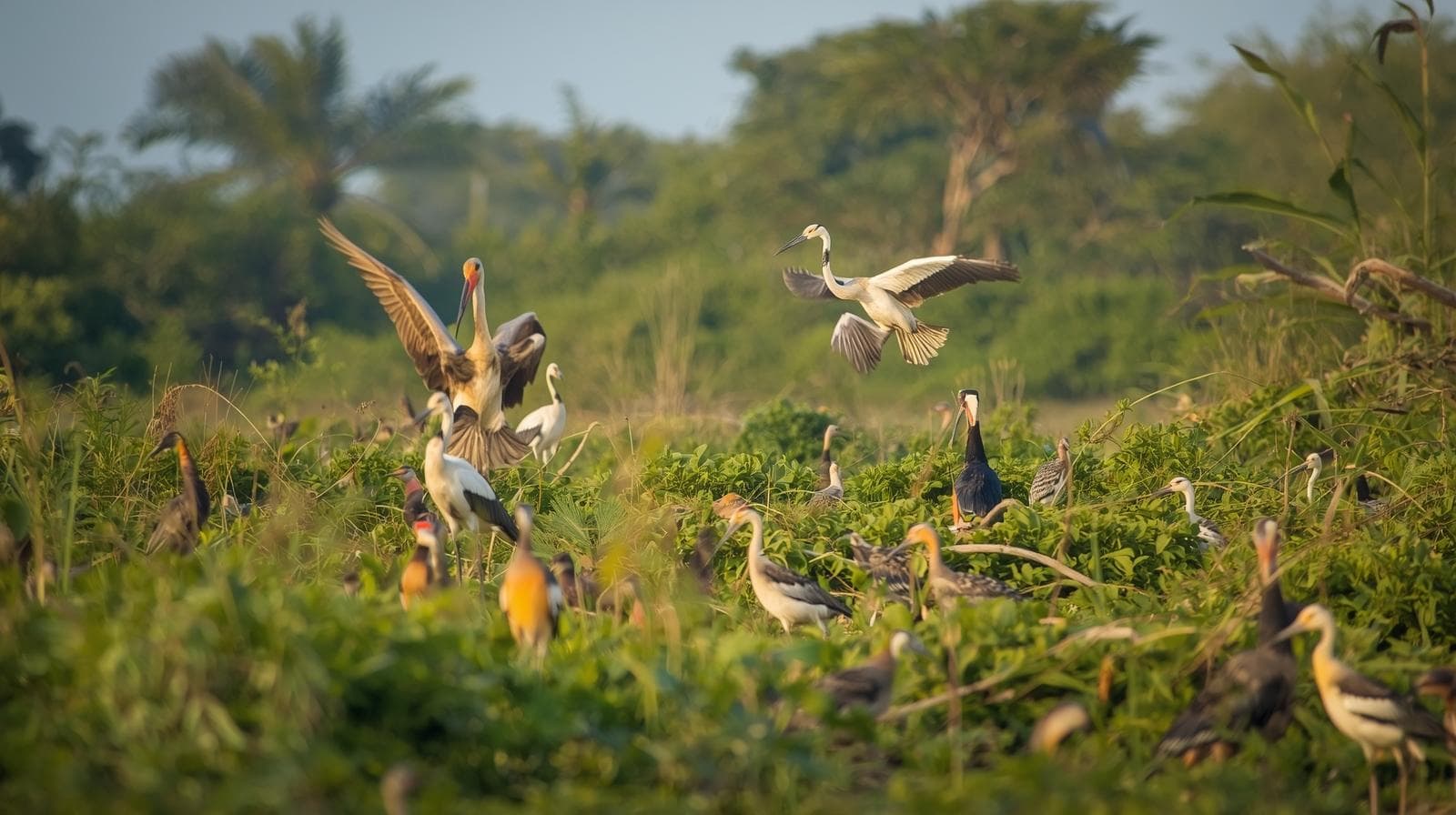
Over 360 bird species have been recorded. In the winter months the resident population is joined by migrants from Central Asia, Siberia and as far as Europe: bar-headed geese, northern pintail, common teal, greylag, several species of crane.
The Siberian crane, which once wintered here and was the park's most celebrated visitor, has not been recorded for many years and is effectively gone from this flyway. It is worth knowing before you go rather than discovering at the gate.
August to October is the breeding season for resident waterbirds — painted storks, open-billed storks, egrets, cormorants — and the heronries are dense and noisy. It is a completely different and equally good visit.
| Season | What is happening |
|---|---|
| October - March | Migratory waterfowl; peak numbers December and January |
| August - October | Resident breeding; crowded heronries, chicks |
| April - June | Hot, water receding, far fewer birds |
| Early morning | Best light and most activity, whatever the month |
Why you cycle
Private vehicles are not permitted beyond the gate, and this single rule is what makes Keoladeo work. The park is quiet — no engines, no dust — which is why the birds tolerate people at close range and why it is such an easy place to watch them.
Three ways in. Walking the main embankment is perfectly viable; the core circuit is a few kilometres on flat, good paths. Cycle rickshaws are the most popular option and the drivers are licensed and trained — many are genuinely good birders who know where a particular species has been roosting. Hiring a bicycle at the gate gives independence and is the cheapest.
A rickshaw driver is worth taking at least once even for confident birders, for the local knowledge rather than the transport. Agree the duration before setting off.
Practical notes
Mornings are substantially better than afternoons for both light and activity. The park opens early and a dawn start is the whole point.
Binoculars transform the visit and almost nobody brings them. A pair of 8x42 is enough. Lodges near the gate rent them, but availability is unreliable.
The paths are flat and the walking is easy, which makes Keoladeo unusually accessible for older visitors and children compared with most wildlife sites.
Fitting it into a trip
Bharatpur sits 55 km from Agra and about 35 km from Fatehpur Sikri, which makes it the obvious third element of a Golden Triangle route rather than a separate journey. A common and good arrangement is Agra for the Taj at sunrise, Fatehpur Sikri in the afternoon, a night at Bharatpur, and the park at dawn before continuing to Jaipur.
From Delhi direct it is about 180 km and three and a half hours on the Yamuna Expressway and NH-21. Triveni Cabs covers all of these legs; tolls on the expressway are payable at actual.
Questions people ask
When is the best time for birds at Bharatpur?
December and January for peak migratory numbers. August to October is excellent for resident breeding colonies and is much less known.
Can I drive inside the park?
No. Private vehicles stop at the gate. You walk, cycle, or take a licensed cycle rickshaw — which is exactly why the park is so quiet and the birds so approachable.
Are the Siberian cranes still there?
No. They have not been recorded at Keoladeo for many years and are effectively lost from this flyway.
How does Bharatpur combine with Agra?
It is 55 km from Agra and 35 from Fatehpur Sikri, so it slots naturally between Agra and Jaipur with one night at Bharatpur and the park at dawn.