
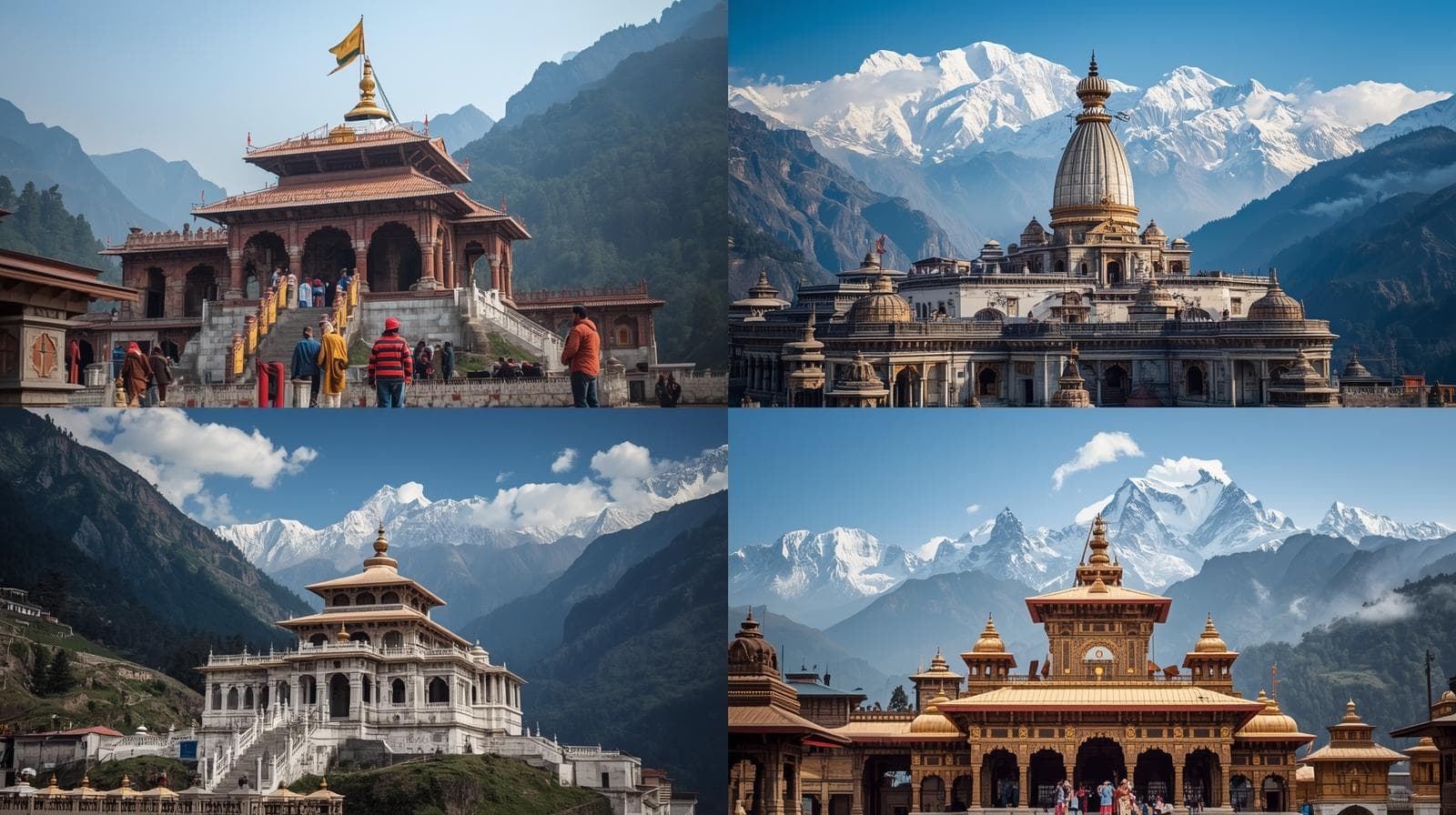
The Uttarakhand Char Dham is Yamunotri, Gangotri, Kedarnath and Badrinath, done in that order, traditionally clockwise. Registration is compulsory — every yatri must register with the state and carry the registration, which is checked at checkposts, and travelling without it means being turned back. The yatra runs roughly from Akshaya Tritiya in April or May to Diwali in October or November, when the shrines close for winter. By road the full circuit needs ten to twelve days; Kedarnath involves a 16 km trek or a helicopter, and Yamunotri a 6 km one.
Registration, which is the thing people get wrong
Uttarakhand requires every Char Dham pilgrim to register, and this is enforced at checkposts on the routes rather than only at the shrines. Registration is done online through the state tourism portal or at designated counters, and a photo identity document is needed for each traveller.
Two practical points. Registration is per person, including children, and the document must be carried — a booking confirmation from a tour operator is not the same thing. And in peak periods the state has limited daily numbers at individual shrines, particularly Kedarnath, so registering late can mean a date you did not want.
Vehicles also require a green card and trip card for the yatra routes, which is the operator's responsibility but worth confirming is in order before departure.
| Shrine | Deity | The hard part |
|---|---|---|
| Yamunotri | Yamuna | 6 km trek from Janki Chatti; pony or palki available |
| Gangotri | Ganga | Road to the temple; highest road access of the four |
| Kedarnath | Shiva | 16 km trek from Gaurikund, or helicopter |
| Badrinath | Vishnu | Road to the temple; easiest access |
Why the order matters
The circuit is traditionally done west to east — Yamunotri, Gangotri, Kedarnath, Badrinath — following a clockwise path through the Garhwal Himalaya. That is a religious convention rather than a road constraint, but it also happens to be the sensible driving order, and almost every operator follows it.
There is a practical argument for it too: it puts Kedarnath, the hardest of the four, third, by which point a yatri has had several days at altitude.
Kedarnath, and what the helicopter actually saves
Kedarnath is the demanding one. The temple sits at about 3,580 m and the approach is a 16 km trek from Gaurikund, climbing steadily. On foot it is a full day each way for most people; ponies, palkis and porters are available along the route.
Helicopter services operate from Phata, Sirsi and Guptkashi, and they are heavily booked. What they save is the trek — they land at a helipad a short walk from the temple, turning a two-day exertion into a few hours.
What they do not save you from: the weather. Flights are cancelled frequently and at short notice for cloud and rain, and a booked ticket is not a guarantee of flying. Anyone building a tight itinerary around a helicopter slot should have a plan for the day it does not fly.
Booking is through the official IRCTC-operated portal for the heli services, and tickets sell out far in advance. Beware of unofficial resale — it is a recurring problem on this route.
Altitude and health, stated seriously
All four shrines are at altitude and Kedarnath is the highest. Every year the yatra sees deaths from cardiac events, overwhelmingly among older pilgrims exerting themselves at altitude in cold weather.
The state issues health advisories for a reason. Anyone with heart or respiratory conditions should take medical advice before booking, not after arriving. Ascend without rushing, keep warm, drink steadily, and treat chest pain or severe breathlessness as a reason to stop rather than push on.
A pony to Kedarnath is not a soft option either — it is still many hours at altitude in the cold.
When to go
The shrines open around Akshaya Tritiya in late April or May and close around Diwali in October or November, with exact dates announced each year.
May and June are the busiest, with the heaviest crowds and the longest darshan queues. July and August are monsoon, and the Garhwal roads are genuinely dangerous then — landslides close routes regularly and the 2013 disaster happened in June. Many experienced yatris avoid the monsoon window entirely.
September and October are the quietest and clearest, with thinner crowds and cold nights, and are the best time for anyone with a choice.
Doing it by road
The full circuit from Haridwar is ten to twelve days at a sensible pace. Compressed seven-day versions exist and mean very long driving days on mountain roads.
Most yatras start from Haridwar or Rishikesh, which is where the vehicle green card and trip card are arranged. Triveni Cabs runs the circuit; a tempo traveller suits a family group, and the driver's familiarity with the Garhwal roads matters more on this route than almost any other.
Questions people ask
Is Char Dham registration compulsory?
Yes. Every pilgrim must register with Uttarakhand, carry it, and show it at checkposts. Travelling without it means being turned back, and a tour booking is not a substitute.
How long does the full Char Dham take by road?
Ten to twelve days from Haridwar at a sensible pace. Seven-day versions exist and mean very long days on mountain roads.
Does the helicopter remove the Kedarnath trek?
Yes — it lands a short walk from the temple. It does not remove the weather: flights cancel frequently at short notice, so have a plan for the day it does not fly.
When is the best time for the yatra?
September and October — thinner crowds, clear air, cold nights. May and June are busiest; July and August are monsoon and the Garhwal roads are genuinely dangerous then.