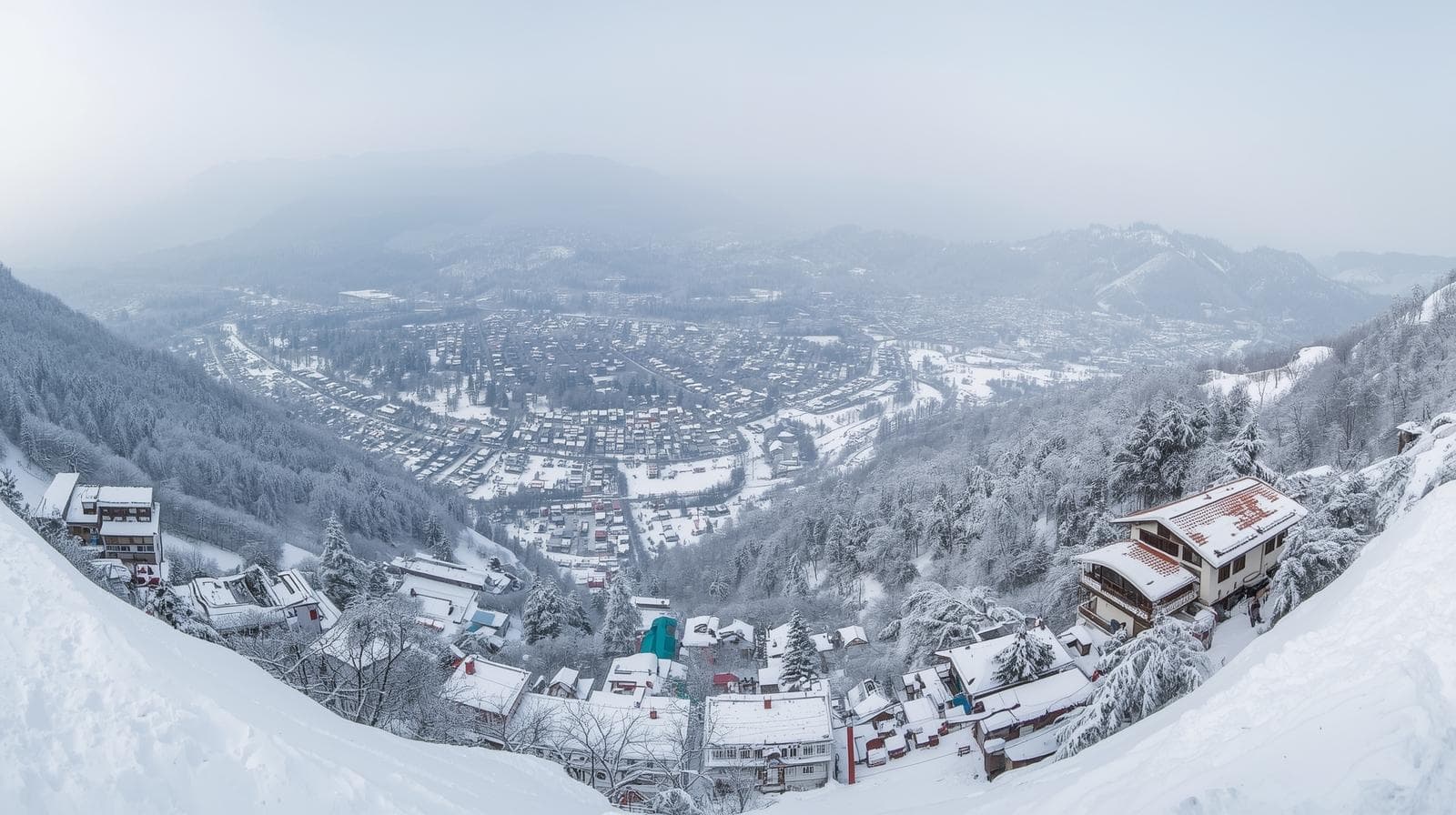
Winter driving in North India is two problems, one on the plain and one on the hill, and our drivers handle them with two rules. On the plain the problem is fog: from mid-December to the end of January, in the words of our road notes, the fog over the fields sits on the expressways and highways out of Delhi until mid-morning, and a four-hour drive becomes five. The rule is to leave later, not earlier, and to crawl with the fog lamps on rather than stop. On the hill the problem is ice and snow: from December the shaded bends ice over in the morning and the snow lies above the towns. The rule is daylight on the hill road and chains in the boot. Nothing about winter changes the rate card, which is ₹11/km for a sedan on a 300 km per day minimum on every date; what it changes is the clock. Three of our route guides carry the winter notes for their corridors: Delhi to Rishikesh, Delhi to Nainital and Delhi to Amritsar.
When is the fog, and where?
Every corridor out of Delhi has a fog note in its road paragraph, and they agree on the months and differ on the hours. The Yamuna Expressway: from December to the end of January there is fog most mornings, thick enough near Jewar that we start later or drive slowly with the hazards on. The Agra–Lucknow side: in December and January the fog sits on the expressway from midnight until well after sunrise. NH-9 towards Moradabad and the Kumaon hills: from late December into January the Gajraula to Moradabad section can sit under fog until mid-morning, so a very early start gains nothing. The Meerut and Dehradun expressways towards Haridwar and Rishikesh: in late December and January the fog over the western UP fields sits on the expressway till mid-morning, so leave after ten and hold the middle lanes. NH-44 towards Amritsar: from December into January the Punjab plain fogs over heavily, worst between Ambala and Ludhiana, and can shut the view down to a few car lengths before ten in the morning. The Rajaji forest between Haridwar and Dehradun holds a thick morning fog until the sun is well up.
The pattern is the same everywhere: the fog forms after midnight, is worst around dawn, and lifts between mid-morning and ten. It is thickest on the flat river plains, the Yamuna floodplain, the Ganga canal country and the Punjab fields, and it thins as soon as the road climbs. A drive that is on the plain at dawn is in it; a drive that reaches the plain at ten is not.
Winter on the main corridors, from the road notes
| Corridor | The plain in winter | The hill in winter | What the drivers do |
|---|---|---|---|
| Delhi to Rishikesh and Haridwar, 250 km | Fog on the Meerut expressway and the western UP fields till mid-morning | No hill road; the river road is flat | Leave after ten in the fog weeks, hold the middle lanes |
| Delhi to Nainital, 300 km | Fog from Gajraula to Moradabad until mid-morning | Snow above the town from December to February; the road to Snow View may close after a fall | Later start; chains carried when snow is forecast; the climb in the middle of the day |
| Delhi to Amritsar, 450 km | The Punjab plain fogs heavily, worst Ambala to Ludhiana, until about ten | No hill road | Slow rather than leave later, because the Wagah clock still applies; let the first rush clear at Attari after dusk |
| Delhi to Mussoorie, 290 km | Fog on the Meerut and Dehradun expressways | Snow to the Mussoorie roads in January and February, heavier on the Dhanaulti side; ice on shaded bends; police hold cars at the bottom after a fall | Chains, and set out with daylight in hand; a gentle driver on the bends |
| Delhi to Shimla and Manali, 350 and 530 km | Fog on NH-44 around Murthal, Karnal and Ambala in the early hours | The shaded bends near Shimla and after Mandi ice over in the morning; Manali's snow from December; Rohtang closed | The hill road in daylight, later than in summer; chains for the last stretch after a fall |
| Srinagar and the Kashmir valley | Dense morning fog on the Punjab plain on the way up | The Jammu–Srinagar highway closes after heavy snow; the upper Pahalgam road can need chains after a fresh fall | Winter runs as daylight-only drives; a spare day held; fly if the dates are fixed |
Every line in the table is from the corridor's own road paragraph or route guide on this site; the distances are the distance pages'.
Why do our drivers leave later in winter, not earlier?
Because the early start buys nothing in fog. In summer a four o'clock departure clears Delhi before the traffic and puts the car on an empty expressway; in the fog weeks the same departure puts the car on an expressway it cannot see, at the speed of the vehicle in front, for four or five hours, and the ground gained by leaving early is lost by crawling. The road notes say it corridor by corridor: leave after ten and hold the middle lanes on the Rishikesh road; a very early start gains you nothing on the Nainital road; the later start is often the quicker one on the Punjab plain. The driver's winter rule is to time the departure so that the plain is crossed as the fog thins, and the hill section, where there is one, falls in the middle of the day.
There is one exception, and it is the Amritsar road. Wagah's ceremony keeps a clock and so does the Ludhiana traffic, and if the day has a fixed appointment at the far end the drivers slow rather than leave later, crawling through the Haryana fog with the lamps on and making the time up beyond Ambala. The same applies to a flight or a train: tell us the fixed time and the departure is planned to it, fog allowed for.
Chains, daylight and the police hold: how the hill rules work
- Chains are carried, not fitted. From December the car has them in the boot on the hill corridors; the driver fits them where fresh snow lies on the road, for the few kilometres it lies, and takes them off when the tarmac shows. The road notes for Nainital, Mussoorie and Pahalgam all put it the same way: chains when snow is forecast, or after a fresh fall.
- The hill road is driven in daylight. Ice on a shaded bend is visible at noon and invisible at dusk, which is why the Kasol, Pahalgam and Lansdowne notes call their hill sections daylight-only in winter, and why the start is timed to put the climb in the middle of the day.
- The police hold is respected. After a fall, the Mussoorie road notes say, the police hold cars at the bottom until the upper bends are cleared. That is an hour or two, not a day, and the driver waits rather than argues.
- A closure is a closure. The Jammu–Srinagar highway shuts after heavy snow, sometimes for days, and the Manali road above the town can be held for a morning. The drivers check the road position the evening before, and if it is shut they say so rather than drive to a barrier.
- The car is an SUV or Innova where the hill is real. Every hill page on this site recommends it, and in winter the clearance on a snowed bend and the grip on a climb are the reason.
What a passenger can do
Three things. Give the driver the fixed time at the far end, if there is one, and let him set the departure; a later start that arrives on time is better than an early one that sits in fog. Hold a spare day on any hill trip between December and February, because a fresh fall can close a road for a morning and the trips that go wrong in winter are the ones with a flight to catch. And carry the right things: warm layers for the hill towns, which are colder than the car; water and something to eat for a slow plain; and patience for the fog, which is the slowest part of the winter drive and the least dangerous if the driver is allowed to crawl.
The fare does not change with any of this. The rate card is ₹11/km for a sedan, ₹15 for an Ertiga or SUV, ₹18 for an Innova Crysta and ₹23 for a 12-seater Tempo Traveller, on a 300 km per day minimum, with tolls and parking at actuals, in January as in June. A slow day in fog is not billed as a longer day; a night held on the hill by snow is billed as a day at the minimum, with the driver's halt at actuals, and it is the reason for the spare day.
Frequently Asked Questions
When is the fog season on North Indian roads?
From mid-December to the end of January on our road notes, worst around dawn and lifting between mid-morning and ten, thickest on the flat river plains and thinning as soon as the road climbs.
Should I leave earlier or later in winter?
Later, unless the far end has a fixed time. The early start buys nothing in fog; time the departure so the plain is crossed as the fog thins and the hill section falls in the middle of the day.
Do the cabs carry snow chains?
Yes, on the hill corridors from December, fitted where fresh snow lies on the road and removed when the tarmac shows.