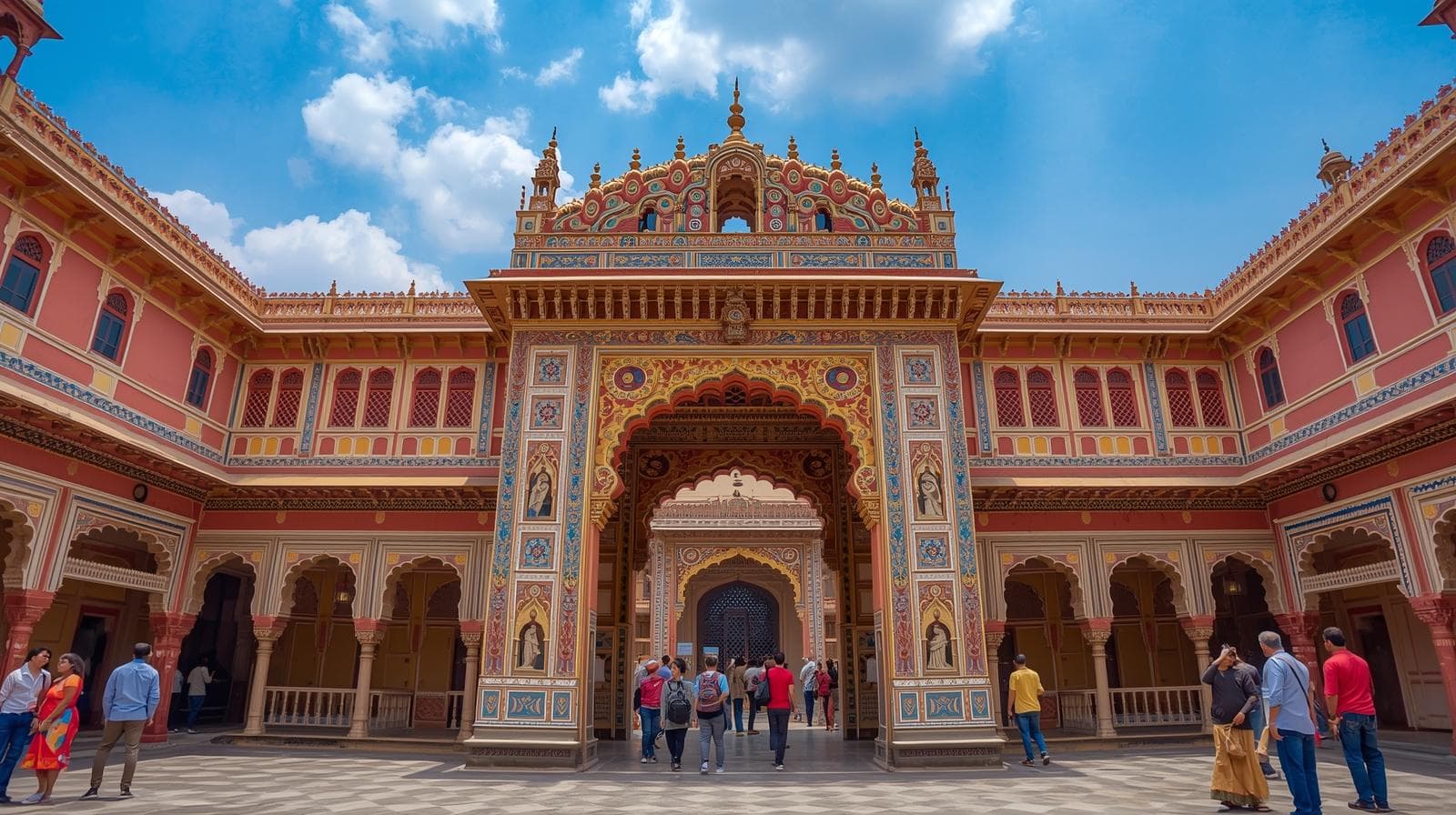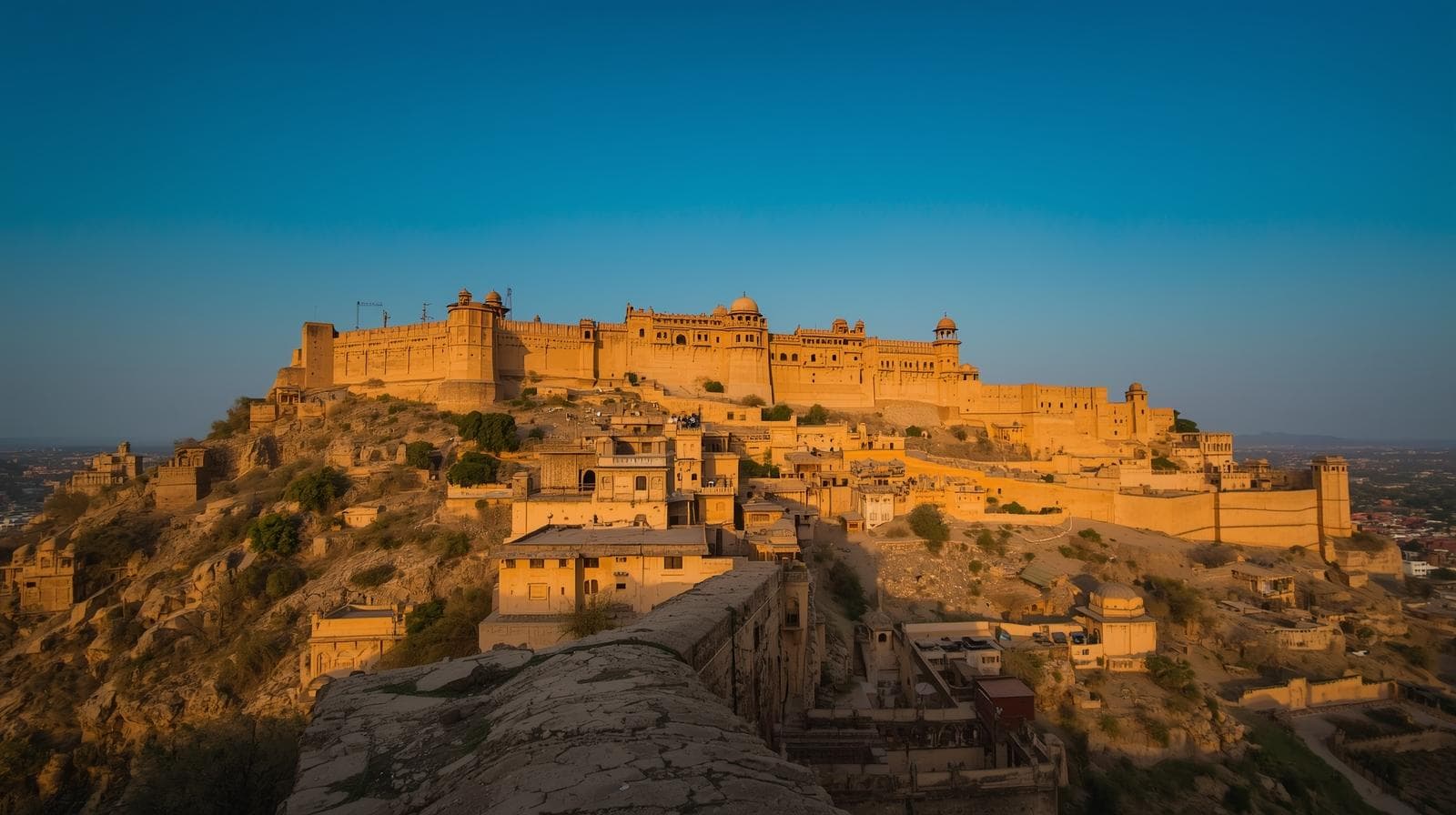
Jaipur – the Pink City, the jewel of Rajasthan, and a living museum of royal heritage. Founded in 1727 by Maharaja Sawai Jai Singh II, Jaipur was India's first planned city and remains one of its most captivating destinations. From the majestic Amber Fort perched on the Aravalli Hills to the iconic Hawa Mahal with its 953 windows, from bustling bazaars selling everything imaginable to royal palaces that still house the descendants of kings – Jaipur is where history comes alive. This comprehensive 2026 guide will help you explore every facet of this magnificent city.
Why is Jaipur Called the Pink City?
In 1876, Maharaja Ram Singh painted the entire old city pink to welcome Prince Albert, the husband of Queen Victoria. Pink, being the color of hospitality in Rajasthan, has remained the city's signature shade ever since. Today, it's a legal requirement for buildings in the old city to maintain this iconic terracotta-pink color!
Top Attractions in Jaipur
Amber Fort - The Crown Jewel
Amber Fort (or Amer Fort) is Jaipur's most visited attraction and a UNESCO World Heritage Site. This magnificent fort-palace complex, built from red sandstone and marble, sits atop a hill overlooking Maota Lake.
Highlights of Amber Fort:
- Sheesh Mahal: The Mirror Palace – walls and ceiling covered with thousands of tiny mirrors that create a starlit effect with just one candle
- Ganesh Pol: Magnificent painted gateway dedicated to Lord Ganesh
- Diwan-i-Am: Hall of Public Audience with ornate pillars
- Diwan-i-Khas: Hall of Private Audience with intricate marble work
- Sukh Niwas: The Pleasure Palace with an air-cooling system from the 16th century!
- Zenana: The women's quarters with separate sections for each queen
Amber Fort Visitor Information
- Timings: 8:00 AM to 5:30 PM (Last entry 5:00 PM)
- Entry Fee: ₹100 (Indians), ₹550 (Foreigners)
- Light & Sound Show: 7:00 PM (English), 8:00 PM (Hindi) – ₹295
- Elephant Ride: ₹1,200 per elephant (2 persons) – controversial, consider skipping
- Best Time to Visit: Early morning or late afternoon to avoid crowds
Hawa Mahal - Palace of Winds
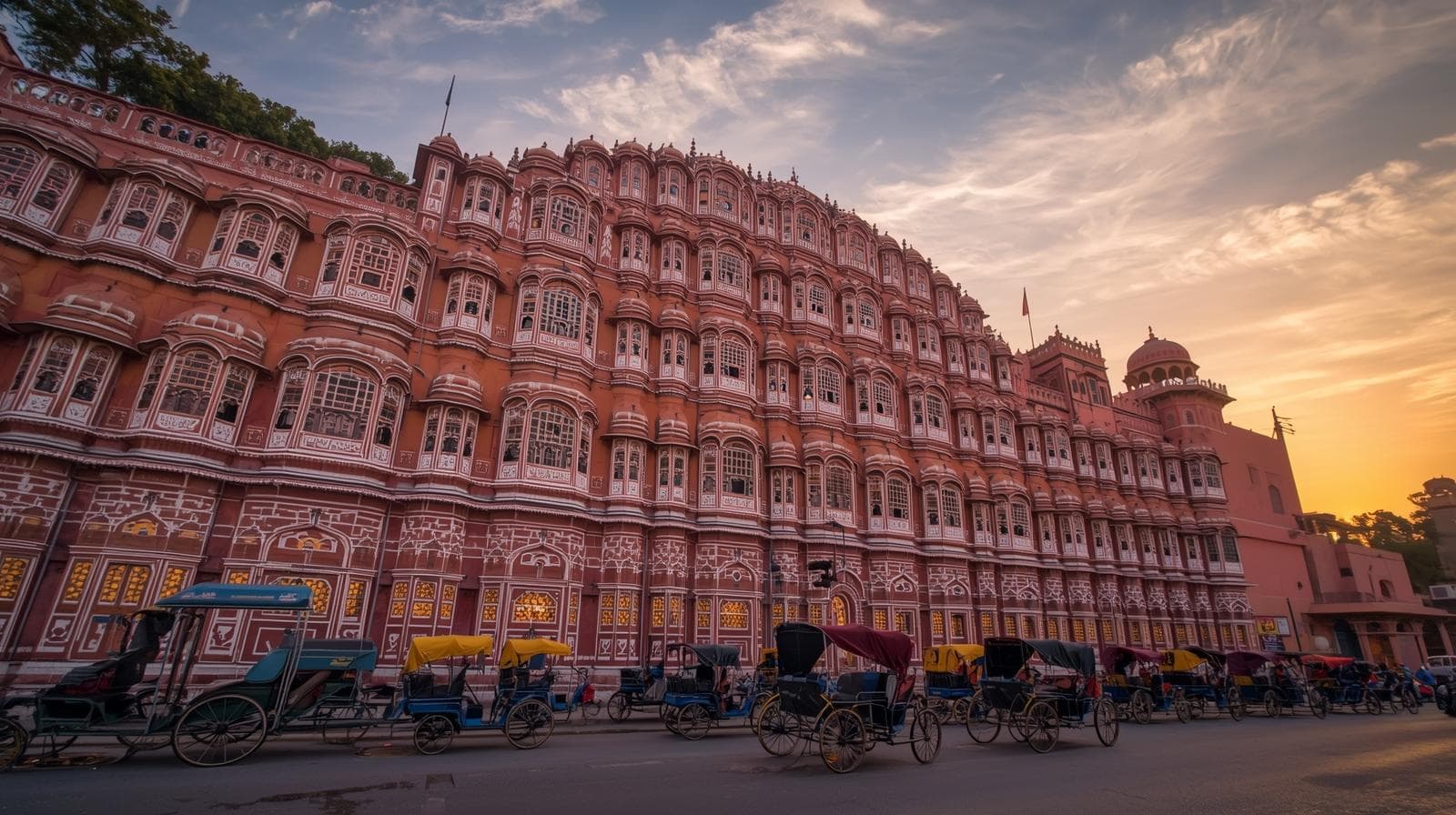
The most photographed building in Jaipur, Hawa Mahal is an architectural wonder built in 1799 by Maharaja Sawai Pratap Singh. Its unique five-story facade has 953 small windows (jharokhas) designed to allow royal women to observe street life without being seen.
Interesting Facts:
- The building is actually just a facade – one room deep at most parts
- The honeycomb design keeps the interior cool through natural ventilation
- Best viewed from the street in the morning light
- You can climb to the top for panoramic city views
Entry Fee: ₹50 (Indians), ₹200 (Foreigners)
Timings: 9:00 AM to 5:00 PM
City Palace - Living Heritage
The City Palace complex occupies one-seventh of the old city and is a stunning blend of Rajasthani and Mughal architecture. Parts of the palace are still occupied by the royal family, making it a living heritage site.
Must-See Sections:
- Mubarak Mahal: Welcome Palace – now a textile and costume museum
- Sileh Khana: The armory with an impressive weapons collection
- Diwan-i-Am: Hall of Public Audience with stunning art gallery
- Pritam Niwas Chowk: Courtyard with four beautiful painted doorways representing seasons
- Chandra Mahal: Seven-story palace (only ground floor open to public)
- Giant Silver Urns: World's largest silver objects in Guinness Records
Entry Fee: ₹200 (Indians), ₹700 (Foreigners) for main palace
Royal Grandeur Tour: ₹2,500 – includes private areas with royal guide
Jantar Mantar - Ancient Observatory
Built by Maharaja Sawai Jai Singh II in 1734, Jantar Mantar is the largest stone astronomical observatory in the world and a UNESCO World Heritage Site. The Samrat Yantra (sundial) is the world's largest, telling time accurate to 2 seconds!
Instruments to Observe:
- Samrat Yantra: 27-meter tall sundial for measuring time
- Jai Prakash Yantra: Hemispherical sundial showing zodiac signs
- Ram Yantra: For measuring altitude of celestial objects
- Rashivalaya Yantra: 12 instruments for each zodiac sign
Entry Fee: ₹50 (Indians), ₹200 (Foreigners)
Tip: Hire a guide (₹200-300) to understand the instruments – fascinating!
Nahargarh Fort - Tiger Fort
Perched on the edge of the Aravalli Hills, Nahargarh Fort offers the best sunset views in Jaipur. Less crowded than Amber Fort, it's perfect for a relaxed afternoon.
Highlights:
- Madhavendra Bhawan – interconnected suites for the king and his nine queens
- Panoramic views of Jaipur city
- Padao restaurant at the fort for dining with views
- Great sunset photography spot
- Night views of the illuminated Jaipur city
Entry Fee: ₹50 (Indians), ₹200 (Foreigners)
Open Till: 10:00 PM (one of the few forts open for night visits)
Jaigarh Fort - Victory Fort
Connected to Amber Fort via underground passages, Jaigarh Fort houses the world's largest cannon on wheels – Jaivana. It's less visited but offers great views and military history.
Highlights:
- Jaivana Cannon: World's largest cannon on wheels, never fired in battle
- Dungeon and armory museum
- Puppet show demonstrations
- Beautiful views of Amber Fort and Maota Lake
Entry Fee: ₹100 (Indians), ₹200 (Foreigners)
Jaipur Day Trip Itineraries
1-Day Jaipur Sightseeing (Best Itinerary)
8:00 AM: Start at Amber Fort (3 hours) – beat the crowds
11:00 AM: Drive by Jal Mahal (Water Palace) for photos
11:30 AM: Hawa Mahal (30 minutes)
12:00 PM: City Palace (2 hours)
2:00 PM: Lunch at LMB or traditional Rajasthani thali
3:00 PM: Jantar Mantar (1 hour)
4:00 PM: Shopping at Johari Bazaar and local markets
5:30 PM: Nahargarh Fort for sunset
7:30 PM: Dinner at Chokhi Dhani for cultural experience
2-Day Jaipur Extended Itinerary
Day 1: Amber Fort → Jaigarh Fort → Jal Mahal → Hawa Mahal → Nahargarh Sunset
Day 2: City Palace → Jantar Mantar → Albert Hall Museum → Birla Temple → Shopping → Chokhi Dhani
Add-ons: Elefantastic Sanctuary visit, Hot Air Balloon ride, Cooking class
Day Trips from Jaipur
Ajmer & Pushkar (135 km)
Ajmer and Pushkar make for an excellent day trip from Jaipur. Ajmer houses the famous Dargah Sharif, while Pushkar is known for Brahma Temple and the holy Pushkar Lake.
- Drive Time: 2.5 hours one way
- Ajmer Highlights: Dargah Sharif, Ana Sagar Lake, Adhai Din Ka Jhonpra
- Pushkar Highlights: Brahma Temple, Pushkar Lake, 52 ghats, hippie cafes
- Best Time: October-March; Pushkar Camel Fair in November
Ranthambore National Park (160 km)
Ranthambore is one of India's best tiger reserves. A 2-day trip allows for multiple safari drives to spot the majestic Bengal tigers.
- Drive Time: 3-3.5 hours
- Safari Zones: 10 zones with different tiger territories
- Safari Timing: 6:00 AM and 2:30 PM (seasonal variations)
- Safari Cost: ₹1,500-4,000 depending on vehicle type
- Best Season: October-June (park closed during monsoon)
Other Day Trips
- Bhangarh Fort (85 km): India's most haunted place – thrilling day trip
- Abhaneri (95 km): Chand Baori – one of the deepest stepwells in India
- Sanganer (16 km): Block printing and paper making workshops
- Samode (42 km): Beautiful palace and haveli with stunning architecture
Shopping in Jaipur
Jaipur is a shopper's paradise, famous for its traditional crafts, jewelry, and textiles.
Famous Markets
- Johari Bazaar: Jewelry heaven – gold, silver, Kundan, Meenakari work
- Bapu Bazaar: Textiles, leather goods, juttis (mojari footwear)
- Tripolia Bazaar: Lac bangles, brass utensils, crafts
- MI Road: Modern shopping with branded stores and restaurants
- Nehru Bazaar: Fabrics, traditional shoes, souvenirs
- Chandpole Bazaar: Marble statues, wooden handicrafts
What to Buy
- Blue Pottery: Traditional Jaipur craft with Persian influence
- Kundan & Meenakari Jewelry: Traditional Rajasthani jewelry work
- Bandhani & Block Print Fabrics: Tie-dye and hand-printed textiles
- Mojaris (Juttis): Traditional embroidered leather footwear
- Gemstones: Jaipur is the gemstone capital of India
- Miniature Paintings: Traditional Rajasthani art form
- Lac Bangles: Colorful traditional bangles
- Marble Artifacts: Statues and decorative items
Shopping Tips
- Always bargain – start at 50% of the quoted price
- Ask for GI (Geographical Indication) tags for authentic products
- Get gemstone certifications from reputable labs
- Government emporia offer fixed prices with quality guarantee
- Beware of "guides" taking you to commission shops
Rajasthani Cuisine
Jaipur's cuisine is a feast for the senses – spicy, flavorful, and unique to the desert region.
Must-Try Dishes
- Dal Baati Churma: The iconic Rajasthani dish – baked wheat balls with lentils and sweet churma
- Laal Maas: Fiery red mutton curry (for non-vegetarians)
- Gatte Ki Sabzi: Gram flour dumplings in tangy gravy
- Ker Sangri: Desert beans and berries – unique local specialty
- Ghevar: Honeycomb-like sweet, especially during Teej festival
- Pyaaz Kachori: Spicy onion-filled deep-fried snack
- Mirchi Bada: Chili fritters – local street food favorite
- Mawa Kachori: Sweet kachori with khoya filling
Where to Eat
- LMB (Lakshmi Misthan Bhandar): Legendary since 1727 – best thali and sweets
- Chokhi Dhani: Ethnic village resort with cultural performances
- Rawat Mishtan Bhandar: Famous for pyaaz kachori
- Suvarna Mahal (Rambagh Palace): Royal dining experience
- 1135 AD (Amber Fort): Fine dining with fort views
- Peacock Rooftop (Hotel Pearl): Rooftop dining with Hawa Mahal view
Best Time to Visit Jaipur
Winter (October - March)
Temperature: 10-25 degrees C
Best for: Sightseeing, festivals (Diwali, Literature Festival)
Note: Peak tourist season, book hotels in advance
Summer (April - June)
Temperature: 35-45 degrees C
Best for: Budget travel, fewer crowds
Note: Very hot – start early, rest midday, explore evenings
Monsoon (July - September)
Temperature: 25-35 degrees C
Best for: Photography, Teej festival
Note: Occasional rain, lush surroundings
Festival Season
Jaipur Literature Festival: January
Teej: July-August
Elephant Festival: Holi (March)
How to Reach Jaipur
By Air
Jaipur International Airport (JAI) is well-connected to major cities:
- Delhi: 55 minutes (₹2,500-5,000)
- Mumbai: 1.5 hours (₹3,500-7,000)
- Bangalore: 2 hours (₹4,000-8,000)
- International: Dubai, Bangkok, Singapore (seasonal)
By Train
- From Delhi: Shatabdi (4.5 hours), Ajmer Express (5 hours)
- From Mumbai: 12-15 hours
- From Agra: 4-5 hours
By Road
- From Delhi: 270 km (5-6 hours via NH48)
- From Agra: 240 km (4-5 hours)
- From Udaipur: 395 km (6-7 hours)
- From Jodhpur: 340 km (5-6 hours)
Travel Costs 2026
| Expense | Budget | Mid-Range | Luxury |
|---|---|---|---|
| Hotels (per night) | ₹1,000-2,000 | ₹3,000-6,000 | ₹15,000-100,000 |
| Meals (per day) | ₹400-600 | ₹800-1,500 | ₹3,000-8,000 |
| Local Transport (per day) | ₹300-500 | ₹1,500-2,500 | ₹4,000-6,000 |
| Entry Fees (all major sites) | ₹400-600 | ₹400-600 | ₹400-600 |
| Daily Total (approx) | ₹2,100-3,700 | ₹5,700-10,600 | ₹22,000+ |
Frequently Asked Questions
How many days are enough for Jaipur?
2-3 days are ideal to explore major attractions comfortably. Add 1 day each for day trips to Ajmer-Pushkar or Ranthambore.
Is Jaipur safe for solo female travelers?
Yes, Jaipur is generally safe. Take normal precautions, dress modestly in traditional areas, and avoid isolated areas at night. Many solo women travelers visit Jaipur without issues.
What is the best way to get around Jaipur?
Hiring a private car/cab for the day is the most comfortable option (₹1,500-3,000/day). Auto-rickshaws are cheaper but require negotiation. The Pink Line metro covers some tourist areas.
Can I do Golden Triangle (Delhi-Agra-Jaipur) by myself?
Yes, but hiring a car for the entire circuit is recommended. It's safer, more comfortable, and allows flexibility. The 3-4 day circuit is one of India's most popular tourist routes.
Should I skip the elephant ride at Amber Fort?
Many animal welfare organizations recommend avoiding elephant rides due to treatment concerns. Consider walking up (10-15 minutes) or taking a jeep instead.
Conclusion
Jaipur is more than just a city – it's a journey into India's royal past, a celebration of living culture, and a feast for all senses. The Pink City seamlessly blends ancient heritage with modern amenities, offering experiences that range from exploring 400-year-old forts to shopping in contemporary malls.
Whether you come for the magnificent architecture, the vibrant markets, the delectable cuisine, or simply to soak in the royal atmosphere – Jaipur never fails to enchant its visitors. The city's warmth, hospitality, and rich traditions make it one of India's most beloved destinations.
Ready to Explore the Pink City?
Book your Jaipur tour with Triveni Cabs™. Comfortable vehicles, knowledgeable drivers, and the best rates for exploring Rajasthan's capital.
Book Jaipur City Tour