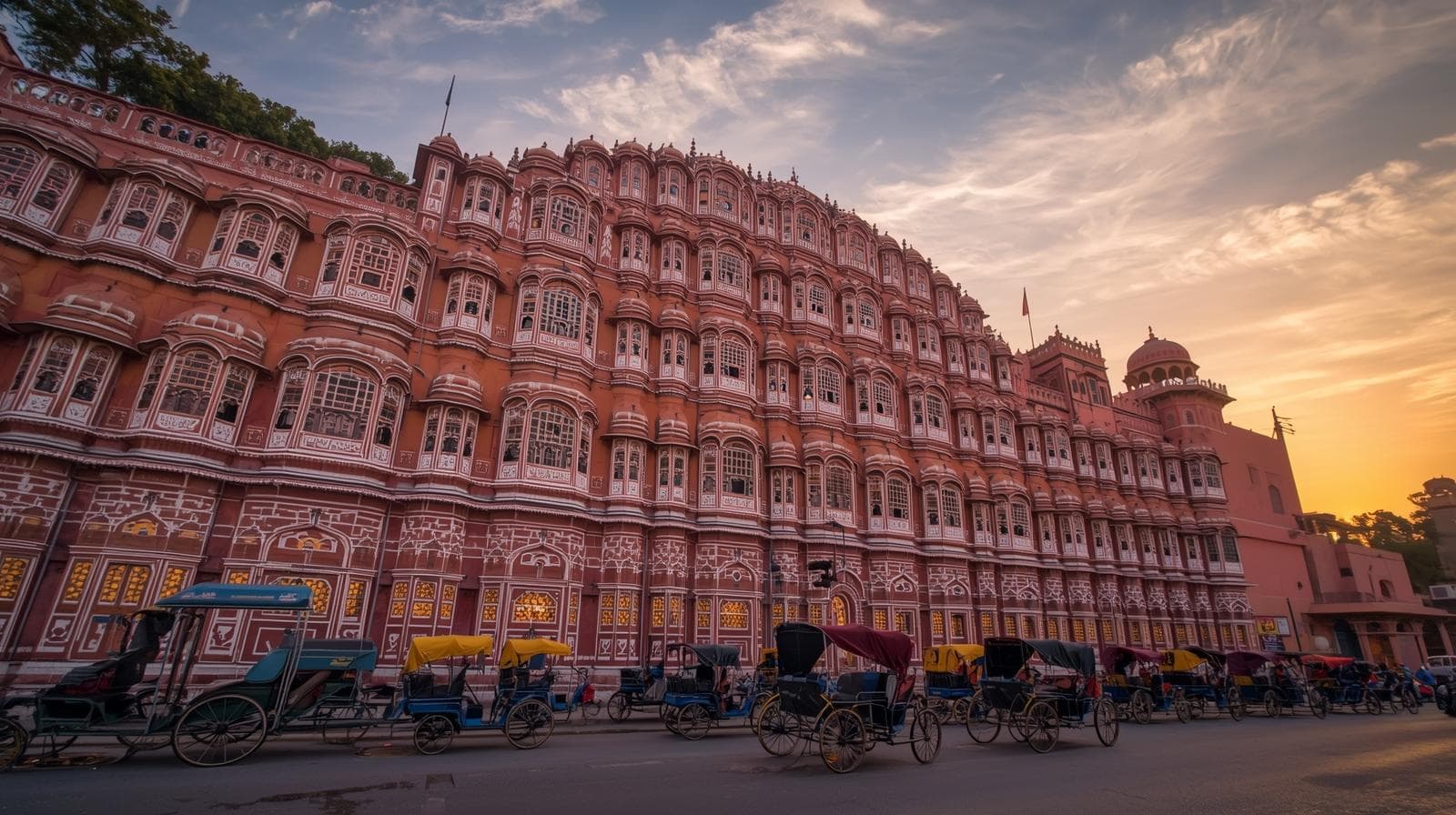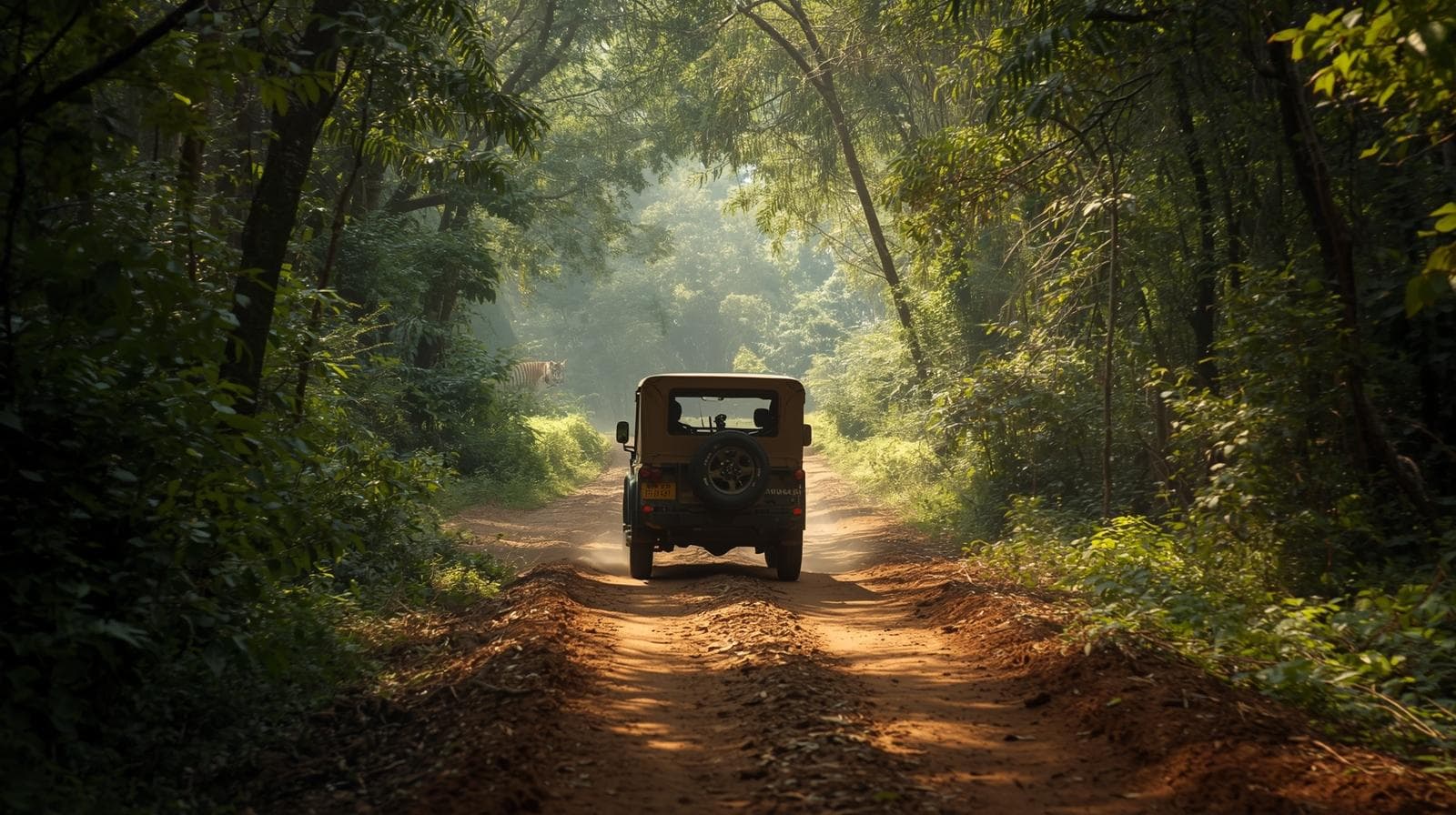
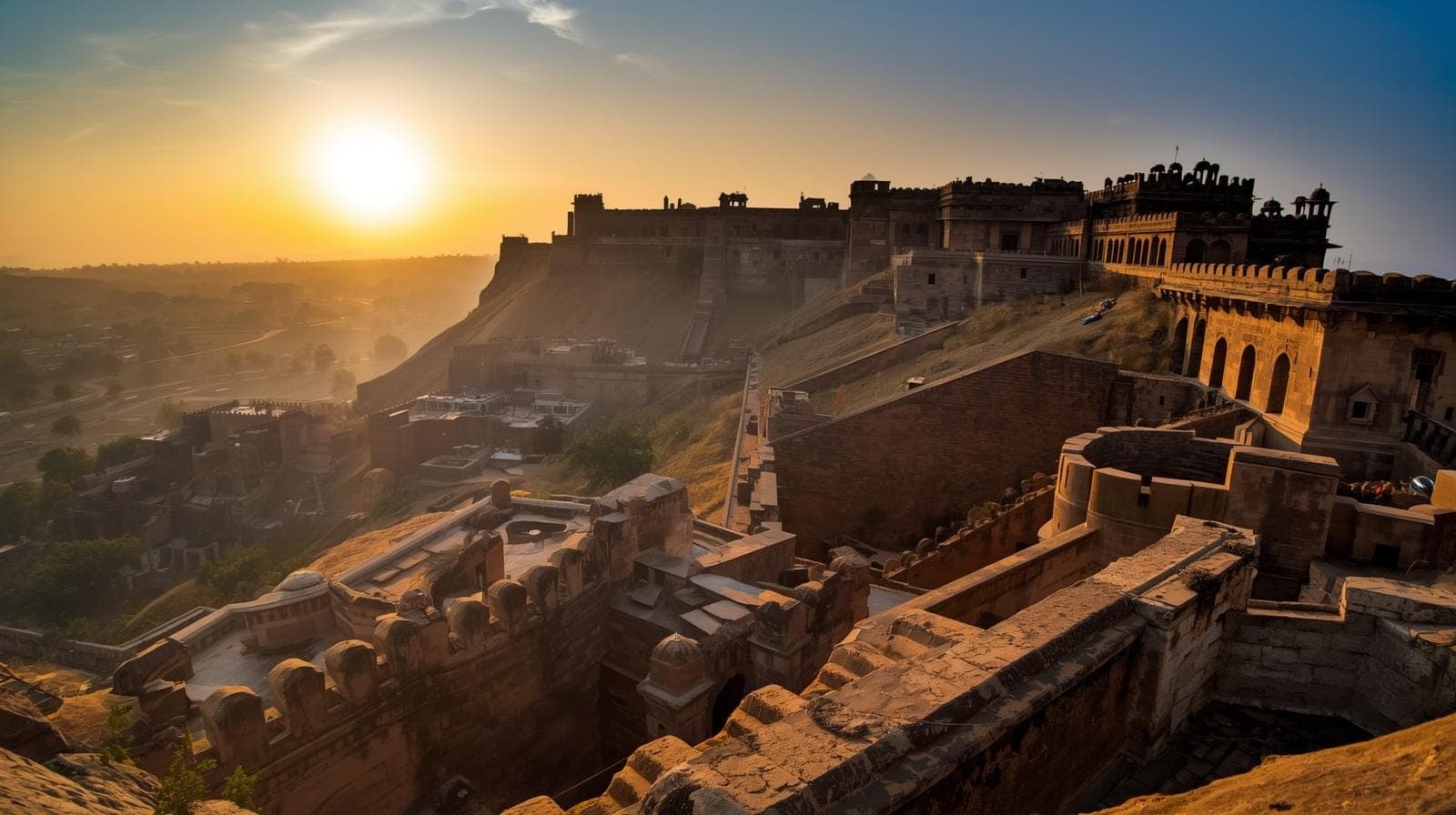
Jaipur to Ranthambore is 180 km and three to three and a half hours by cab on NH-52 through Tonk to Sawai Madhopur, the town beside the park. The road is good highway the whole way. The park is open from October to June and closed for the monsoon; October to March is the comfortable season and April to June, hot as it is, is when the tigers are easiest to see at water. The safari is booked with the forest department by zone and by slot, in the morning or the afternoon, and the cab is timed to the slot. On the rate card the drive bills the 300 km minimum, ₹3,300 for a sedan, and a two-day trip with the car staying is ₹6,600. Book on the Jaipur to Ranthambore cab page or the round-trip page.
How far is Ranthambore from Jaipur, and what is the road like?
Our distance page puts it at 180 km and three to three and a half hours on NH-52 via Tonk, with Tonk and Sawai Madhopur as the stops, and calls the road a good highway; the park is near Sawai Madhopur town. The drive leaves Jaipur south past the airport, runs across the flat Tonk country and turns for Sawai Madhopur, where the hotels line the road towards the park gates. It is one of the easier three hours in Rajasthan: no hills, no towns to cross once you are clear of Jaipur, and a road that carries the safari traffic every day of the season. The booking page rounds the run to about 160 km; the distance page's 180 km is the figure we bill on, and both are under the 300 km minimum.
Sawai Madhopur is where the road ends and the timing begins. Safaris leave from the hotels and the assembly points at fixed morning and afternoon slots, and the whole day is arranged around them: an early start from Jaipur for an afternoon safari the same day, or a night in Sawai Madhopur for the morning one.
Jaipur to Ranthambore at a glance
| Detail | What our pages say |
|---|---|
| Distance | 180 km to Sawai Madhopur |
| Drive time | 3 to 3.5 hours |
| Road | NH-52 via Tonk; good highway throughout |
| Park season | October to June; closed for the monsoon, July to September |
| Best for sightings | April to June at the waterholes; October to March for comfort |
| Sedan fare | ₹3,300 one-way (300 km minimum at ₹11/km); ₹6,600 for a two-day round trip |
| Tolls | At actuals on the driver's FASTag; no toll page exists for this corridor |
When is the best time to visit Ranthambore?
It depends on what you want, and our Ranthambore sightseeing page says it plainly. The park is open to visitors from October to June. October to March brings pleasant weather, greenery after the monsoon and comfortable safaris, which suits first-timers and families. April to June is harsh in the heat but statistically the best for tiger sightings, because the big cats gather around the shrinking waterholes and are far easier to find; the safaris are early and late in the day, and the cab is air-conditioned for the hours between. The park typically closes from July to September for the breeding season, and no cab goes to a closed gate.
On zones, the distance page says zones three to five have the best tiger sighting and the sightseeing page widens that to the first five; the honest position is that the zone is assigned with the permit and the best zone changes with the season and the water. Book early, take the zone you are given, and go in the morning if you can, which the distance page also recommends.
The safari sequence, in order
- Fix the dates and the slot. Morning or afternoon, and how many safaris; the slot decides whether you drive from Jaipur the same morning or sleep in Sawai Madhopur.
- Book the permit through official channels. The forest department's booking system issues the permit by zone and slot with an ID for every visitor; slots sell out in peak season, so book well in advance. The permit price, the vehicle and the guide fees are on that system.
- Choose the vehicle. Drives are in forest-department Gypsies, shared or private, or in the larger Canters; a private Gypsy is the usual family choice and is reserved with the permit.
- Then book the cab. Tell us the slot and the hotel, and the driver plans the departure from Jaipur so you are at the assembly point in time; our tour page says the driver knows exactly when to leave.
- Between safaris. The car takes you up to Ranthambore Fort and the Trinetra Ganesh temple, or to the lakes for the birds, and waits.
What does a Jaipur to Ranthambore cab cost?
The drive is 180 km, and outstation cabs bill a 300 km per day minimum, so the one-way fare is the minimum at the vehicle's rate: ₹3,300 for a sedan at ₹11/km, ₹4,500 for an Ertiga or SUV at ₹15, ₹5,400 for an Innova Crysta at ₹18 and ₹6,900 for a 12-seater Tempo Traveller at ₹23. Fuel and the driver are inside those figures; tolls on NH-52 and parking at the hotel are at actuals. The safari permit, the Gypsy and the guide are booked and paid separately with the forest department and are not part of the cab fare.
The usual shape is two days: down from Jaipur for the afternoon safari, the night in Sawai Madhopur, the morning safari and the fort, then back to Jaipur. That is two days at the minimum, ₹6,600 for a sedan, ₹9,000 for an Ertiga, ₹10,800 for an Innova Crysta and ₹13,800 for a Tempo Traveller, with the driver's night halt at actuals. A same-day trip, down for the afternoon safari and back after it, bills one day but is a long one. If Ranthambore is a stop on a longer Rajasthan circuit, the one-way cab drops you at the hotel and the next leg is a separate booking; the Ranthambore day tour covers the transfers around the park once you are there.
The drive, stop by stop
Jaipur to Tonk is the first half, flat farmland on NH-52 with the city traffic behind you inside half an hour of a morning start; Tonk is the only town on the way, and there is nothing to stop for except tea. Tonk to Sawai Madhopur is the second half, the same good highway across country that turns drier and rockier as the Aravalli outliers of the park come into view. Sawai Madhopur is a railway town, and the hotels and the safari assembly points lie along the road that runs from the town towards the park gates; tell us the hotel and the driver knows the zone it sits in. For an afternoon safari the same day, the morning start from Jaipur is the rule; for the morning safari, the night before in Sawai Madhopur.
Between the safaris: the fort and the lakes
Ranthambore is not only the tiger. The fort above the park, a thousand years old and a World Heritage Site, is reached by a winding road and a flight of steps, and its ramparts, temples and tanks look out over the whole reserve; the Trinetra Ganesh temple inside it draws pilgrims as well as visitors, and langurs and peacocks have the run of the ruins. The car takes you to the base and waits. The lakes, Padam Talao, Rajbagh and Malik Talao, are the birdwatchers' reason to come, and our sightseeing page counts over three hundred species around them, with crocodiles on the banks and the morning light across the water for photographers. Between a morning safari and an afternoon one there is time for the fort and a rest; with two nights there is time for the lakes as well.
What the cab does, then, is join the pieces: the hotel to the assembly point in time for the slot, the fort between safaris, the lakes when the light is right, and the road back to Jaipur or on to the next stop. What it does not do is the safari itself, which is the forest department's, in its vehicles, on its permits. Keep the two bookings separate in your mind and the day runs smoothly.
Frequently Asked Questions
How far is Ranthambore from Jaipur?
180 km on NH-52 via Tonk to Sawai Madhopur, three to three and a half hours on a good highway.
When is Ranthambore closed?
For the monsoon, typically July to September. The park is open from October to June.
Does the cab fare include the safari?
No. The permit, the Gypsy or Canter and the guide are booked and paid through the forest department's official channels; the cab covers the road transfers and waits between safaris.