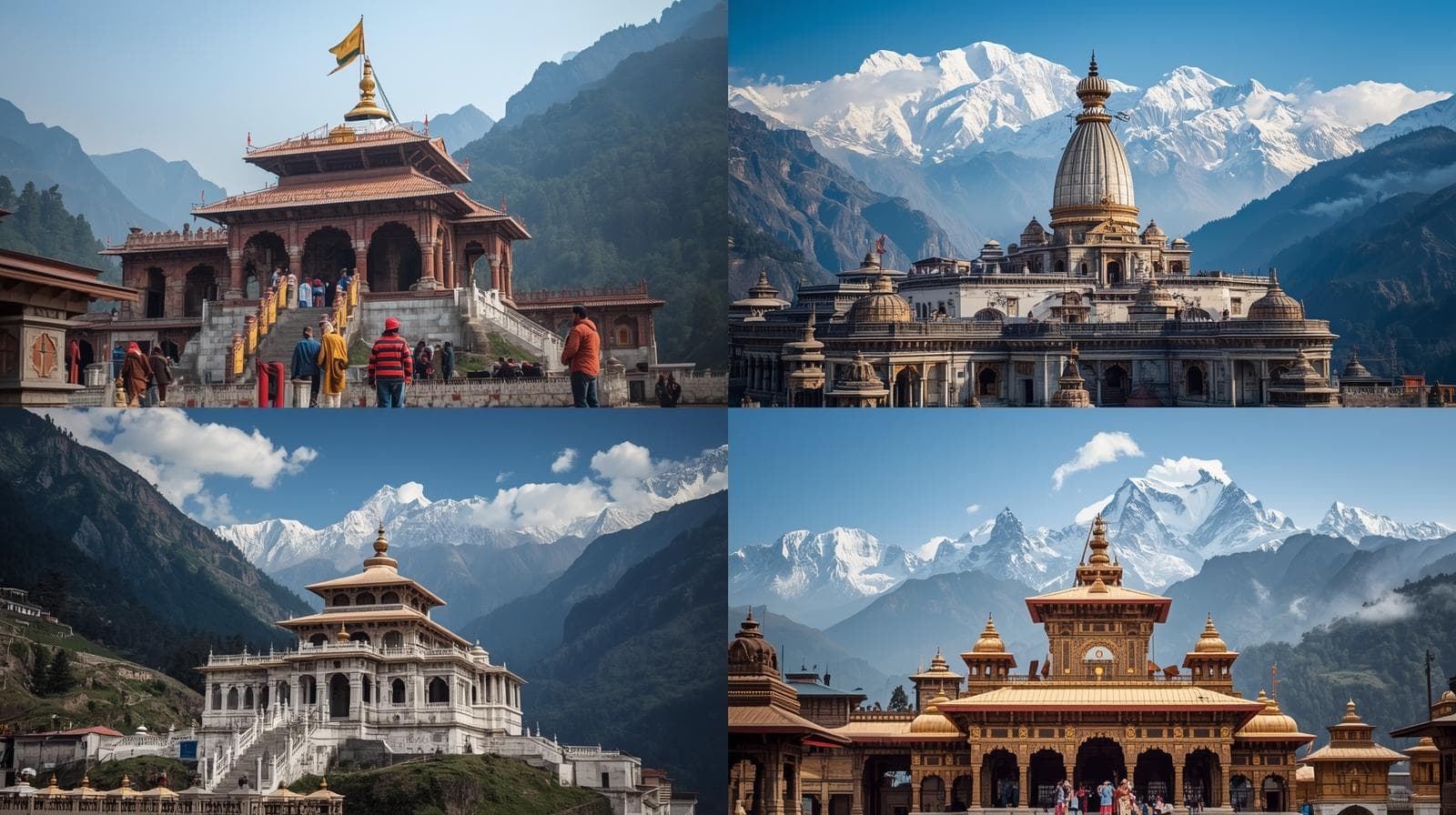

The Vaishno Devi shrine sits at about 1,560 m in the Trikuta hills, reached by a roughly 12 km climb from Katra. Every pilgrim must obtain a free yatra parchi — a registration slip — before starting, and the climb takes four to seven hours on foot. Ponies, palkis and battery cars cover parts of the route, and a helicopter runs from Katra to Sanjichhat, which cuts out about 9.5 km but still leaves a climb of roughly 2.5 km. Katra is about 50 km from Jammu.
The yatra parchi, which is not optional
Registration is compulsory and free. The slip is issued at the Yatra Registration Counter in Katra, or online in advance, and it is checked at the Banganga gate where the track begins. No slip, no entry — and in peak season the counters issue a limited number per day.
The slip has a validity window, usually a few hours from issue, within which you must cross Banganga. Collecting it and then having a long lunch can mean it lapses. Registering online before travelling is the simplest route and avoids the counter queue entirely.
The climb, described honestly
The track from Banganga to the Bhawan is about 12 km, paved throughout, lit at night, and covered in long stretches. It is a well-made path rather than a mountain trail — but it is 12 km of continuous uphill, and the gradient in the first few kilometres is the hardest part.
Four to seven hours is the normal range on foot. Fit walkers manage it faster; families with children and older pilgrims take longer and should plan for it. Most people walk through the night, starting around ten in the evening, which avoids the heat and puts them at the Bhawan for an early morning darshan.
Ardhkuwari, roughly halfway, is where the goddess is held to have sheltered for nine months, and the narrow Garbh Joon cave there has its own queue which can be long. Many pilgrims break the climb here.
There is a newer alternative route via Tarakote Marg, longer but gentler and less crowded, which many walkers now prefer.
| Covers | Note | |
|---|---|---|
| On foot | Full 12 km | Four to seven hours; the Tarakote route is gentler |
| Pony | Most of the route | Booked at fixed counters, not with individuals |
| Palki | Full route | Carried by four bearers; the costliest option |
| Battery car | Sanjichhat to Bhawan | Short section only, booked separately |
| Helicopter | Katra to Sanjichhat | Saves about 9.5 km; roughly 2.5 km still to walk |
What the helicopter actually saves
The helicopter runs from Katra to a helipad at Sanjichhat, a flight of a few minutes, and is the single most misunderstood part of the yatra. It does not deliver you to the shrine. From Sanjichhat there is still roughly 2.5 km of walking or a battery car ride to reach the Bhawan.
Tickets are booked online and sell out well ahead in peak season. Flights are weather-dependent and cancellations in poor visibility are common, which leaves booked pilgrims walking anyway — so the helicopter should be treated as a convenience rather than a guarantee.
For elderly pilgrims it transforms the yatra. For a fit person it saves time rather than effort.
At the Bhawan
The shrine itself is a cave in which the goddess is represented by three natural rock formations — the pindies — rather than an idol. Darshan is brief: the queue moves through the cave continuously and the time in front of the pindies is a matter of seconds.
Queue times vary enormously, from under an hour in a quiet period to many hours during Navratri. Lockers are available for bags, and phones, cameras, leather goods and prasad bought outside are not permitted inside.
Bhairavnath temple sits about 2 km above the Bhawan, a further steep climb, and tradition holds that the yatra is incomplete without visiting it. Many pilgrims take the ropeway that now covers this section.
When to go, and when not to
March to October is the general season. Navratri in spring and autumn brings enormous crowds — the shrine is among the most visited in India at the best of times and during Navratri the queues and the track become extremely congested.
Winter is cold with occasional snow at the Bhawan, and the crowds are at their thinnest; the climb is pleasant in the cold if you are equipped for it. Monsoon brings landslide risk on the approach roads to Katra and the track can be slippery.
If the choice is open, a weekday outside Navratri is a completely different experience from a festival weekend.
Getting to Katra
Katra is about 50 km from Jammu, roughly an hour and a half by road, and has its own railway station served by direct trains. Jammu airport is the nearest.
Accommodation in Katra ranges widely and fills during Navratri and holiday weekends. Most pilgrims leave luggage at their Katra hotel and climb with only essentials, which is the sensible arrangement.
Questions people ask
Is the yatra parchi really compulsory?
Yes. It is free, it is checked at the Banganga gate, and it has a validity window from the time of issue. Registering online before you travel avoids the counter queue.
Does the helicopter take me to the shrine?
No. It flies to Sanjichhat, leaving roughly 2.5 km still to cover on foot or by battery car. Flights are also weather-dependent and cancel often.
How long does the climb take?
Four to seven hours on foot over about 12 km of paved, lit and partly covered track. Many pilgrims walk overnight to avoid the heat.
When is it least crowded?
Weekdays outside Navratri, and winter. During Navratri the shrine is among the most congested places in India.