Introduction: Why Wedding Transportation Matters
Your wedding day is one of the most important days of your life, and every detail matters – including how you and your guests travel. Wedding transportation isn't just about getting from point A to point B; it's about creating memorable experiences, ensuring everyone arrives on time, and eliminating stress from an already busy day. In India, where weddings often span multiple days and venues, professional transportation becomes essential for a smooth celebration.
From the groom's grand baraat procession to shuttling guests between the wedding venue and hotel, transportation logistics can make or break the wedding experience. Poor planning leads to delayed ceremonies, stressed guests, and missed photo opportunities. On the other hand, well-organized transportation ensures your wedding flows seamlessly, allowing everyone to focus on celebration rather than logistics.
Understanding Your Wedding Transportation Needs
Mapping Your Wedding Events
Indian weddings typically involve multiple events across several days. Each event has unique transportation requirements. The sangeet and mehendi ceremonies might be at one venue, while the main wedding could be at a different location, and the reception at yet another. Create a complete list of all events, venues, and timings. This becomes your transportation planning foundation.
Consider the guest count for each event – intimate events like the mehendi might have 50-100 guests, while the main wedding could host 500 or more. The venues' accessibility matters too – a palace in Rajasthan has different access points than a farmhouse on Delhi's outskirts. Map out parking availability, entrance points for different vehicle types, and any venue-specific restrictions.
Categorizing Transportation Requirements
Wedding transportation typically falls into several categories, each with different requirements:
Bridal Party Transportation: The bride and her closest family need comfortable, often luxurious vehicles. The bride's car is particularly important – it should be spacious enough for elaborate lehengas, have good air conditioning, and provide a calm environment for the pre-ceremony journey. Consider vehicles like Toyota Innova Crysta or luxury sedans that combine comfort with space.
Groom's Baraat: The baraat is a celebration in itself. Beyond the groom's vehicle – traditionally decorated with flowers – you need vehicles for the baraat party. Depending on your style, this could range from vintage cars to luxury SUVs to the traditional ghodi (horse). Plan for the DJ vehicle, the band (if separate), and guest vehicles that follow the procession.
Guest Shuttles: Guests staying at hotels need transportation to venues. Rather than expecting everyone to arrange their own transport, providing shuttle services ensures timely arrivals and reduces parking chaos at venues. Identify hotel clusters and plan shuttle routes accordingly. Consider separate shuttles for elderly guests who might need earlier departure times.
Types of Wedding Vehicles
Luxury Cars for the Couple
The wedding car is one of the most photographed vehicles at any celebration. Popular choices include Mercedes-Benz E-Class or S-Class for contemporary elegance, BMW 5 Series or 7 Series for sporty luxury, Audi A6 or A8 for understated sophistication, and classic vintage cars for a royal touch. Consider your wedding theme when selecting – a palace wedding in Udaipur might call for a vintage Rolls Royce, while a modern Delhi wedding could feature a sleek Mercedes.
SUVs and Premium MPVs
For family members and the bridal party, premium SUVs and MPVs offer the perfect balance of space and comfort. The Toyota Innova Crysta remains a wedding favorite – it accommodates elaborate outfits, provides comfortable seating for 6-7 passengers, and maintains an elegant appearance. For larger groups, the Toyota Fortuner or similar SUVs add a premium touch.
Buses and Coaches
For guest transportation, mini-buses (18-25 seaters) and large coaches (40-50 seaters) provide economical and efficient solutions. Modern coaches come with air conditioning, comfortable seating, and entertainment systems. For long-distance guest transport – like bringing relatives from another city – luxury coaches ensure guests arrive refreshed rather than tired.
Tempo Travelers
The versatile tempo traveler (12-17 seaters) bridges the gap between cars and buses. It's perfect for close family groups, wedding photographers and videographers team, or smaller guest groups. The compact size allows access to venues where large buses can't enter, while still providing group transportation efficiency.
Planning Wedding Transportation: Step by Step
Step 1: Create a Transportation Timeline
Work backward from your ceremony time. If the wedding is at 7 PM, and guests need 30 minutes to settle in, shuttles should arrive by 6:15 PM. If the hotel is 45 minutes away, departure should be at 5:30 PM. Add buffer time for traffic, especially in cities like Delhi and Mumbai. Create similar timelines for every event and every group requiring transportation.
Step 2: Guest Transportation Survey
Include transportation questions in your RSVP. Ask guests about their accommodation location, whether they need transportation, any mobility requirements, and preferred pickup points. This data helps you plan efficient routes and appropriate vehicle types. For destination weddings, ask about arrival dates and flight timings to arrange airport transfers.
Step 3: Select Your Transportation Partner
Choosing the right transportation provider is crucial. Look for companies with wedding experience – they understand the unique requirements like decorated vehicles, flexible timing for delayed ceremonies, and the need for immaculate presentation. Check their fleet quality, read reviews from other weddings, and ask for references. Ensure they have backup vehicles available for emergencies.
Step 4: Book Early and Confirm Details
Wedding season (October to February) sees high demand for quality vehicles. Book at least 2-3 months in advance for regular vehicles, and 4-6 months for specialty vehicles like vintage cars or luxury limousines. Confirm all details in writing – vehicle types, quantities, timing, decoration requirements, driver dress code, and contact numbers for the wedding day.
Step 5: Assign a Transportation Coordinator
Designate someone (not the couple!) to manage transportation on the wedding day. This coordinator should have the complete transportation schedule, all driver contact numbers, guest pickup lists, and authority to make decisions if changes are needed. Many professional transportation companies provide their own coordinators for large wedding bookings.
Wedding Transportation Costs and Budgeting
Cost Factors
Wedding transportation costs depend on multiple factors. Vehicle type significantly impacts pricing – a luxury sedan costs more than a standard sedan. Duration matters – full-day bookings are priced differently than hourly rentals. Distance affects fuel and driver costs. Special requirements like decoration, vintage vehicles, or specific driver attire add to expenses. Wedding season rates are typically 20-30% higher than off-season.
Budgeting Guidelines
As a general guideline, allocate 3-5% of your total wedding budget for transportation. For a ₹25 lakh wedding, this means ₹75,000 to ₹1,25,000 for transportation. This should cover the couple's vehicles, immediate family transport, and basic guest shuttles. Luxury vehicles and extensive guest transportation can push this higher.
Money-Saving Tips
Consolidate transportation needs – fewer, larger vehicles often cost less than multiple smaller ones. Book package deals that include multiple events. Consider local vehicles at destination wedding locations rather than transporting vehicles from your city. Share shuttle services with nearby hotels. Book early to avoid last-minute premium pricing.
Destination Wedding Transportation
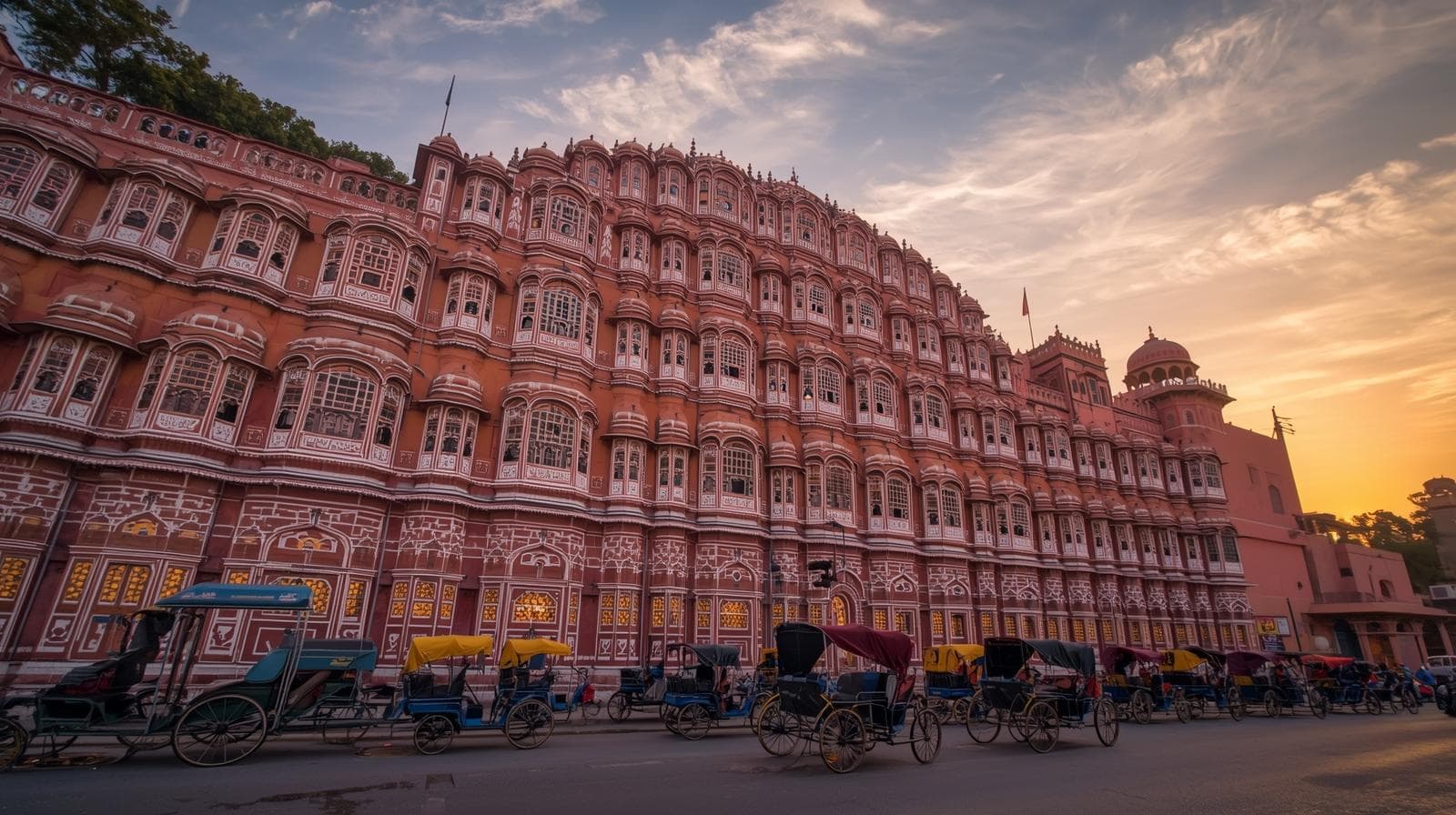
Destination weddings in places like Udaipur, Jaipur, Goa, or Kerala require specialized transportation planning. Guests need airport transfers, hotel-to-venue transportation for multiple events, and often sightseeing arrangements. Work with transportation providers who understand the local terrain – the narrow lanes of old Jaipur or the hilly roads of Udaipur require experienced drivers.
For palace and resort weddings, coordinate with the venue about vehicle access. Many heritage properties have restrictions on vehicle types or parking locations. Some venues provide internal transportation (golf carts, tuk-tuks) that can be incorporated into your plan. Consider the distance from the nearest airport – Udaipur airport is 30 minutes from the lake palaces, while the Jaipur airport is about 40 minutes from central hotels.
Wedding Day Transportation Tips
For the Couple
Have your vehicle arrive at least 30 minutes before you need to leave. Ensure the car is cool (or warm in winter) and has water bottles and tissues. If wearing heavy jewelry or an elaborate outfit, check the vehicle's interior space. Assign someone to help with lehenga/sherwani while getting in and out. Keep a small emergency kit in the car – safety pins, stain remover, and basic makeup for touch-ups.
For Guest Transportation
Clearly communicate pickup times and locations to guests through WhatsApp groups, printed cards, or wedding website. Have signs at pickup points. Ensure elderly and mobility-impaired guests have appropriate assistance. Keep extra capacity for guests who miss scheduled shuttles. Provide water bottles in guest vehicles for hot weather weddings.
For Baraat
Coordinate baraat timing with wedding venue and bride's family. Brief the baraat vehicles about the route and expected stops. Ensure the DJ/band vehicle leads at appropriate pace. Have a coordinator with the baraat to manage timing. Plan for the baraat to arrive with buffer time – waiting is better than rushing the bride's family.
Common Wedding Transportation Mistakes to Avoid
Underestimating time: Traffic during wedding season is unpredictable. Always add 30-50% buffer time to your estimates.
Ignoring guest needs: Not everyone can arrange their own transport. Elderly guests, those from out of town, and those unfamiliar with the city need assistance.
Booking late: Quality vehicles get booked early, especially during wedding season. Don't wait until the last month.
No backup plan: Vehicle breakdowns happen. Ensure your provider has backup options and a clear plan for emergencies.
Poor communication: Drivers should have complete information – venue addresses, contact numbers, parking instructions, and any special requirements.
Conclusion
Wedding transportation, when planned thoughtfully, becomes an invisible enabler of your perfect day. Guests arrive relaxed, ceremonies start on time, and the couple can focus on celebrating rather than logistics. The investment in professional wedding transportation pays dividends in reduced stress, better experiences, and those perfect getaway photos with a beautiful vehicle.
Start your transportation planning early, choose an experienced provider, and communicate clearly with all stakeholders. Your wedding day will flow smoothly, and you'll create beautiful memories – some captured with stunning vehicles in the background.
Plan Your Perfect Wedding Transportation
From baraat cars to guest shuttles, we handle all your wedding transportation needs. Call 7668570551 for a customized quote.
Wedding & Event Transportation Services
- Wedding Car Rental Services — Decorated luxury cars for your big day
- Car Decoration Packages
- Doli Car Rental — Bridal car with premium decoration
- Baraat Tempo Traveller — Group transport for baraat party
- Wedding Cars in Delhi
- Wedding Cars in Jaipur
- Wedding Cars in Udaipur — Destination wedding transport
- Wedding Transportation Service
- Destination Wedding Transport
- Tempo Traveller Rental — Guest shuttle for weddings