
Best time to visit Amritsar,and the Golden Temple by season
The best time to visit Amritsar is November to March, when the days sit between 5°C and 20°C and the Golden Temple is at its most comfortable to walk barefoot. February is the sweet spot, after the December and January fog has lifted and before the heat starts in April. May to September is the off-season: 40°C to 45°C in May and June, then a humid monsoon from July. Delhi to Amritsar is 450 km and seven to eight hours on NH-44, ₹4,950 one-way for a sedan at ₹11/km, and the fare is the same in every month.
Updated · Fares from the published rate card, Sedan ₹11/km to Tempo ₹23/km
- Best months
- November to March
- Hottest
- May–June · up to 45°C
- Delhi to Amritsar
- 450 km · 7–8 hrs
- Sedan, one-way
- ₹4,950
Amritsar has a Punjab plains climate, which means it does everything to excess: foggy winter mornings you cannot see the far side of the sarovar through, summer afternoons that empty the parikrama, and a monsoon that fills the tank to the brim. The Golden Temple is open through all of it, the langar never stops, and the Wagah ceremony happens every evening of the year. What changes with the season is how pleasant each of those things is, how long the queue for the sanctum runs, and what time the border ceremony starts.
This page takes the year in four parts and, within each, says what the Golden Temple, Wagah, the food lanes and the hill day trips are like then. The month-by-month table under the season cards gives the temperatures and the verdict at a glance. Every fare comes from the published rate card: Sedan ₹11/km, Ertiga or SUV ₹15/km, Innova Crysta ₹18/km and a 12-seater Tempo Traveller ₹23/km, on a 300 km per day minimum for outstation trips, with tolls and parking at actual. There is no seasonal or festival surcharge.
November to February
Winter: the season Amritsar is built for, fog and all
Daytime 15°C to 20°C, nights down to 5°C, and dense fog on most December and January mornings. Crowds are at their highest, with Bandi Chhor Divas on 8 November 2026, Guru Nanak Jayanti on 24 November 2026 and the Christmas to New Year week the three peaks.
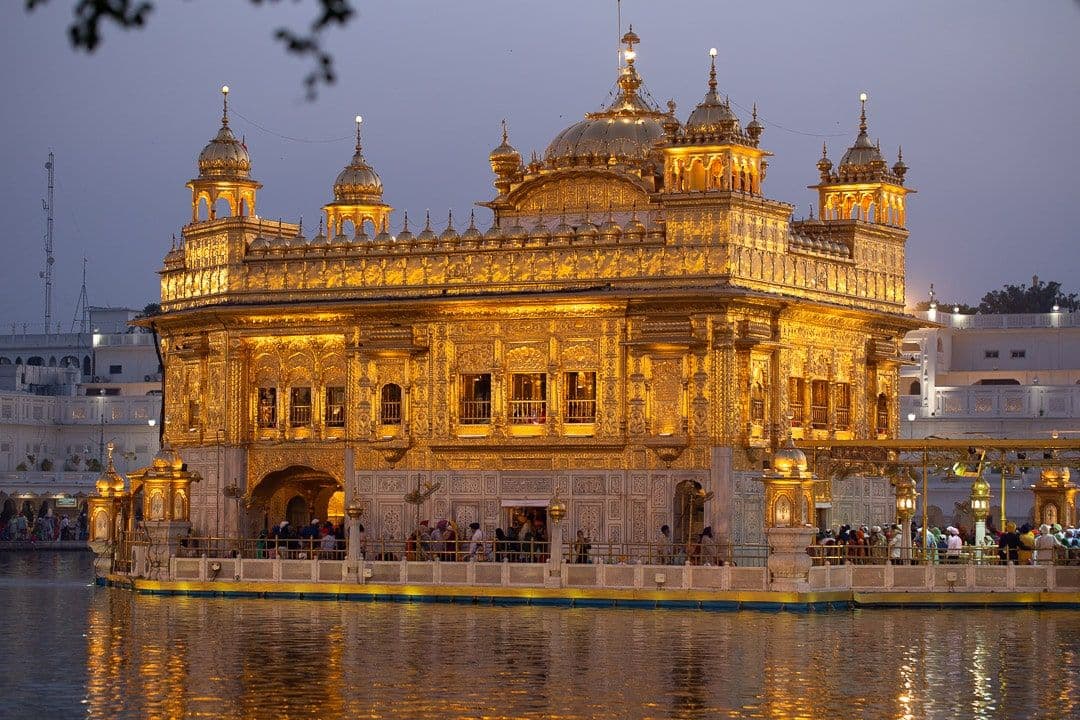
Golden Temple in winter
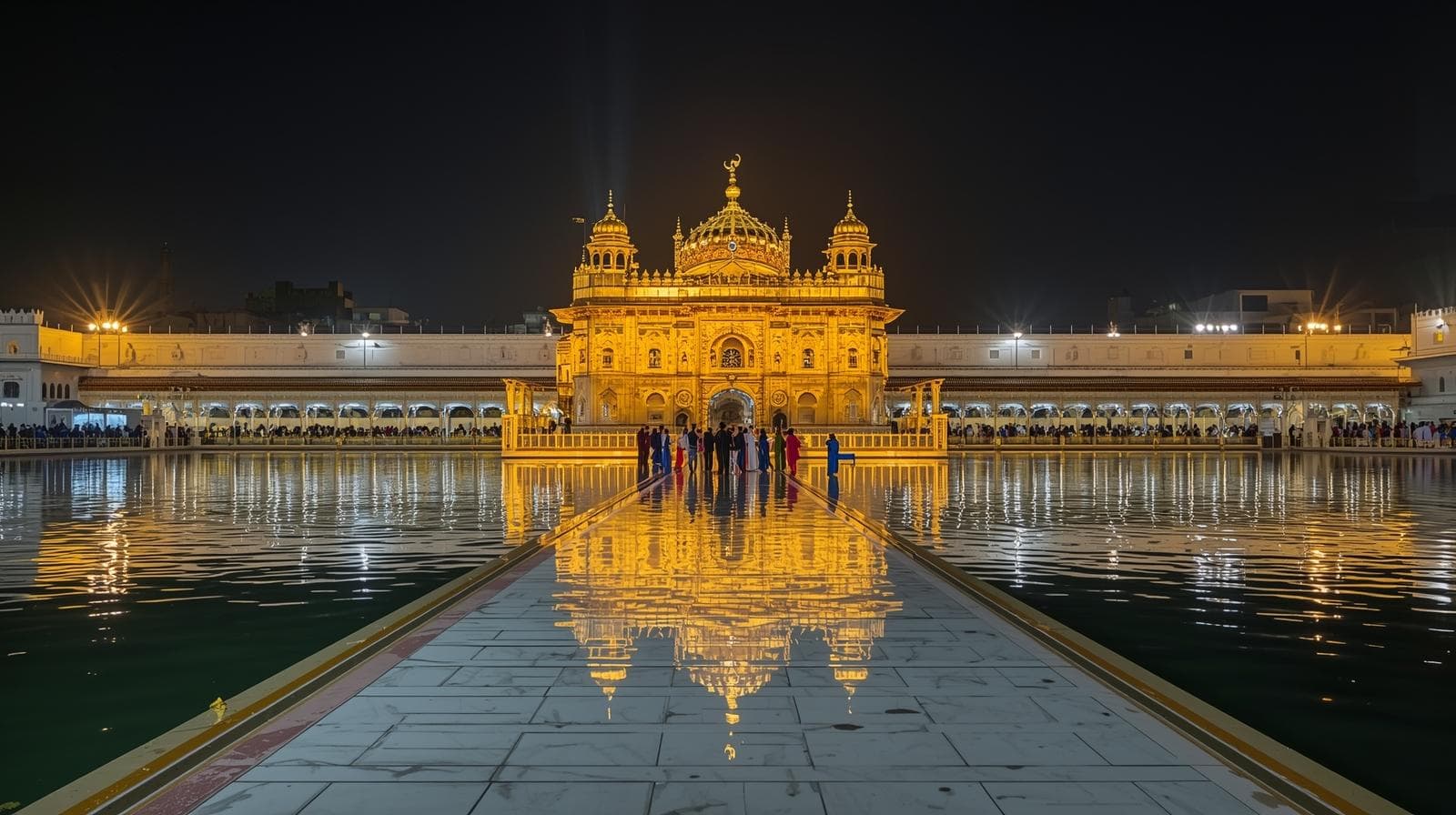
Evenings and late nights
The cool months are when the marble parikrama is pleasant underfoot and the complex is at its most crowded. Go after eight in the evening, when the day visitors have left and the lamps are lit, or before dawn for the palki ceremony that brings the Guru Granth Sahib into the sanctum. The sanctum queue on a winter weekend can run two to three hours; a weekday night is a fraction of that.
- Lamps from dusk
- Late-night palki ceremony
- Langar all day
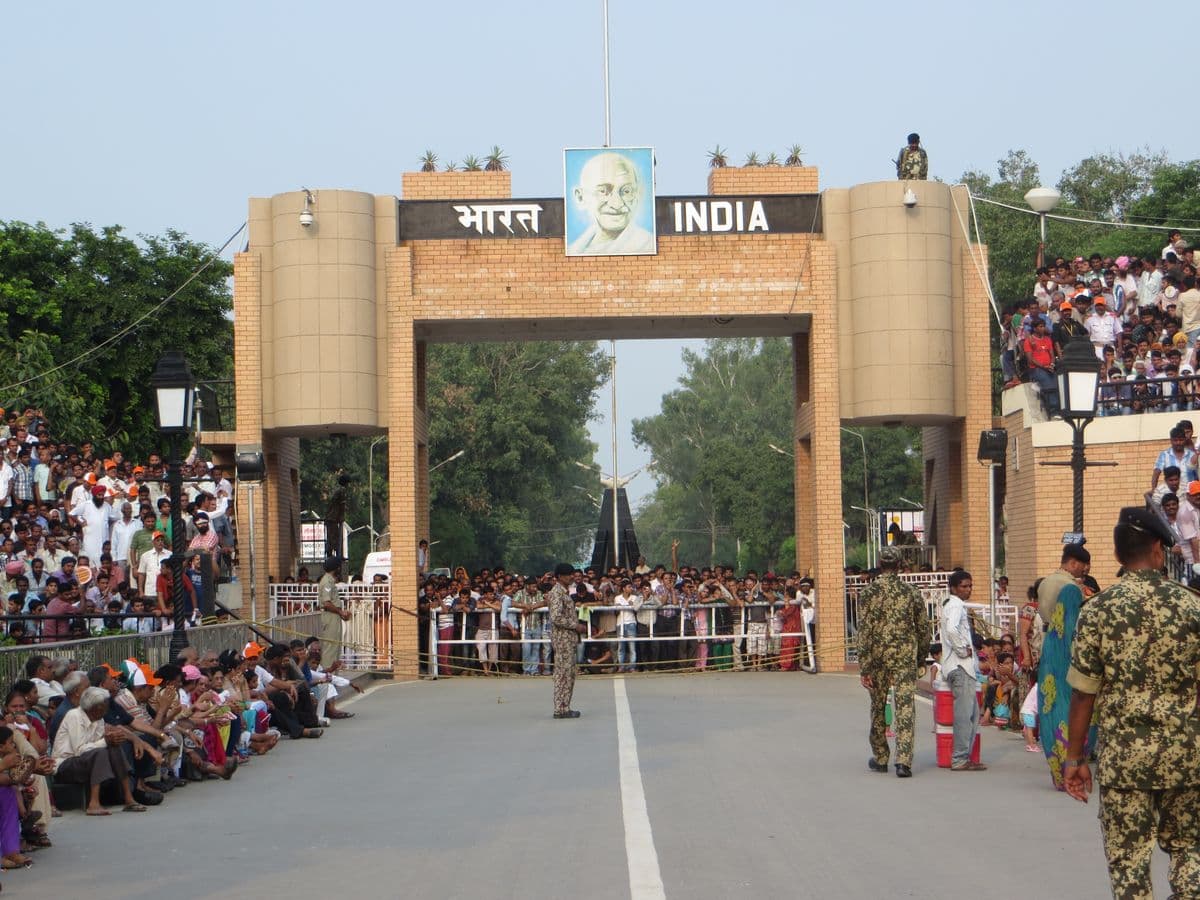
Wagah in winter
Ceremony about 4.15–4.30 pm
The ceremony starts about an hour before sunset, which in December and January means around a quarter past four. The stands face west and are cold once the sun drops, so carry a layer. The half-day cab waits through the ceremony and has you back at the Golden Temple by seven, in time for the lamps.
- Retreat before sunset
- Be seated by 3
- Warm layer for the stands
The food lanes in winter
Sarson da saag, kulcha, gajar halwa
Winter is the season the Amritsari kitchen was made for: sarson da saag with makki di roti, kulcha straight from the tandoor with chole, and gajar halwa and hot jalebi after the evening at the temple. Everything worth eating is within a short walk of the complex, and the cold makes the walk part of the pleasure.
- Kesar da Dhaba
- Kulcha breakfasts
- Hot jalebi at night
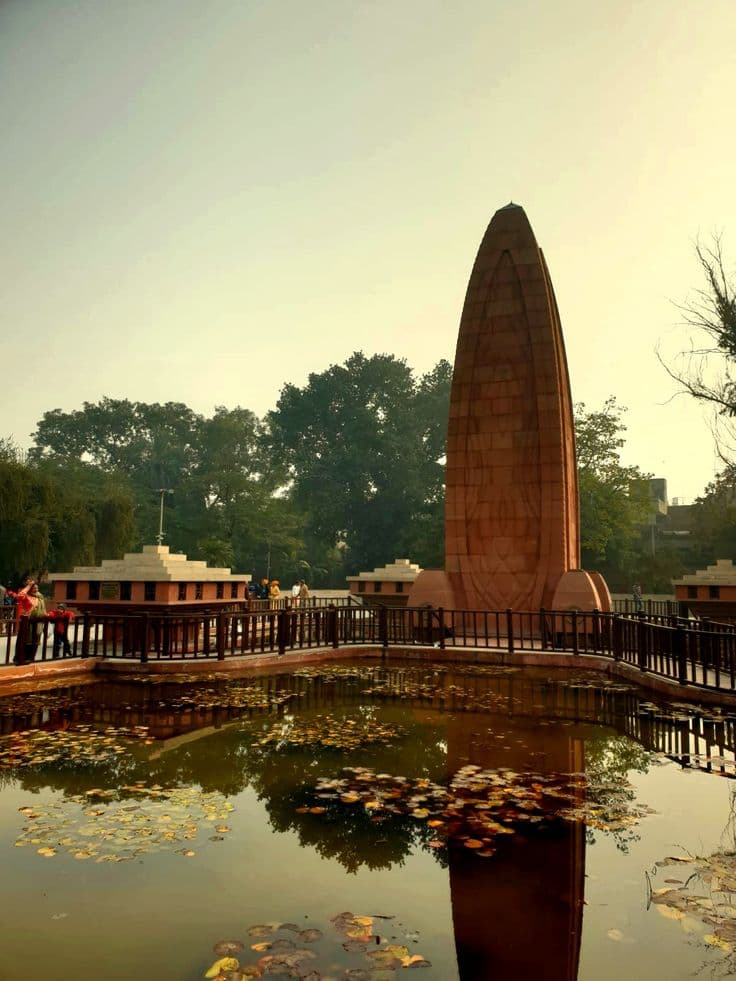
Jallianwala Bagh
A daylight hour on the same visit
The memorial garden is a short walk from the temple entrance and is best seen in daylight, so do it on the way to or from the Golden Temple rather than as a separate outing. In the fog season the late morning is the clearest hour for it.
- Martyrs’ well
- Bullet-marked wall
- Flame of Liberty
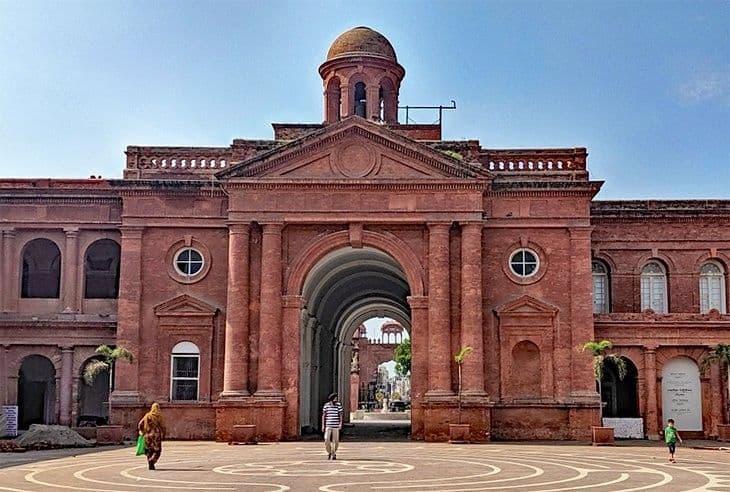
Partition Museum on a foggy morning
Indoors while the fog burns off
On a December morning the fog can sit until eleven, and the museum in the old Town Hall is the right use of those hours: two floors of oral histories and objects from 1947, walking distance from the temple along the pedestrian Heritage Street. Come out to a cleared sky and a warm afternoon.
- Oral histories
- Refugee belongings
- Heritage Street walk
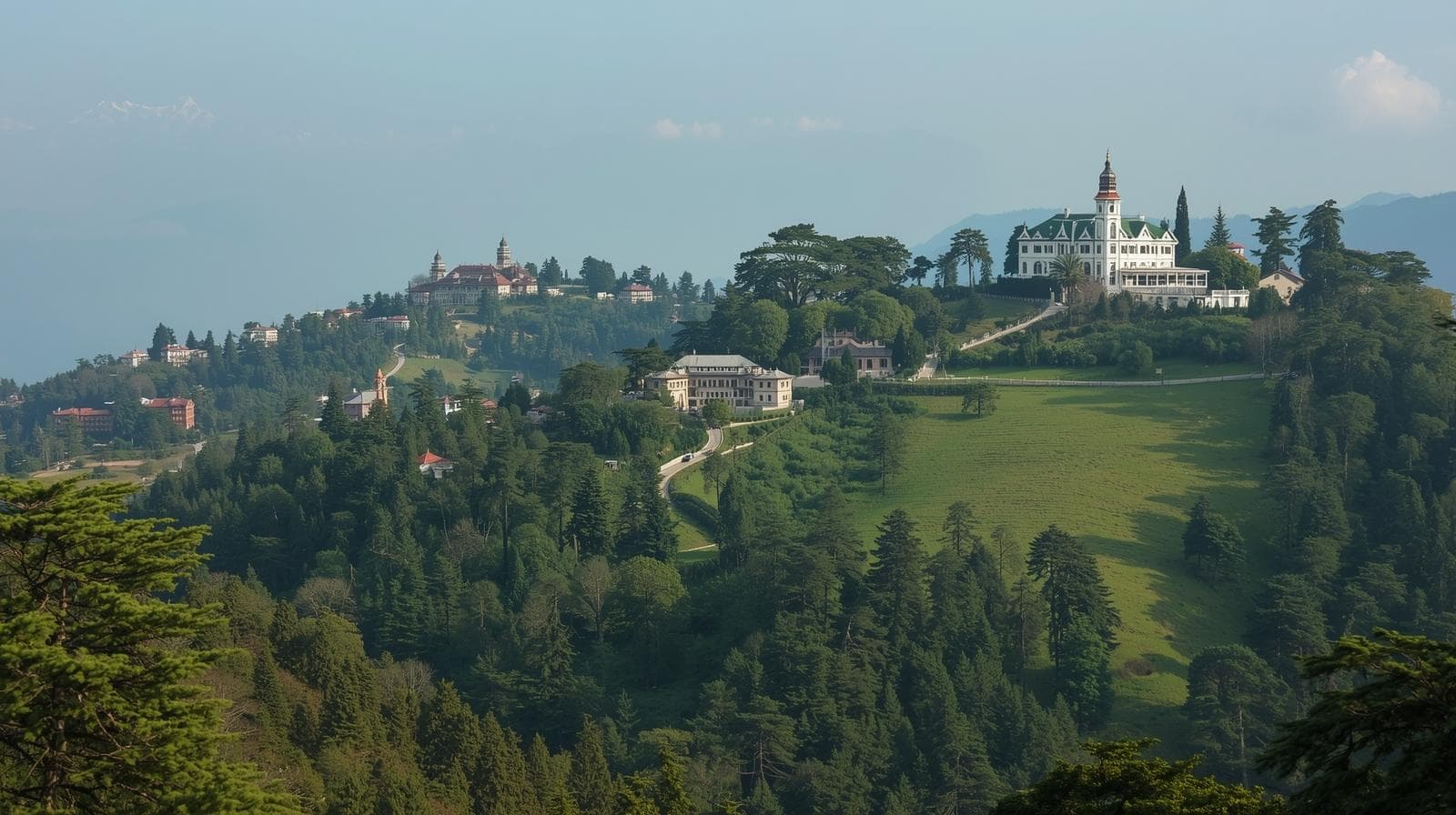
Dalhousie for snow
Snow from late December
The nearest hill station, four and a half hours via Pathankot, usually has snow between late December and February. Add two nights to a winter Amritsar trip and the same car takes you up; Khajjiar is twenty kilometres beyond and the road can close after a heavy fall, so ask the driver on the day.
- Snow on the Mall
- Khajjiar meadow
- Dainkund walk
March to April
Spring and Baisakhi: warm days, the harvest, and the last comfortable weeks
March is 15°C to 28°C and about the best weather of the year. April climbs to 35°C by the end, but Baisakhi in the middle of the month is the biggest day of the Sikh calendar and the reason to come.
Golden Temple at Baisakhi
The founding of the Khalsa
Baisakhi marks the harvest and the founding of the Khalsa in 1699, and the Golden Temple is at the centre of it: processions through the old city in the days before, kirtan through the night, and a langar that feeds more people than on any other day. Expect the sanctum queue to match Diwali. The Baisakhi cab page has the arrangements for the week.
- Nagar kirtan
- Kirtan through the night
- Largest langar of the year
Wagah in spring
Ceremony about 5–5.30 pm
As the days lengthen the ceremony moves later, to about five by the end of March and half past five once summer timings begin. March is the most comfortable month in the stands; by mid-April the afternoon sun is strong and a hat and water matter more than a layer.
- Later start as days lengthen
- Warm stands by April
- Arrive 90 min before
Jallianwala Bagh in April
The 13 April anniversary
The massacre of 13 April 1919 happened on Baisakhi day, and the anniversary falls in the same week as the festival. The garden is busiest and most moving then; a morning visit before the heat is the right way to do it.
- Anniversary observances
- Morning visit
- Pairs with the temple
The food lanes in spring
Kulcha and lassi before the heat
The kulcha shops are at their best before nine, and by April that is also the only cool hour of the day. A lassi thick enough to stand a spoon in is the Amritsar answer to the first warm afternoons; the fish and tandoori lanes come alive again after sunset.
- Kulcha breakfast
- Lassi in a steel glass
- Fish tikka at dusk
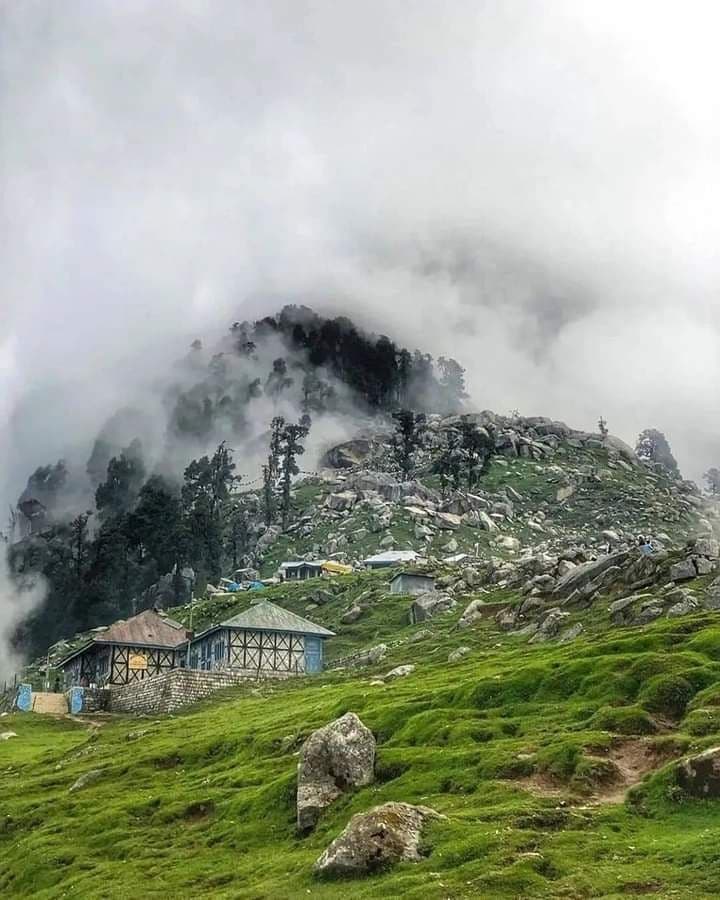
McLeodganj in spring
Clear Dhauladhar views
March and April are when the Dhauladhar is still white above a green Kangra valley and the Triund trail has just reopened. Dharamshala is the same 200 km from the Golden Temple as Dalhousie, on the Kangra road from Pathankot, and a two-night add-on to an Amritsar trip.
- Dalai Lama Temple
- Bhagsu walk
- Triund trek opens
May to September
Summer and monsoon: the off-season, and how to do it anyway
May and June reach 42°C to 45°C with almost no visitors. The monsoon arrives in early July and runs to September, 25°C to 35°C and humid, with the sarovar full and the odd Wagah evening rained on.
Golden Temple before sunrise
The only cool hours of a summer day
In summer the temple is a dawn-and-night place. Be inside by five for the morning palki ceremony, when the marble is still cool and the queue is minutes long; by ten the parikrama is too hot to stand on outside the matting strips. Come back after nine at night, when the stone has cooled and the complex is nearly empty. The monsoon softens all of this, and a full sarovar under a grey sky is a sight the winter visitor never sees.
- Palki ceremony before dawn
- Matting on the marble
- No queue at 5 am
Partition Museum in the afternoon
Indoors from noon to four
The middle of a summer day is for the museum: the galleries in the Town Hall are the only place in the old city where a July afternoon is comfortable, and the collection needs the two hours you will want to spend out of the sun anyway.
- Air-conditioned galleries
- 1947 oral histories
- Cafés on Heritage Street
Wagah in the heat and the rain
Ceremony about 5.30 pm
Summer timings put the ceremony at about half past five, and the stands are in full sun until it starts. Go anyway, but arrive no earlier than you must and drink water. In the monsoon a heavy shower can shorten or interrupt the ceremony, so treat it as a bonus rather than the fixed point of the day.
- Open stands, full sun
- Water and a hat
- Rain can cut it short
The food lanes in summer
Lassi, phirni, night kulcha
The lanes shut down in the afternoon and reopen after dark, which is when the summer visitor should eat. Lassi and phirni in clay bowls carry the season; in the monsoon every corner fries pakoras the moment the rain starts.
- Chilled phirni
- Lassi by the litre
- Pakoras in the rain
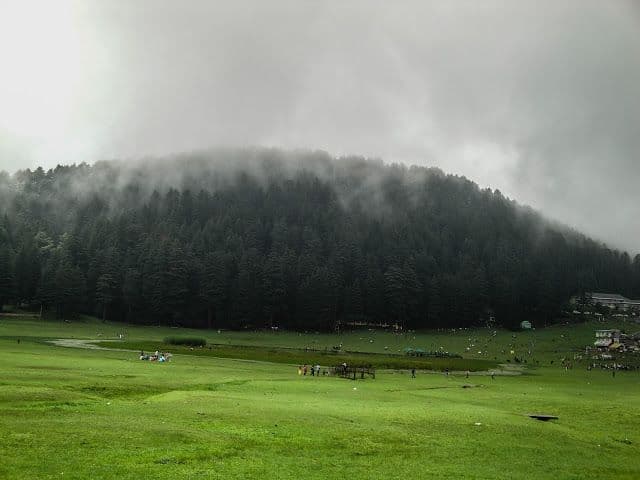
Khajjiar meadow, the escape
Twenty degrees cooler than the plain
The honest advice for a June visit is to give Amritsar a night and spend the rest in the hills. Khajjiar, twenty kilometres beyond Dalhousie, is the closest green meadow to the Punjab plain and twenty degrees cooler than the sarovar at noon. The Dalhousie–Khajjiar tour runs from Amritsar.
- Meadow and lake
- Kalatop forest
- Dalhousie on the way
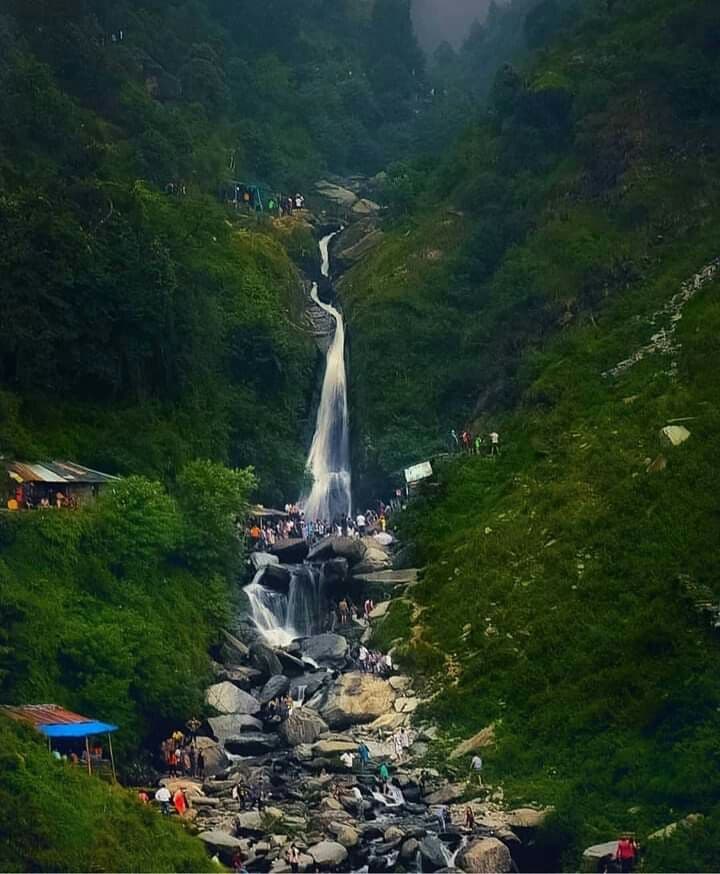
Bhagsu waterfall in the monsoon
Waterfalls at full flow
July and August turn the Kangra hills green and the Bhagsu waterfall above McLeodganj into something worth the walk. The road from Pathankot is fine in ordinary rain; after a very heavy spell the driver checks for landslide closures before leaving Amritsar.
- Bhagsu falls
- Mist over the Dhauladhar
- Landslide checks on the day
October
October: the shoulder month that beats the peak
The rain has gone, the fog has not come, and the days are dry at around 30°C with evenings under 20°C. Dussehra falls on 20 October 2026, and the crowds only build after Diwali in November.
Golden Temple in October
Clear skies, short queues
If you can choose freely, choose October. The sky is the clearest of the year, the parikrama is warm rather than hot, and the queue for the sanctum on a weekday is under an hour. The Diwali and Gurpurab surge is still a month away.
- Clean light for photographs
- Warm marble, cool evenings
- Pre-Diwali calm
Wagah in October
Ceremony about 4.30–5 pm
With sunset creeping earlier the ceremony moves back towards half past four through the month. Evenings are dry and mild, the best conditions of the year for the stands, and the weekend crowd is Punjab’s own rather than the winter tourist wave.
- Timing moves earlier
- Dry evenings
- Stands fill on weekends
Jallianwala Bagh and the old city on foot
Walking weather
October is the month for the old city on foot: the Bagh, the Heritage Street to the Town Hall, the katras and the smaller gurdwaras, none of which is pleasant to walk between in June or in the fog. Two hours in the morning and two in the late afternoon cover it.
- Jallianwala Bagh
- Heritage Street
- Gurdwaras of the old city
The food lanes in October
Everything, at any hour
The one month you can eat kulcha at nine, fish tikka at eight and jalebi at eleven without the weather having a say. The sweet shops start their Diwali stock in the last week and the old city smells of ghee.
- Kulcha mornings
- Fish and tikka evenings
- Sweet shops before Diwali
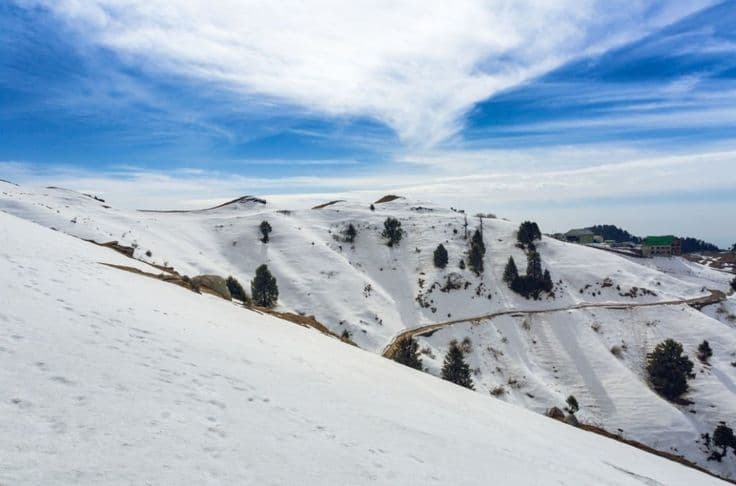
Dainkund, clear October hills
The clearest mountain views of the year
After the monsoon washes the dust out of the air, October gives the Dhauladhar and the Pir Panjal their sharpest outlines. Dalhousie and the Dainkund walk are at their best; the same three-day cab that brings you from Delhi can carry on up.
- Dainkund walk
- Post-monsoon clarity
- Before the snow
Amritsar month by month
Temperatures are the usual range for the month on the Punjab plain. Wagah timings are approximate; the ceremony always starts about an hour before sunset and the exact time is set by the BSF for each period.
| Month | Temperature | Weather | Golden Temple crowds | Wagah ceremony | Verdict |
|---|---|---|---|---|---|
| January | 5–15°C | Cold, dense morning fog | High; Lohri week busy | About 4.15 pm | Good, plan around fog |
| February | 8–20°C | Fog lifting, clear cool days | High on weekends | About 4.30 pm | Best month |
| March | 15–28°C | Warm days, cool nights | Medium; Holi weekend busy | About 5 pm | Excellent |
| April | 20–35°C | Hot by the end of the month | Peak at Baisakhi mid-month | About 5.30 pm | Good, come for Baisakhi |
| May | 25–42°C | Hot and dry | Low | About 5.30 pm | Dawn and night only |
| June | 28–45°C | Hottest month, loo winds | Low | About 5.30 pm | Avoid, or pair with the hills |
| July | 27–36°C | Monsoon arrives, humid | Medium | About 5.30 pm, rain risk | Bearable, sarovar full |
| August | 26–35°C | Humid, heavy showers | Medium | About 5.30 pm, rain risk | Bearable |
| September | 25–34°C | Rain tails off, still humid | Medium to low | About 5 pm | Improving |
| October | 18–32°C | Dry, clear, mild evenings | Medium; builds after Dussehra | About 4.30–5 pm | Excellent, the quiet best |
| November | 10–25°C | Cool and clear, fog from the end | Peak: Diwali 8 Nov, Gurpurab 24 Nov | About 4.30 pm | Excellent, book early |
| December | 5–18°C | Cold, fog from mid-month | High; Christmas to New Year full | About 4.15 pm | Good, plan around fog |
Festival dates are for 2026: Baisakhi in mid-April, Dussehra 20 October, Diwali and Bandi Chhor Divas 8 November, Guru Nanak Jayanti 24 November. Cab fares are the same rate card in every row.
The answer
Which month is actually the best for the Golden Temple?
February, with October a close second. November to March is the season everybody quotes, and it is right as far as temperature goes: the marble parikrama, which you walk barefoot, is comfortable from November to March and a trial in any other month. But the winter has a flaw the templated advice never mentions, and that is fog. From the middle of December to the end of January most mornings in Amritsar begin under a white blanket that can hide the sanctum from the far side of the sarovar and can hold until eleven. It is atmospheric once, and a nuisance on a two-day visit. February is the month the fog has gone and the heat has not arrived; the days reach 20°C, the nights are cool rather than cold, and the evening at the temple needs one layer, not three.
October wins on the other axis, crowds. The monsoon has finished, the sky is the clearest of the year, and the festival surge of November has not begun, so a weekday visit in October gets you into the sanctum in under an hour where a winter weekend can take three. The trade is a warmer afternoon, around 30°C, which the temple handles with evening and dawn visits anyway.
Whatever month you choose, the Golden Temple is best seen twice: once after dark, when the lamps are lit and the day visitors have gone, and once before dawn, for the ceremony that carries the Guru Granth Sahib from the Akal Takht into the sanctum. Both timings move with the season, earlier in the morning and later at night through summer, so ask at the information office on arrival.
Golden Temple · all yearCrowds
How do the crowds change through the year, and when is it quietest?
The Golden Temple is never empty, but its crowd moves in three waves. The first is the winter tourist season, November to February, when school holidays, weddings in Punjab and the pleasant weather bring the largest numbers; weekends and the Christmas to New Year week are the heaviest. The second is the festival calendar: Bandi Chhor Divas, which coincides with Diwali and falls on 8 November 2026, when the complex is lit with lamps and fireworks and the queue for the sanctum runs through the night; Guru Nanak Jayanti on 24 November 2026, Kartik Purnima, with nagar kirtan processions through the old city in the days before; and Baisakhi in mid-April. The third, smaller wave is Punjab’s own long weekends, which fill Wagah as much as the temple.
The quiet months are May, June and the first half of September, for the simple reason that the plain is too hot or too humid for most visitors. If you can tolerate a dawn start and a late night, a June visit gives you the sanctum with a queue of minutes and a parikrama you share with pilgrims rather than tour groups. The langar runs at full strength in every month; the kitchen does not have an off-season.
For the two November festivals the practical advice is about the cab, not the temple: the old city is closed to vehicles for the evening, hotels within walking distance sell out weeks ahead, and the drive from Delhi on the day before Diwali is the slowest of the year on NH-44. Book the car and the room together, and arrive a day early. The Gurpurab transport page and the Diwali packages guide cover the arrangements for both dates.
- Peak crowds: weekends from November to February, Diwali and Bandi Chhor Divas (8 November 2026), Guru Nanak Jayanti (24 November 2026), Baisakhi (mid-April), Christmas to New Year.
- Quietest: May, June, early September, and any weekday in October.
- Shortest sanctum queue on any day: after nine at night, or before six in the morning.
Wagah
When is the Wagah ceremony, and does the season change it?
The beating retreat at the Attari–Wagah border happens every evening of the year and always begins about an hour before sunset, which is why the clock time moves with the season: roughly a quarter past four in December and January, half past four in late autumn and early spring, and half past five once summer timings begin around April. The BSF fixes the exact time for each period, and the driver knows the current one. Seating is free and on a first-come basis, and the stands fill an hour or more before the start on winter weekends, so the sister page on places within 50 km of Amritsar is right to say be seated by half past three in winter.
Season changes the experience more than the schedule. In winter the stands face a setting sun and then turn cold within minutes of it dropping; a warm layer matters. From April to June they are in full sun until the ceremony begins, and the sensible plan is to arrive as late as the seating allows, with water and a hat. In the monsoon a heavy shower can interrupt or shorten the ceremony, and while it is rarely cancelled outright, July and August are the months to treat it as a bonus. October and February are the two months when the stands are simply pleasant.
From the Golden Temple the border is 30 km and about forty-five minutes west on the Attari road. It fits the 4 hour / 40 km local package, ₹2,200 for a sedan with kilometres beyond the forty at ₹11/km, and the car waits in the border parking and brings you back to the temple for the evening lamps. An Ertiga is ₹2,500 on the same package, an Innova Crysta ₹2,800.
Wagah · 30 kmThe drive
What does the Delhi to Amritsar drive cost, and does the season change the fare?
Delhi to Amritsar is about 450 km on NH-44, the Grand Trunk Road, through Panipat, Karnal, Ambala, Ludhiana and Jalandhar, and takes seven to eight hours with a breakfast halt at Murthal and a fuel stop beyond Ludhiana. It is six lanes almost the whole way and the fastest long drive out of Delhi. Chandigarh to Amritsar is 230 km and about four hours on the same highway.
The fare does not change with the season. A sedan is ₹11/km, so the one-way drop is ₹4,950; an Ertiga at ₹15/km is ₹6,750, an Innova Crysta at ₹18/km is ₹8,100 and a 12-seater Tempo Traveller at ₹23/km is ₹10,350. A three-day round trip, which is the usual shape of an Amritsar visit with the driver staying for the Wagah run and the sightseeing, bills the greater of twice the one-way fare or three days at the 300 km minimum; for the 450 km drive the two come out the same, ₹9,900 for a sedan, ₹13,500 for an Ertiga, ₹16,200 for an Innova Crysta and ₹20,700 for the Tempo Traveller. From Chandigarh (230 km) the one-way sedan fare is ₹3,300, billed on the 300 km minimum. Tolls on NH-44 and parking are paid at actual; there is no festival or winter surcharge, though the fleet books out early for Diwali, Gurpurab and Baisakhi.
What the season does change is the drive itself. In the fog window from mid-December to the end of January, visibility on the stretch between Karnal and Ludhiana can drop to a few car lengths before nine in the morning, and the honest advice is to leave Delhi at seven rather than four and accept a lunchtime arrival, or to travel after the fog burns off. In summer the drive is best done before the heat of the afternoon; the car is air-conditioned but the halts are not. The monsoon rarely troubles the highway.
The hills
Is it worth adding the hills to an Amritsar trip, and in which season?
Yes, in every season except the fog, and the season decides which hill. Dalhousie and Dharamshala are both about 200 km and four and a half hours from the Golden Temple, the first via Pathankot and Banikhet, the second on the Kangra road, and either bills the 300 km minimum, ₹3,300 one-way for a sedan. In winter the reason to go up is snow, which Dalhousie and Khajjiar usually have from late December to February. In summer the reason is the twenty degrees you lose between the sarovar and the Khajjiar meadow, which turns a June Amritsar visit from an ordeal into a night on the plain and two in the cool. In October the reason is the view: the monsoon has cleared the air and the Dhauladhar stands sharp above the Kangra valley.
The shape that works is three or four days with the same car: Delhi to Amritsar on day one, the Golden Temple and Wagah on day two, up to Dalhousie or McLeodganj on day three and back to Amritsar or on to Delhi on day four. The hill-stations guide for Amritsar ranks every option by distance, and the Amritsar–Dharamshala–Dalhousie circuit page sets out the loop day by day.
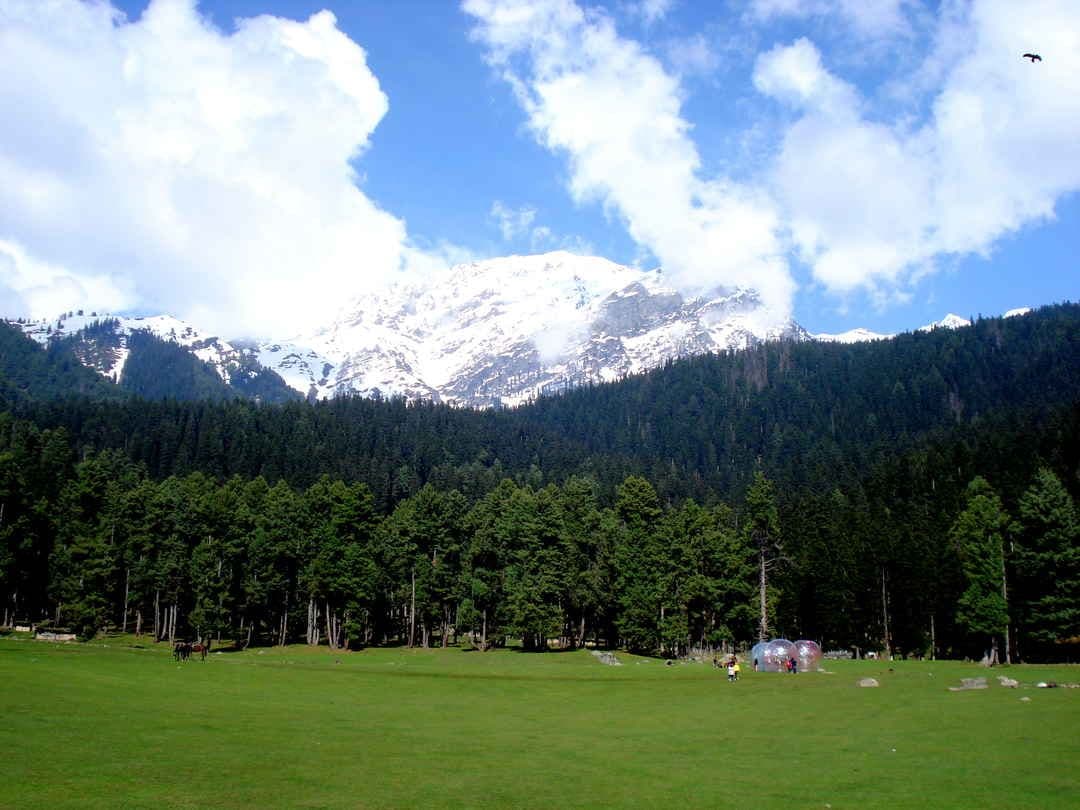 Khajjiar · 220 km
Fare box
Delhi to Amritsar, any month
Rate-card fares for the 450 km drive on NH-44. The three-day figure is the usual Amritsar visit: drive up, a day for the Golden Temple, Wagah and the old city with the driver on hand, and the drive home.
- Outstation trips bill a 300 km/day minimum; tolls, parking and state permits are extra at actual.
- Driver allowance and fuel are included. No advance for most bookings; pay after the trip.
- Fixed fares, no festival or weekend surge.
| Vehicle | Seats | Rate | One-way fare | Three-day round trip |
|---|---|---|---|---|
| Sedan (Swift Dzire, Etios) | 4 | ₹11/km | ₹4,950 | ₹9,900 |
| Ertiga / SUV | 6 | ₹15/km | ₹6,750 | ₹13,500 |
| Innova Crysta | 6–7 | ₹18/km | ₹8,100 | ₹16,200 |
| Tempo Traveller (12-seater) | 12 | ₹23/km | ₹10,350 | ₹20,700 |
Tolls and parking at actual. The same rate card applies in every season and on every festival; the fleet books out early for Diwali, Gurpurab and Baisakhi. From Chandigarh the sedan one-way fare is ₹3,300 for 230 km (300 km minimum).
In pictures
Amritsar through the year
All yearThe Golden Temple
Barefoot-comfortable from November to March; dawn and night in summer.
30 kmWagah retreat
About an hour before sunset, every evening of the year.
Old cityJallianwala Bagh
A daylight hour, two minutes from the temple.
Heritage StreetPartition Museum
The indoor hours for a foggy morning or a June afternoon.
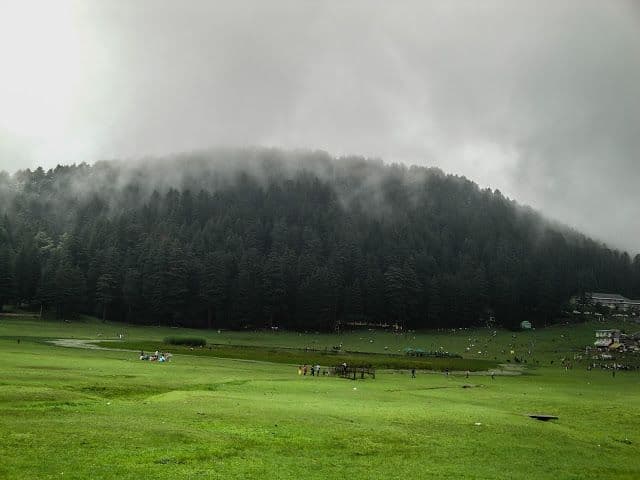 Hills · 220 km
Khajjiar, beyond Dalhousie
The summer escape and the winter snow, 220 km from the Golden Temple.
Three things the drivers would tell you
In the fog months, leave Delhi later
From mid-December to the end of January, a four o’clock start puts you into the worst of the fog between Karnal and Ludhiana. Leave at seven, breakfast at Murthal in daylight, and arrive for a late lunch instead.
Do the temple at night and Wagah at dusk
Reach Amritsar by early afternoon, drive straight to Wagah for the ceremony, and see the Golden Temple after eight when the lamps are lit and the queue is short. The order works in every season.
Book the November festivals as one
For Diwali on 8 November and Gurpurab on 24 November the old city closes to cars and the walking-distance hotels fill weeks ahead. Fix the room and the cab together, and arrive the day before.
Questions people ask
Frequently asked questions
Our team is here to help. Contact us for personalized assistance.
Where to go next
Book the trip, or keep reading
- Amritsar cabsLocal, outstation and airport
- Delhi to Amritsar cab450 km · ₹4,950 sedan
 Amritsar trip cost from DelhiFare, tolls, stay
- Golden Temple and Wagah tourOne day, car waits
- Amritsar in 2 daysThe itinerary that fits
- Amritsar food tourKulcha to fish tikka
- Baisakhi cab, AmritsarMid-April arrangements
 Amritsar airport taxiAirport to the Golden Temple