
Delhi to Srinagar by road:the two-day drive, the Jammu stop, the tunnel
Delhi to Srinagar by road is 810 km on NH-44 and sixteen to eighteen hours of driving, which is why almost nobody does it in one go. The standard plan is Delhi to Jammu on day one, 580 km and about nine hours of four-lane highway through Ambala, Ludhiana, Jalandhar and Pathankot, and Jammu to Srinagar on day two, about 230–260 km of mountain road through Udhampur, Ramban and the 8.45 km Banihal tunnel that takes seven to eight hours. A sedan is ₹8,910 one-way at ₹11/km; a four-day round trip with the car staying with you in the valley is ₹17,820.
Updated · Fares from the published rate card, Sedan ₹11/km to Tempo ₹23/km
- Distance
- 810 km · NH-44
- Driving time
- 16–18 hrs · 2 days
- Night halt
- Jammu, 580 km
- Sedan, one-way
- ₹8,910
Delhi to Kashmir by road means Delhi to Srinagar: the valley has one motorable door from the south, the Jammu–Srinagar highway, and every road trip from Delhi goes through it. The first two-thirds of the journey is the Grand Trunk Road across Haryana and Punjab, flat and fast; the last third is a mountain highway that climbs out of Jammu, threads the Chenab gorge at Ramban and passes under the Pir Panjal through the Banihal tunnel before the valley opens out at Qazigund.
This guide follows the road in order, kilometre by kilometre, and then answers the questions people ask before booking: why two days rather than one, where to sleep, what the tunnel and the one-way regulation at Ramban actually mean, what happens between December and February, and what the trip costs. Every fare on the page comes from the published rate card: Sedan ₹11/km, Ertiga or SUV ₹15/km, Innova Crysta ₹18/km and a 12-seater Tempo Traveller ₹23/km, billed on a 300 km per day minimum with tolls and parking extra at actual.
The road, in order
Delhi to Srinagar, kilometre by kilometre
Kilometre marks are from Delhi and rounded to the nearest post; the billing distance is 810 km. Day one runs to Jammu, day two from Jammu into the valley. Times assume a four o’clock start from Delhi and a six o’clock start from Jammu.
- km0
Delhi
4 am startLeave before the city wakes. From north and west Delhi, NH-44 begins at Mukarba Chowk a quarter of an hour away; from Gurgaon, Noida and south Delhi allow forty-five minutes to reach it. Everything that follows assumes the wheels are moving by four.
- km50
Murthal
5 amThe paratha halt. Fifteen minutes at one of the highway dhabas, and the last easy stop before Ambala.
Halt: Breakfast
- km200
Ambala
7 amThe Chandigarh road peels off to the right; you stay on NH-44 into Punjab. Between here and Pathankot the road is six lanes for long stretches and the toll plazas come every fifty kilometres or so.
- km320
Ludhiana
8.30 amTake the bypass, not the city. Fuel here, because the next clean pump with a decent tea shop is on the far side of Jalandhar.
Halt: Fuel
- km380
Jalandhar
9.30 amThe last big Punjab town on the route. The Amritsar road branches west here and you bear north for Pathankot. If you are adding the Golden Temple, this is the junction to remember for the way back.
- km480
Pathankot
11 amLunch, and the end of the plains. Beyond Lakhanpur, the Jammu and Kashmir entry post about 25 km on, the halts thin out and the road begins to lift into the Shivalik foothills.
Halt: Lunch
- km580
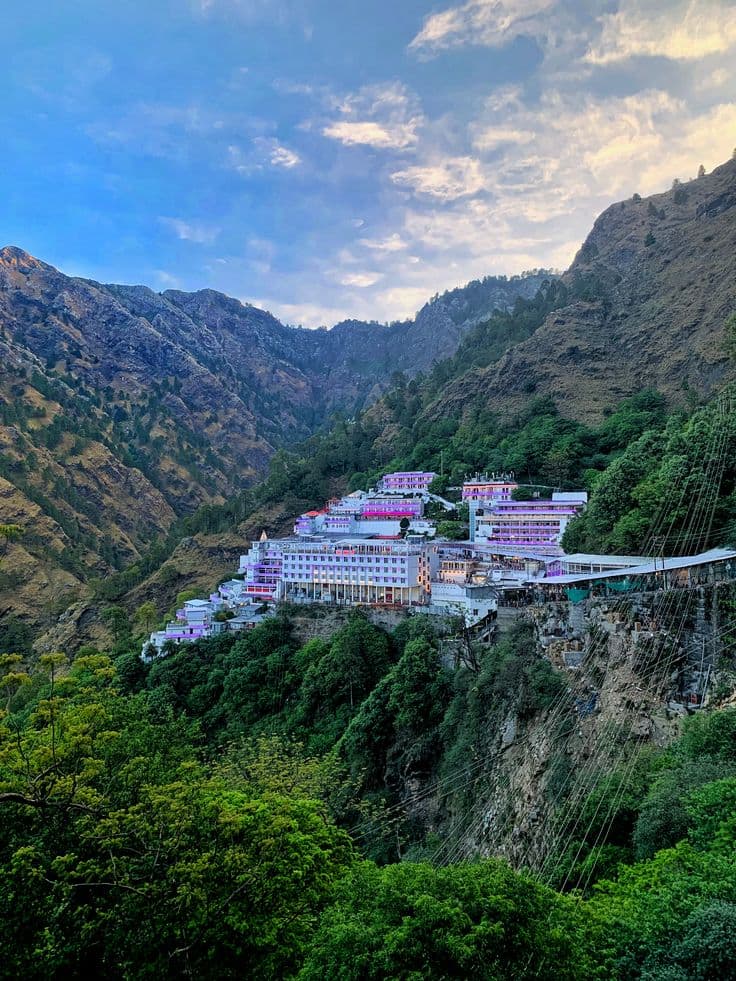 Night halt
Jammu
1 pmDay one ends here for nearly everyone. The bypass skirts the city, and a hotel on the Srinagar side of town puts you on the highway first thing in the morning. Katra, 50 km on, is the alternative halt if Vaishno Devi is part of the trip.
- km645
Udhampur
Day 2 · 7.30 amOut of Jammu by six, Udhampur by half past seven. This is the last town with a full choice of fuel, ATMs and food before the gorge, so top up the tank and the snacks here.
Halt: Fuel
- km670
Chenani–Nashri tunnel
8 amNine kilometres under the Patnitop ridge, opened in 2017. It replaced the old climb over Patnitop, Kud and Batote and took about thirty kilometres and two hours off the day. Patnitop itself is now a detour: the old road leaves the highway at Chenani.
- km700
Ramban
9.30 amThe Chenab gorge. This is the slow, unstable stretch where landslides and widening work still close lanes, and where the traffic police move light vehicles in one direction at a time when they have to. The morning window is the one you want to be in.
- km730
Banihal
11.30 amThe old hill town at the foot of the Pir Panjal and the mouth of the Navyug tunnel: 8.45 km, twin-tube, opened in 2021 and about four hundred metres lower than the Jawahar tunnel it replaced. Lights on, no overtaking, out the other side in ten minutes.
- km740
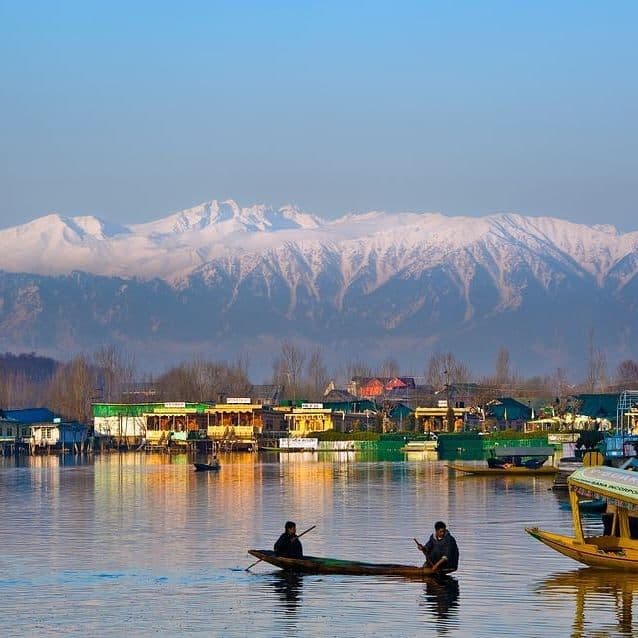
Qazigund
12 noonThe tunnel ends and the Kashmir valley opens out flat in front of you: poplars, paddy and, in autumn, the saffron fields at Pampore an hour on. From here to Srinagar the road is four-lane and quick.
- km810
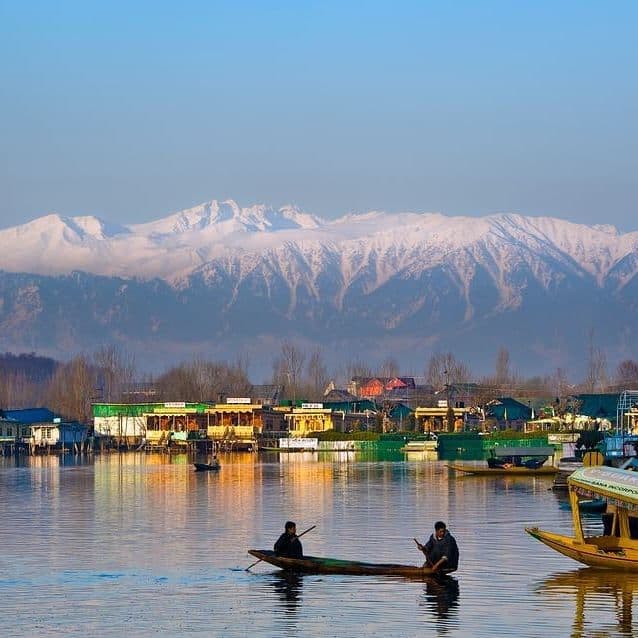 Arrive
Srinagar
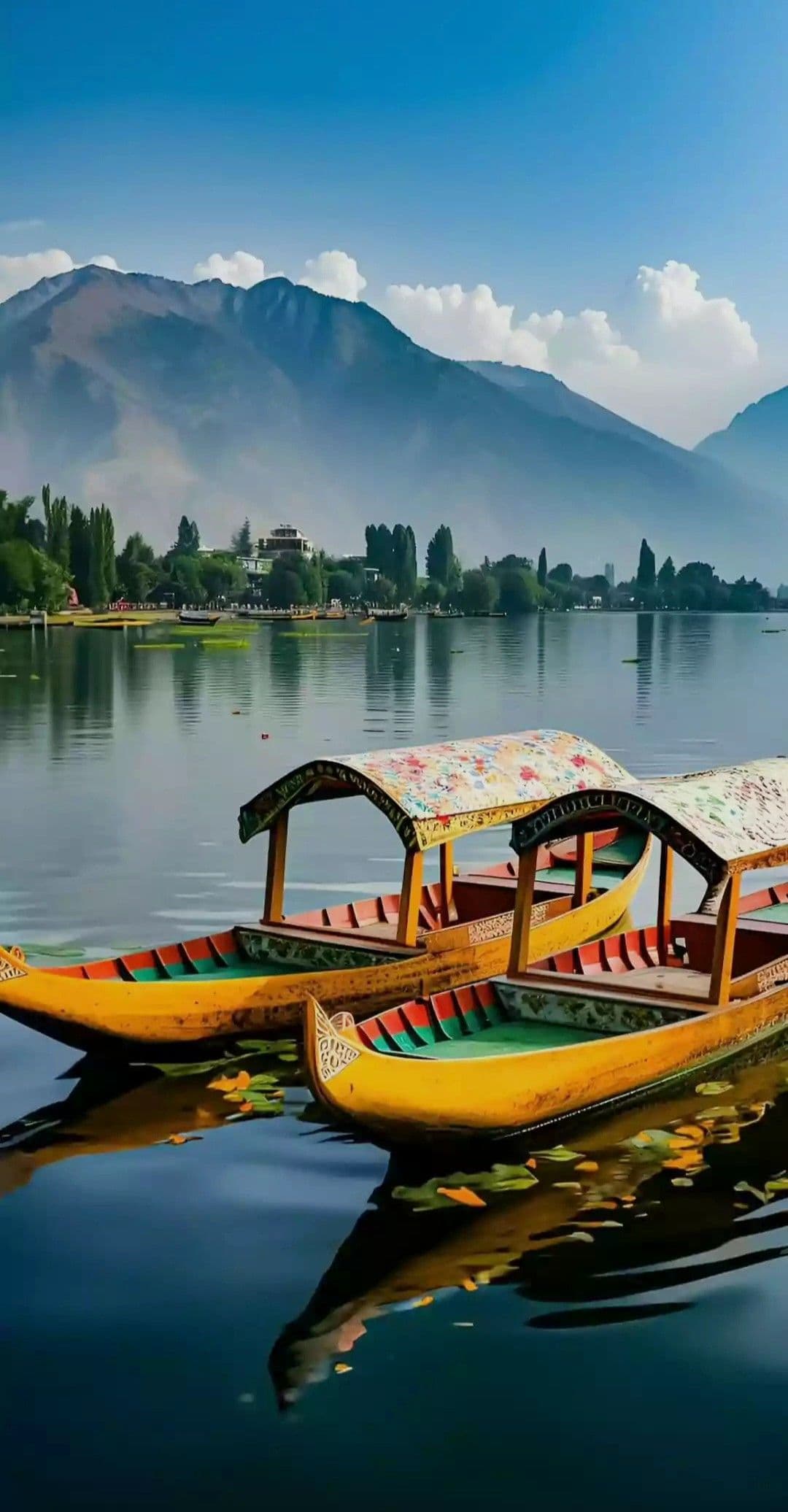
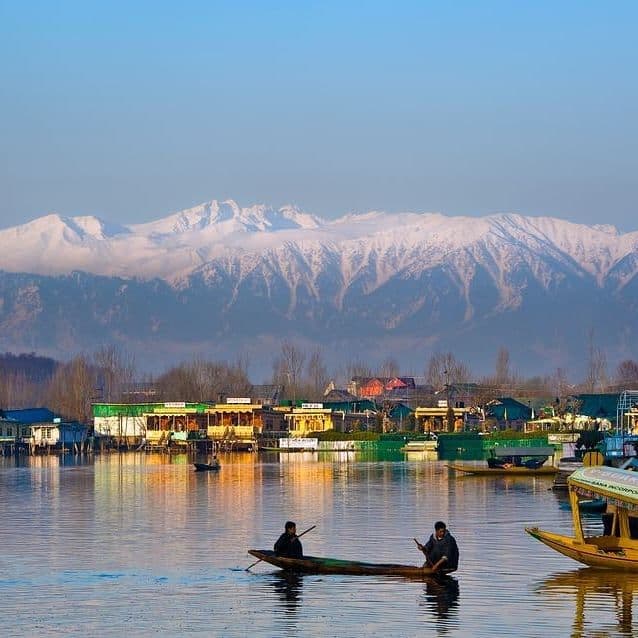
2 pmArrive in time for a shikara on Dal Lake before dark. The Boulevard along the lake is where the houseboats moor; the Mughal gardens are twenty minutes further round the shore.
Delhi to Srinagar by road: the drive by segment
The six segments below are from our travel-by-car log for the corridor. The first three are plains driving on a divided highway; the last three are mountain road, and the times reflect that. Read the first three as day one and the last three as day two.
| Segment | Distance | Driving time | Road | What to expect |
|---|---|---|---|---|
| Delhi to Ludhiana | 320 km | 5 hrs | Four to six lanes | GT Road through Panipat, Karnal and Ambala; the fastest stretch of the trip |
| Ludhiana to Jalandhar | 60 km | 1 hr | Four lanes | Flat Punjab farmland; use the Ludhiana bypass |
| Jalandhar to Jammu | 200 km | 3.5 hrs | Four lanes | Pathankot, then the Lakhanpur entry post into Jammu and Kashmir; night halt at Jammu |
| Jammu to Udhampur | 65 km | 1.5 hrs | Mountain highway | The climb out of the Tawi valley begins; last full services at Udhampur |
| Udhampur to Ramban | 80 km | 3 hrs | Tunnel, then gorge | Chenani–Nashri tunnel, then the slow Chenab gorge section with one-way regulation on bad days |
| Ramban to Srinagar | 130 km | 5 hrs | Gorge, tunnel, valley | Banihal and the Navyug tunnel, then flat four-lane road from Qazigund to the city |
The segment log is the older corridor log and adds up to about 855 km, with day two at 275 km; the Chenani–Nashri tunnel took roughly thirty kilometres off the old road over Patnitop, and the distance we bill on is the 810 km published on our Delhi to Srinagar distance page, which is why the prose gives day two as about 230–260 km. Mountain times are for a dry day with the road fully open.
Why two days
Why is Delhi to Srinagar a two-day drive when it is only 810 km?
Because the 810 km are not the same kind of kilometres. The first 580, from Delhi to Jammu, are the Grand Trunk Road: divided highway the whole way, toll plazas every fifty kilometres, and an honest average of sixty kilometres an hour including stops. Nine hours takes you from a four o’clock start in Delhi to lunch in Jammu. The last 230 or so, from Jammu to Srinagar, are a different road altogether. The highway climbs out of the Tawi valley, drops into the Chenab gorge at Ramban, where slopes are still being cut back and lanes are still being widened, and then goes under the Pir Panjal through the Banihal tunnel. On a good day that is seven hours; on a day when the Ramban section is under one-way regulation it is nine, and a landslide can hold it longer.
Put those together and a single-day run means leaving Delhi at four in the morning and reaching the gorge at dusk, which is exactly the wrong time to be on it. Convoy windows on the Ramban stretch are set for daylight, the traffic police close bad sections after dark, and the tunnel approaches are no place for a tired driver. So the drive is split at Jammu, the mountain section is done fresh in the morning, and Srinagar is reached by mid-afternoon with light left for the lake. Our drivers do the corridor this way as a matter of course; the driver’s night-halt allowance at Jammu is billed at actual on top of the fare.
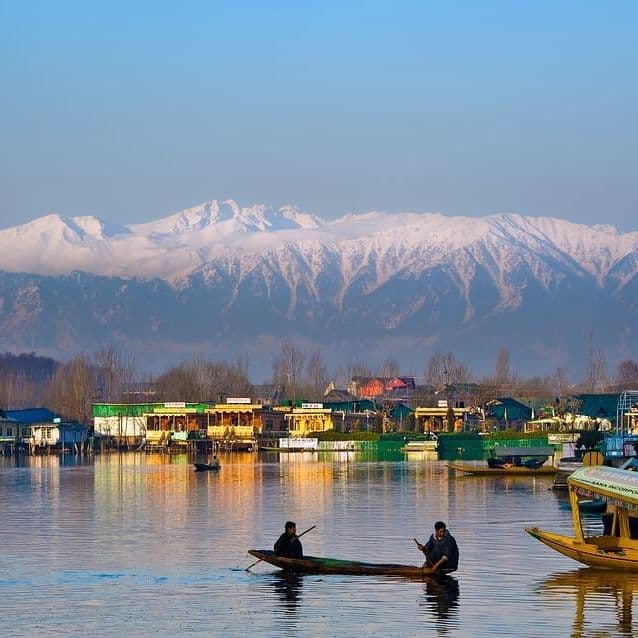 Srinagar · day 2
The halt
Where should I stop for the night: Jammu, Katra or Patnitop?
Jammu, for most people. It is 580 km from Delhi, the bypass keeps you out of the city, and there are hotels of every kind on the Srinagar side of town, so the morning start is straight onto the highway. It also leaves the longest possible daylight window for the mountain section, which is the thing that decides how the second day goes. Reaching Jammu by one or two in the afternoon means a rest, an early dinner and a six o’clock departure.
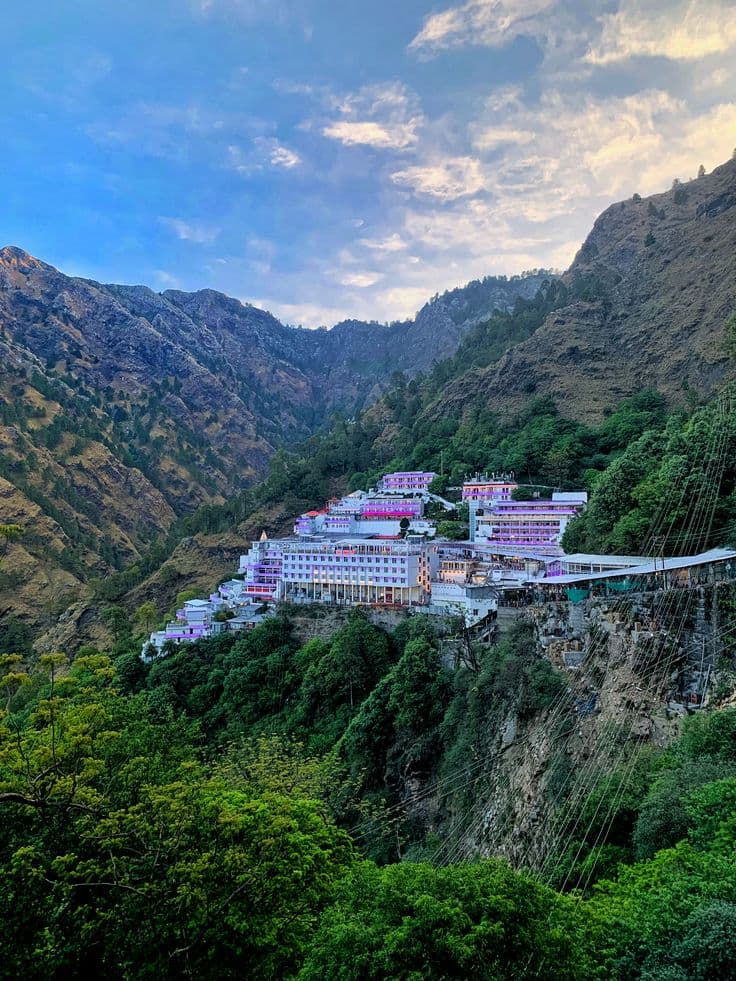
Katra is the halt if Vaishno Devi is part of the plan. It is 50 km beyond Jammu on a side road, so it adds an hour to day one, and the climb to the Bhawan is a full day in itself, which turns the two-day drive into three. The driver waits at Katra while you go up. Patnitop is the hill-station halt, 2,000 m up on the old road that the Chenani–Nashri tunnel bypassed. It is cool, quiet and only six hours from Srinagar, but the detour off the highway adds hairpins to the end of a nine-hour day, and in winter the road up can be icy. Choose it for the weather in May and June, not for speed.
- Jammu, 580 km: the standard halt; day two is about 230–260 km and seven to eight hours to Srinagar.
- Katra, 630 km: the pilgrimage halt; add a full day for the climb to the Bhawan.
- Patnitop, about 650 km via the old road: the cool halt; day two shrinks to six hours but day one gains a hill climb.
- Udhampur, 645 km: only if you are running late; hotels are few and plain.
 Katra · +1 day
Tunnel and gorge
What is the Banihal tunnel, and what does one-way regulation at Ramban mean?
There are two tunnels on the second day, and they matter for different reasons. The first is the Chenani–Nashri tunnel between Udhampur and Ramban: nine kilometres under the Patnitop ridge, opened in 2017, which replaced the old climb over Patnitop and Batote and took about thirty kilometres and two hours off the drive. The second is the one people mean when they say the Banihal tunnel: the Navyug tunnel between Banihal and Qazigund, 8.45 km long, twin-tube, opened in 2021. It replaced the Jawahar tunnel of 1956, which sat four hundred metres higher and closed whenever the approaches iced. The new tunnel is lower, wider and lit, and it is the reason the valley is now reachable by road on days when it used to be cut off.
Between the two tunnels is the Ramban stretch, the Chenab gorge, and this is where the day is won or lost. The four-laning of this section has been under way for years, the slopes above the road are unstable after rain, and when a lane is lost to a slide or to work the traffic police run the remaining lane one way at a time: light vehicles towards Srinagar in one window, towards Jammu in another. The advisory is published each evening for the next day, and our drivers check it before they leave Jammu. On a regulated day the six o’clock start is not optional; it is what gets you through the gorge in the morning window rather than waiting at Ramban for the afternoon one.
On the far side of the Navyug tunnel the change is immediate. The road comes out at Qazigund onto the flat floor of the valley, and the last seventy kilometres or so to Srinagar are four-lane road past Anantnag and the saffron fields at Pampore. If the morning has gone to plan you are on Dal Lake by two.
Winter
Can I drive Delhi to Srinagar in winter, and what is the alternative?
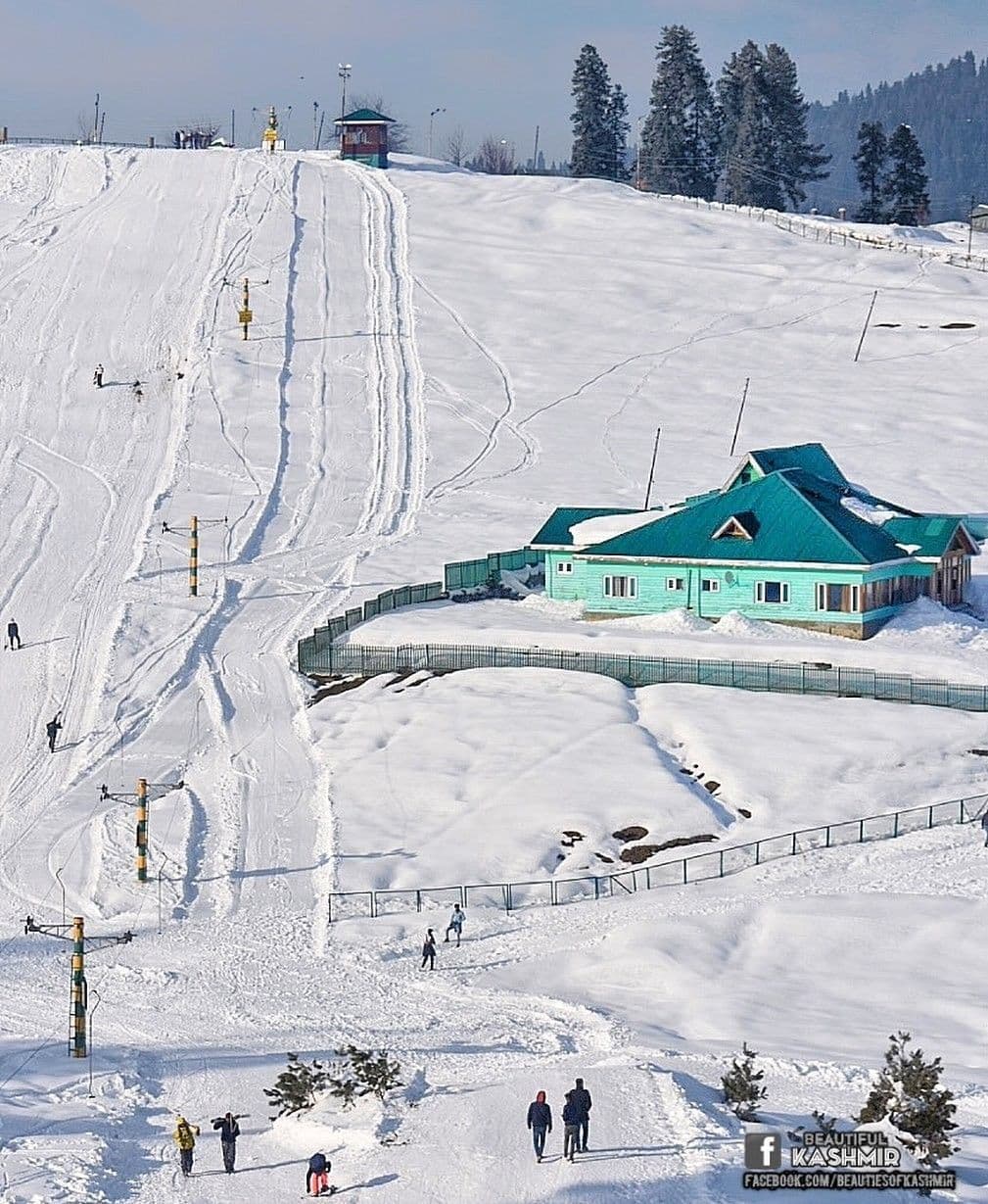
From December to February the honest answer is: sometimes. The Jammu–Srinagar highway closes after heavy snowfall and after the landslides that follow it, and a closure can last a day or several. The Navyug tunnel itself is rarely the problem, being lower than the old Jawahar tunnel, but the Ramban gorge and the climb to Banihal are, and a road that is open when you leave Jammu can be shut by the time you reach Ramban. The Punjab plain adds its own hazard in the same months: dense fog on the GT Road from Panipat to Jalandhar in the early hours, which is precisely when day one is supposed to be moving. In winter we ask for the start to be pushed to seven, and we ask you to hold a spare day.
If the dates are fixed, fly. Delhi to Srinagar is about an hour and a half in the air, and a cab from Srinagar airport takes you to the lake, to Gulmarg or to Pahalgam the same afternoon; that is what the airport-service page is for, and it is what most winter visitors to Gulmarg do. The summer alternative that people ask about, the Mughal Road from Rajouri and Poonch over Pir ki Gali to Shopian, is a scenic route rather than a practical one: it is well over three hundred kilometres from Jammu, a long day of hairpins, and it is shut in winter altogether because the pass is snowbound. The monsoon months of July and August are the other time to avoid the highway, when landslides in the gorge are a daily event.
The good months for the drive are April to June and September to October. October in particular is the road at its best: the plains are cool by dawn, the gorge is dry, and the valley is turning gold with chinar and saffron.
- December to February: highway liable to close after snow; fog on the Punjab plain; fly if the dates are fixed.
- July and August: landslides on the Ramban stretch; avoid.
- April to June and September to October: the drive as it should be.
 Gulmarg · Dec–Feb
Cost
What does Delhi to Srinagar by car cost?
The one-way fare is the distance at the vehicle’s rate: 810 km at ₹11/km is ₹8,910 for a sedan, ₹12,150 for an Ertiga or similar SUV at ₹15/km, ₹14,580 for an Innova Crysta at ₹18/km and ₹18,630 for a 12-seater Tempo Traveller at ₹23/km. Fuel is inside those figures; the driver’s night-halt allowance at Jammu, tolls on NH-44, parking and any hill-state charges are extra, all paid at actual. There is no surcharge for the mountain section.
Most people want the car for longer than the drive, and the round trip is priced as the greater of twice the one-way fare or the number of days at the 300 km minimum. For a four-day trip, two days up and two days back with nothing in between, a sedan is ₹17,820, an Ertiga ₹24,300, an Innova Crysta ₹29,160 and a Tempo Traveller ₹37,260. A fifth day in the valley costs nothing extra for a sedan, because five days at 300 km is still less than the 1,620 km you actually drive; from the sixth day the daily minimum takes over, so six days is ₹19,800 and seven is ₹23,100, and eight days at the 300 km minimum is ₹26,400 for the sedan.
On the choice of vehicle: the corridor page recommends an SUV or Innova, and for the second day that is good advice. The extra ground clearance and torque tell in the gorge, and an Innova Crysta with six people aboard works out cheaper per head than two sedans. For a family of four with luggage for a week, the Ertiga is the sensible middle.
 Innova · ₹18/km
Onward
How do I get on to Gulmarg, Pahalgam and Sonamarg once I reach Srinagar?
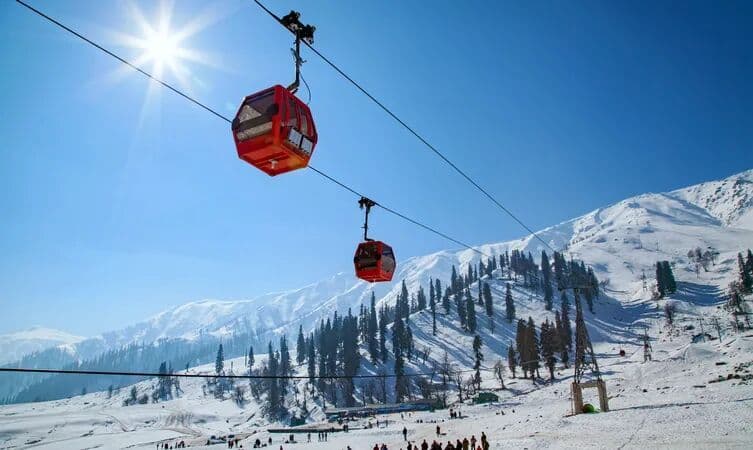
Srinagar is the hub, and the three places most people come to Kashmir for are each a short drive out of it in a different direction. Gulmarg is 50 km west, an hour and a half to two hours up through Tangmarg, with the gondola, the meadows in summer and the ski slopes in winter. Pahalgam is 95 km south-east, two to three hours along the Lidder, with Aru, Betaab and Chandanwari beyond it. Sonamarg is a little under a hundred kilometres north-east on the Leh road, with the Thajiwas glacier walk and, for those going on, the Zoji La pass to Ladakh.
If the car has come with you from Delhi, the driver simply carries on: each is a day trip from a Srinagar base, or a night away. If you want the car to end somewhere other than Srinagar, the one-way pages price the longer drop from Delhi directly, and the arithmetic is the same rate card on a longer distance: Delhi to Gulmarg is 880 km and ₹9,680 for a sedan, Delhi to Pahalgam 870 km and ₹9,570, Delhi to Sonamarg 910 km and ₹10,010. The full-week itineraries on the site put all three together with Srinagar in five, seven or eight days.
- Gulmarg: 50 km, 1.5–2 hrs; gondola, meadows, winter skiing.
- Pahalgam: 95 km, 2–3 hrs; Lidder valley, Aru and Betaab.
- Sonamarg: under 100 km, 2.5–3 hrs; Thajiwas glacier, the road to Zoji La and Leh.
 Gulmarg · 50 km
Fare box
Delhi to Srinagar by car
Rate-card fares for the 810 km drive, halting at Jammu; the driver’s night-halt allowance is extra at actual. The round-trip column is a four-day trip: two days up, two days back. Extra days in the valley bill at the 300 km minimum once they exceed the distance.
- Outstation trips bill a 300 km/day minimum; tolls, parking and state permits are extra at actual.
- Driver allowance and fuel are included. No advance for most bookings; pay after the trip.
- Fixed fares, no festival or weekend surge.
| Vehicle | Seats | Rate | One-way fare | Four-day round trip |
|---|---|---|---|---|
| Sedan (Swift Dzire, Etios) | 4 | ₹11/km | ₹8,910 | ₹17,820 |
| Ertiga / SUV | 6 | ₹15/km | ₹12,150 | ₹24,300 |
| Innova Crysta | 6–7 | ₹18/km | ₹14,580 | ₹29,160 |
| Tempo Traveller (12-seater) | 12 | ₹23/km | ₹18,630 | ₹37,260 |
Tolls on NH-44, parking and the driver’s night-halt allowance at Jammu are extra at actual; fuel is included. Six days bills ₹19,800 for a sedan, seven ₹23,100, eight ₹26,400.
In pictures
What the second day earns you
 Srinagar · km 810
Shikara on Dal Lake
The first evening, if you left Jammu at six.
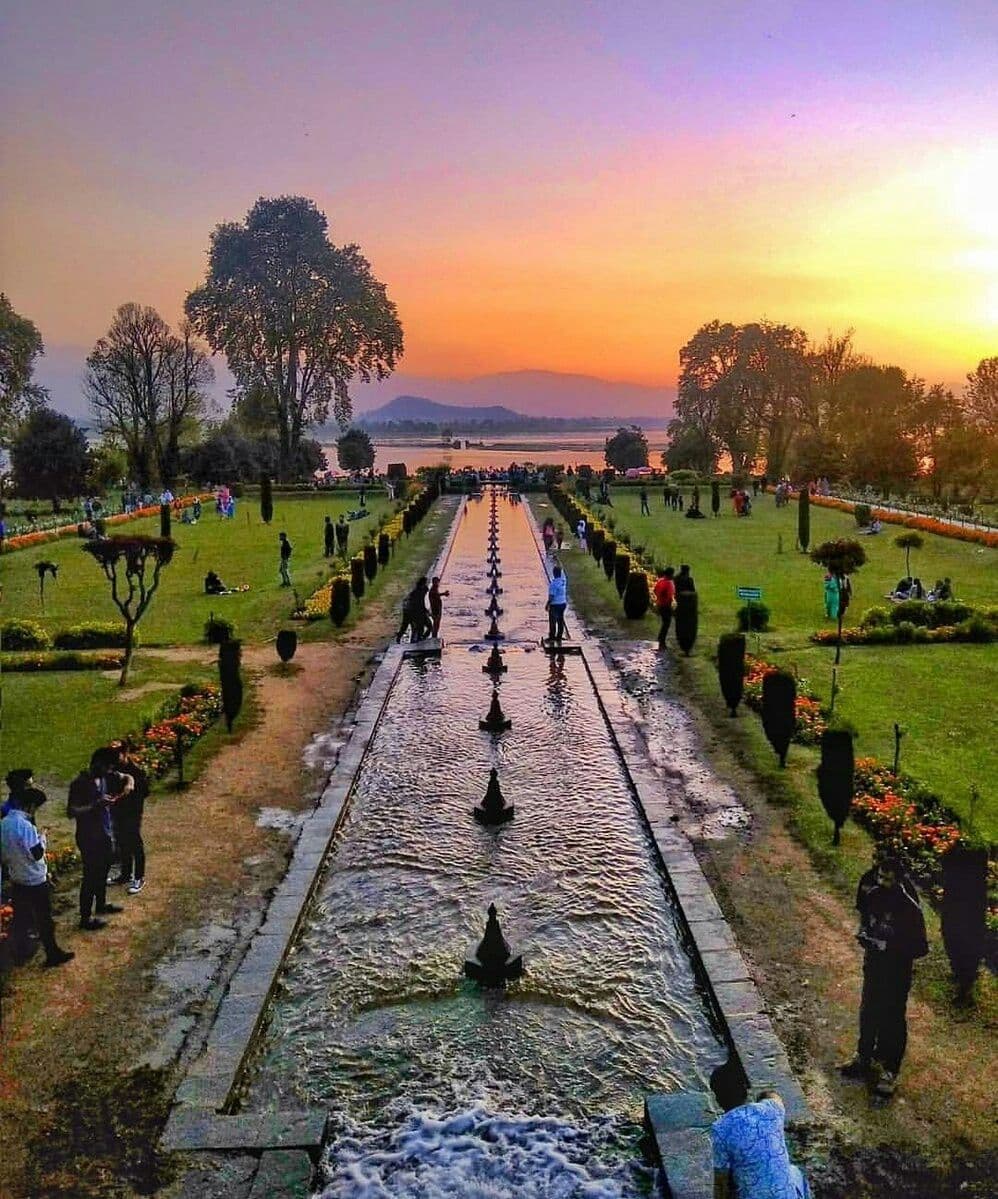 Srinagar
Nishat Bagh
The Mughal gardens, twenty minutes round the lake from the Boulevard.
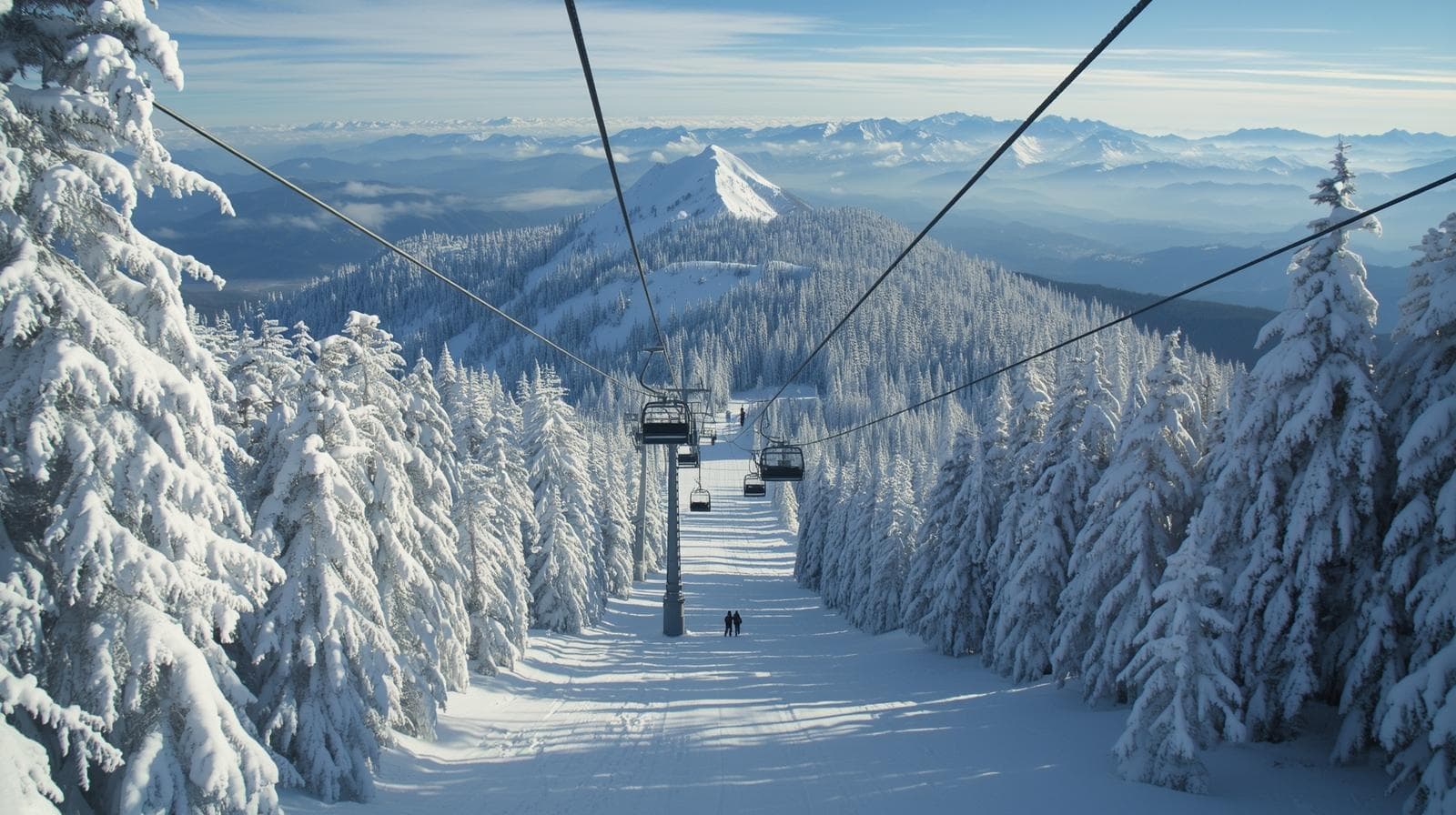 Gulmarg · 50 km
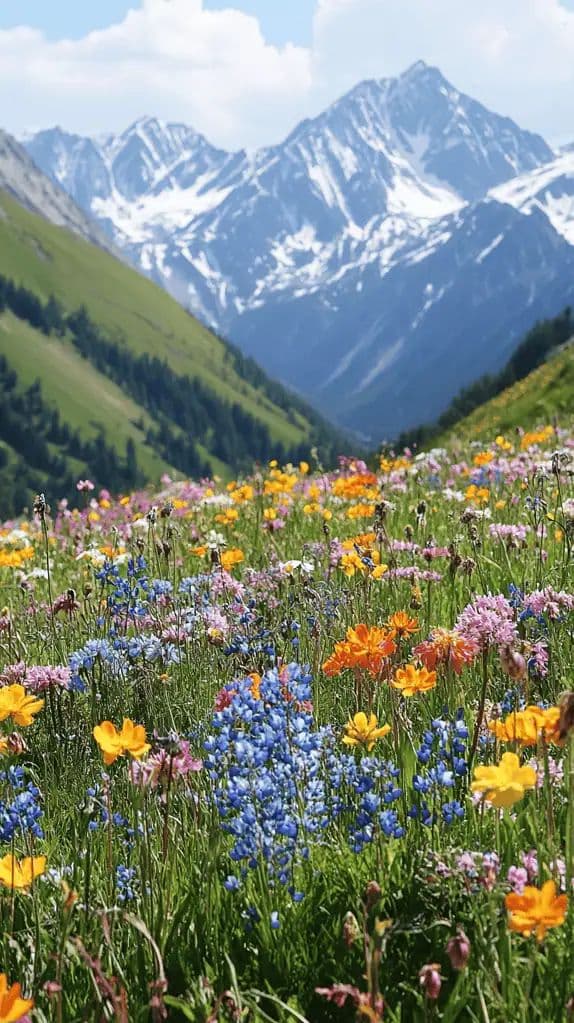
Gulmarg
50 km west of Srinagar; meadows in summer, snow from December.
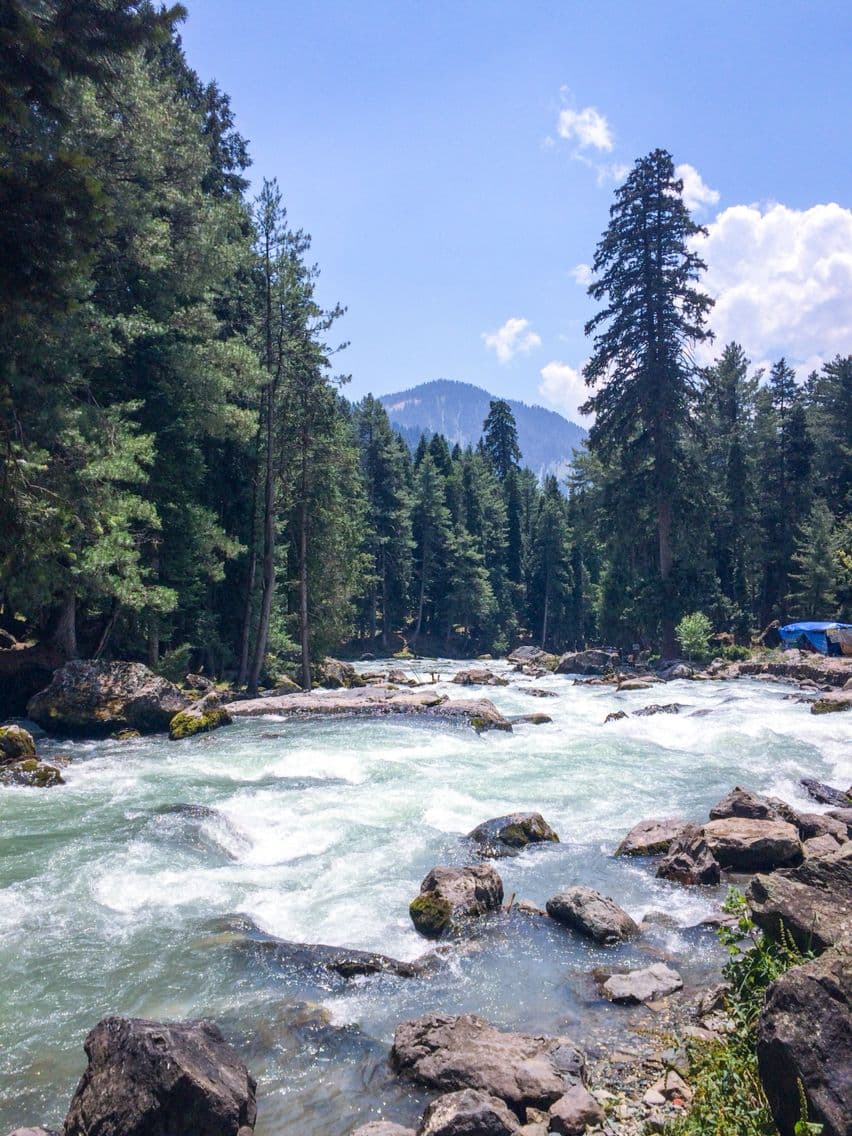 Pahalgam · 95 km
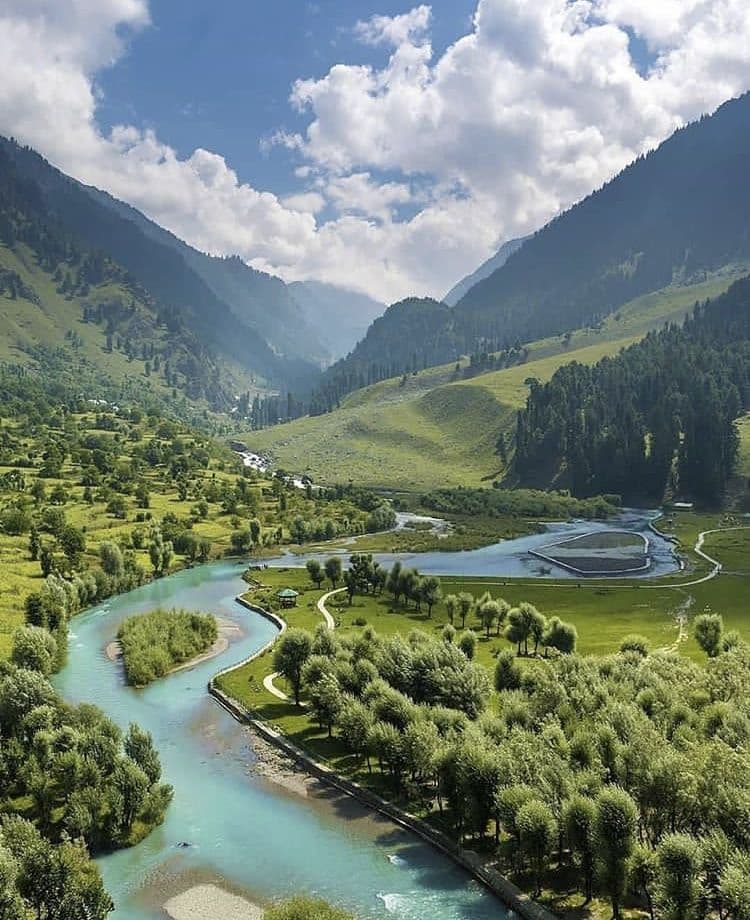
The Lidder at Pahalgam
95 km south-east, along the river all the way.
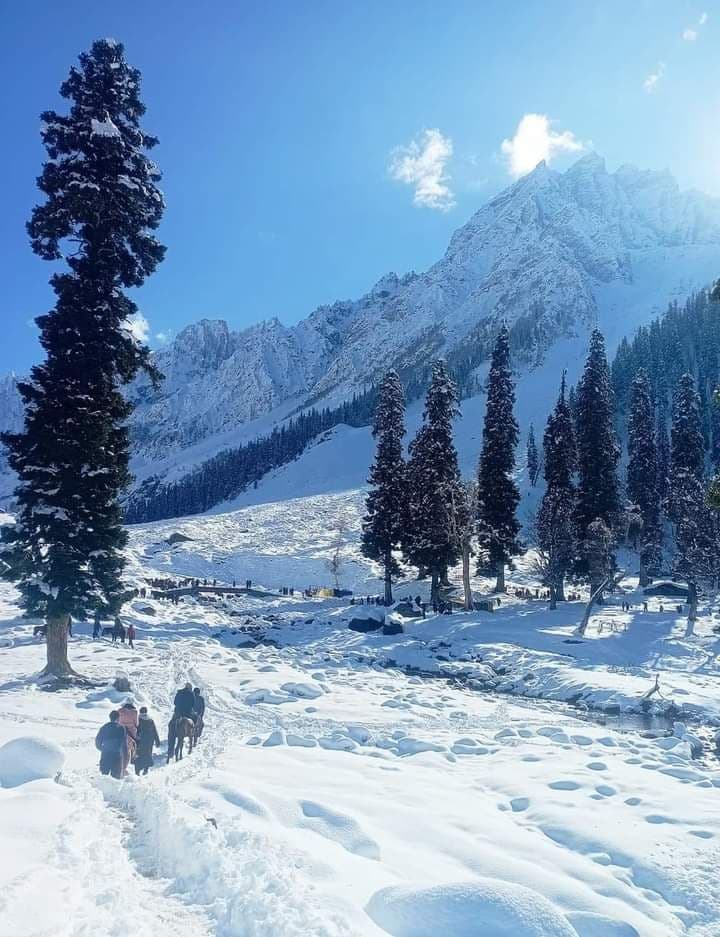 Sonamarg
Thajiwas glacier, Sonamarg
The walk from the meadow, and the start of the Leh road.
Three things the drivers would tell you
Check the highway advisory the night before day two
The traffic police publish the next day’s position for the Jammu–Srinagar highway each evening. If the Ramban section is one-way, the morning window towards Srinagar is the one to be in, and the six o’clock start from Jammu is what gets you there.
Fill up and stock up at Udhampur
It is the last town with a full choice of pumps, ATMs and food before the gorge. Services between Udhampur and Qazigund are sparse, and a slide can hold you for hours; water, snacks and a full tank are the difference between a delay and a bad day.
Give the mountain day to the driver
Day two is not the day for detours or a late breakfast. Sleep on the Srinagar side of Jammu, leave at six, and let the driver set the pace through Ramban. The reward is Dal Lake by two rather than by dark.
Questions people ask
Frequently asked questions
Our team is here to help. Contact us for personalized assistance.
Where to go next
Book the trip, or keep reading
- Delhi to Kashmir by carThe corridor page, segment by segment
 Delhi to Srinagar distance810 km · road notes and fares
- Kashmir road trip from DelhiThe eight-day itinerary
 Delhi to Gulmarg one-way cab880 km · ₹9,680 sedan
 Delhi to Pahalgam one-way cab870 km · ₹9,570 sedan
 Srinagar airport cabsThe winter alternative
- Kashmir trip cost from DelhiCar, stay and days, added up
- Delhi to Katra one-way cab630 km · the Vaishno Devi halt