Planning to visit the Taj Mahal in 2026? Timing your visit right can mean the difference between a magical, crowd-free sunrise experience and a sweltering, overcrowded afternoon. This comprehensive month-by-month guide covers the best time to visit Taj Mahal, including sunrise and sunset times, weather conditions, crowd levels, ticket prices, and essential photography tips. Book an Agra tour package with Triveni Cabs™ for a hassle-free experience.
Taj Mahal Quick Facts for 2026
| Detail | Information |
|---|---|
| Opening Hours | 30 min before sunrise to 30 min before sunset |
| Closed On | Friday (open for prayers at mosque) |
| Indian Ticket | ₹50 (₹200 with Mausoleum) |
| Foreign Ticket | ₹1,100 (includes Mausoleum) |
| Night Viewing | 5 nights around full moon, ₹510 Indians / ₹750 foreigners |
| Time Needed | 2-3 hours minimum |
| Distance from Delhi | 230 km via Yamuna Expressway (3-3.5 hours) |
Month-by-Month Guide to Visiting Taj Mahal
January: Cold but Beautiful
- Temperature: 5-20°C (cold mornings, pleasant afternoons)
- Sunrise: 7:10 AM | Sunset: 5:40 PM
- Crowd Level: Moderate (post-holiday season)
- Fog Risk: High - sunrise views may be obscured in early January
- Tip: Visit mid-morning (9-10 AM) when fog lifts for clear photos
January mornings in Agra can be bitterly cold with dense fog, especially during the first two weeks. While the Taj looks ethereal emerging from mist, you may not get clear sunrise shots. Dress in layers and carry warm accessories. The marble feels ice-cold underfoot, so wear thick socks (shoes are not allowed on the main platform).
February: The Sweet Spot Begins
- Temperature: 8-25°C (warming up, comfortable)
- Sunrise: 6:55 AM | Sunset: 6:00 PM
- Crowd Level: Moderate
- Fog Risk: Low to moderate
- Tip: One of the best months overall - pleasant weather, manageable crowds
February is among the best months to visit the Taj Mahal. The fog clears up, temperatures are comfortable for walking, and the tourist rush of peak season has not yet started. The Taj Mahotsav festival (held in February) adds cultural performances and handicraft exhibitions near the monument. Book our same-day Agra tour to make the most of this pleasant weather.
March: Peak Tourist Season
- Temperature: 15-32°C (warm but bearable)
- Sunrise: 6:25 AM | Sunset: 6:15 PM
- Crowd Level: High (peak international tourism)
- Tip: Arrive at gate 30 minutes before opening for minimal crowds
March marks the beginning of peak international tourist season. The weather is warm but manageable, especially in the morning. Holi celebrations (usually in March) may affect travel plans - the monument remains open, but road closures can occur in nearby areas. Buy tickets online in advance to skip long queues.
April-May: Hot Season
- Temperature: 25-45°C (extremely hot afternoons)
- Sunrise: 5:40-5:55 AM | Sunset: 6:35-6:50 PM
- Crowd Level: Low to moderate
- Tip: Visit at sunrise only, carry 2+ litres of water, wear sunscreen
Summer in Agra is scorching. The white marble reflects intense heat and can burn bare feet. However, this is when you get the fewest crowds and the longest daylight hours. If you visit, go at sunrise when temperatures are still bearable (around 25-28°C). The early morning light creates a golden glow on the marble. An AC cab from Delhi is essential for comfortable summer travel.
June-August: Monsoon Season
- Temperature: 26-38°C (humid, intermittent rain)
- Sunrise: 5:25-5:45 AM | Sunset: 6:50-7:05 PM
- Crowd Level: Very low
- Tip: Dramatic cloud backdrops for photography, but carry rain gear
Monsoon brings dramatic skies and the greenest gardens you will see around the Taj. Crowds are minimal, and the rain-washed marble gleams beautifully. However, humidity is high, and sudden downpours can disrupt plans. The Yamuna River fills up, creating lovely reflections from Mehtab Bagh across the river. Carry waterproof covers for camera equipment.
September: Monsoon Retreat
- Temperature: 24-35°C (rain reducing, still humid)
- Sunrise: 5:55 AM | Sunset: 6:15 PM
- Crowd Level: Low
- Tip: Good balance of fewer crowds and improving weather
October-November: Best Season
- Temperature: 15-33°C (perfect weather)
- Sunrise: 6:00-6:30 AM | Sunset: 5:30-5:50 PM
- Crowd Level: High (peak season returns)
- Tip: Book tickets and transport well in advance
October and November are widely considered the absolute best months to visit the Taj Mahal. The monsoon has washed the marble clean, the gardens are lush, and temperatures are ideal for walking. Clear skies mean perfect photography conditions. This is also peak tourist season, so booking a same-day Agra tour from Delhi in advance is essential.
December: Festive Season
- Temperature: 5-22°C (cold mornings, pleasant days)
- Sunrise: 6:55-7:10 AM | Sunset: 5:25-5:35 PM
- Crowd Level: Very high (holiday season)
- Tip: Fog may form; mid-morning visits recommended in late December
December brings holiday crowds but also pleasant weather during the day. The late sunrise means you do not need to wake up at 4 AM. However, fog becomes increasingly common toward the end of the month. Christmas and New Year week see the highest crowd levels of the year.
Sunrise vs Sunset: When to Visit
Sunrise (Recommended)
- Fewest crowds - gates open 30 minutes before sunrise
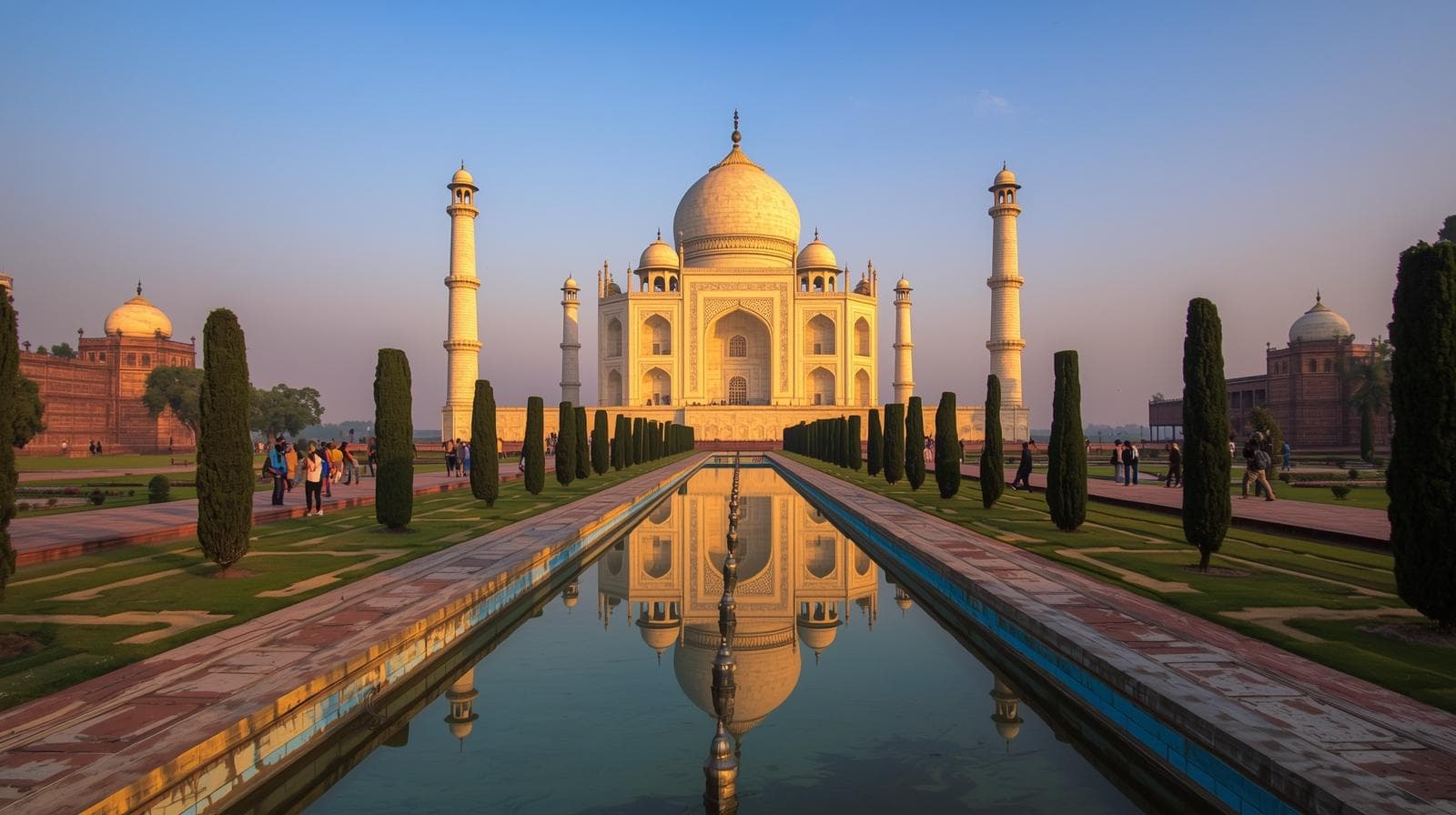
- Magical golden light on the white marble
- Cooler temperatures, especially in summer
- Best photography conditions with soft, warm light
- You need to depart Delhi by 3-4 AM (or stay overnight in Agra)
Sunset (Alternative)
- Visit Mehtab Bagh (across river) for sunset views of Taj - free from crowds
- The Taj turns pink-orange in sunset light
- Combine with a full day of Agra sightseeing
- Mehtab Bagh entry: ₹50 Indians, ₹300 foreigners
Photography Tips for Taj Mahal
Best Photography Spots
- Main Gateway: Classic framing of Taj through the archway
- Diana Bench: The famous Princess Diana photo spot on the central platform
- Jawab (east side): Side angle with fewer tourists in frame
- Mehtab Bagh: Across the Yamuna for full reflections at sunset
- Charbagh Gardens: Reflection pool shots early morning
Camera Tips
- Tripods are allowed but may slow you down at security
- Wide-angle lens (16-35mm) captures the full monument
- Telephoto lens (70-200mm) for detail shots of inlay work
- Arrive first in line at gate for 10-15 empty-ground minutes
- Drones are strictly prohibited - do not attempt
How to Reach Taj Mahal from Delhi
By Car (Recommended)
Distance: 230 km via Yamuna Expressway | Duration: 3-3.5 hours | Toll: ₹735 one-way
Hiring a cab from Delhi is the most flexible option. You control your departure time (crucial for sunrise visits), can stop wherever you like, and have comfortable return transport after a tiring day. Our same-day Agra tour includes pickup from your Delhi hotel at 4 AM for sunrise visits.
| Vehicle | Same-Day Price | Best For |
|---|---|---|
| Sedan (Swift Dzire) | ₹3,500 | Couples, solo travelers |
| SUV (Innova) | ₹5,500 | Families (4-6 people) |
| Tempo Traveller | ₹8,500 | Groups (9-12 people) |
By Train
Gatimaan Express: Delhi to Agra in 1 hour 40 minutes (departs 8:10 AM) | Shatabdi Express: 2 hours (departs 6:00 AM). However, trains limit your flexibility and you will still need local transport in Agra.
Budget Breakdown for Taj Mahal Visit (Per Person)
| Expense | Budget | Mid-Range | Premium |
|---|---|---|---|
| Transport (from Delhi, shared) | ₹800 | ₹1,200 | ₹2,500 |
| Taj Mahal Entry | ₹50 | ₹200 | ₹200 |
| Agra Fort Entry | ₹50 | ₹50 | ₹50 |
| Food | ₹300 | ₹700 | ₹1,500 |
| Guide | - | ₹300 | ₹500 |
| Total Per Person | ₹1,200 | ₹2,450 | ₹4,750 |
Related Reading
Planning more than just the Taj? Read our complete one-day Agra itinerary for a full hour-by-hour plan. If driving from Delhi, check out our Delhi-Agra toll charges guide and road trip packing checklist. For your first outstation cab booking, our outstation cab tips guide is a must-read. You can also explore the complete Golden Triangle tour with English-speaking driver or plan a same-day Agra tour from Delhi.
Insider Tips for First-Time Visitors
- Buy tickets online: Skip the 30-60 minute queue at the ticket counter by purchasing on the ASI website
- Use South Gate: Less crowded than the main West Gate; East Gate is for groups
- Carry minimal items: Large bags, tripods, food, and power banks over 10,000mAh are not allowed inside
- Wear shoe covers: Provided free at the Mausoleum platform, or carry thick socks
- Beware of touts: Licensed guides display government-issued ID cards; refuse others
- Combo ticket savings: If visiting Agra Fort the same day, buy a combo ticket to save ₹50
- Water: Sealed water bottles are allowed; stay hydrated especially in summer
Frequently Asked Questions
Is the Taj Mahal open on Fridays?
The Taj Mahal is closed to tourists on Fridays. However, Muslims can offer namaz prayers at the mosque inside the complex. Plan your visit accordingly - if arriving in Agra on Thursday evening, you can visit Agra Fort and Fatehpur Sikri on Friday, then the Taj on Saturday.
How much time is needed at the Taj Mahal?
Budget 2-3 hours minimum. Photography enthusiasts and history buffs can easily spend 4 hours. The complex includes the main mausoleum, mosque, jawab, Charbagh gardens, and museum.
Can I see the Taj Mahal at night?
Yes, night viewing is available for 5 nights around the full moon each month (2 nights before, full moon night, 2 nights after). Tickets must be booked 24 hours in advance from the ASI office. The experience lasts 30 minutes and capacity is limited to 400 visitors per night.
Book Your Taj Mahal Tour Today
Travel in comfort with experienced drivers who know the best routes and timings for your Taj Mahal visit.
Call: 7668570551 | WhatsApp: 7668570551
Book Same-Day Agra TourExplore More with Triveni Cabs™
Popular Routes
Popular City Guides
Special Tours
Trust Triveni Cabs™ for safe, reliable travel across North India