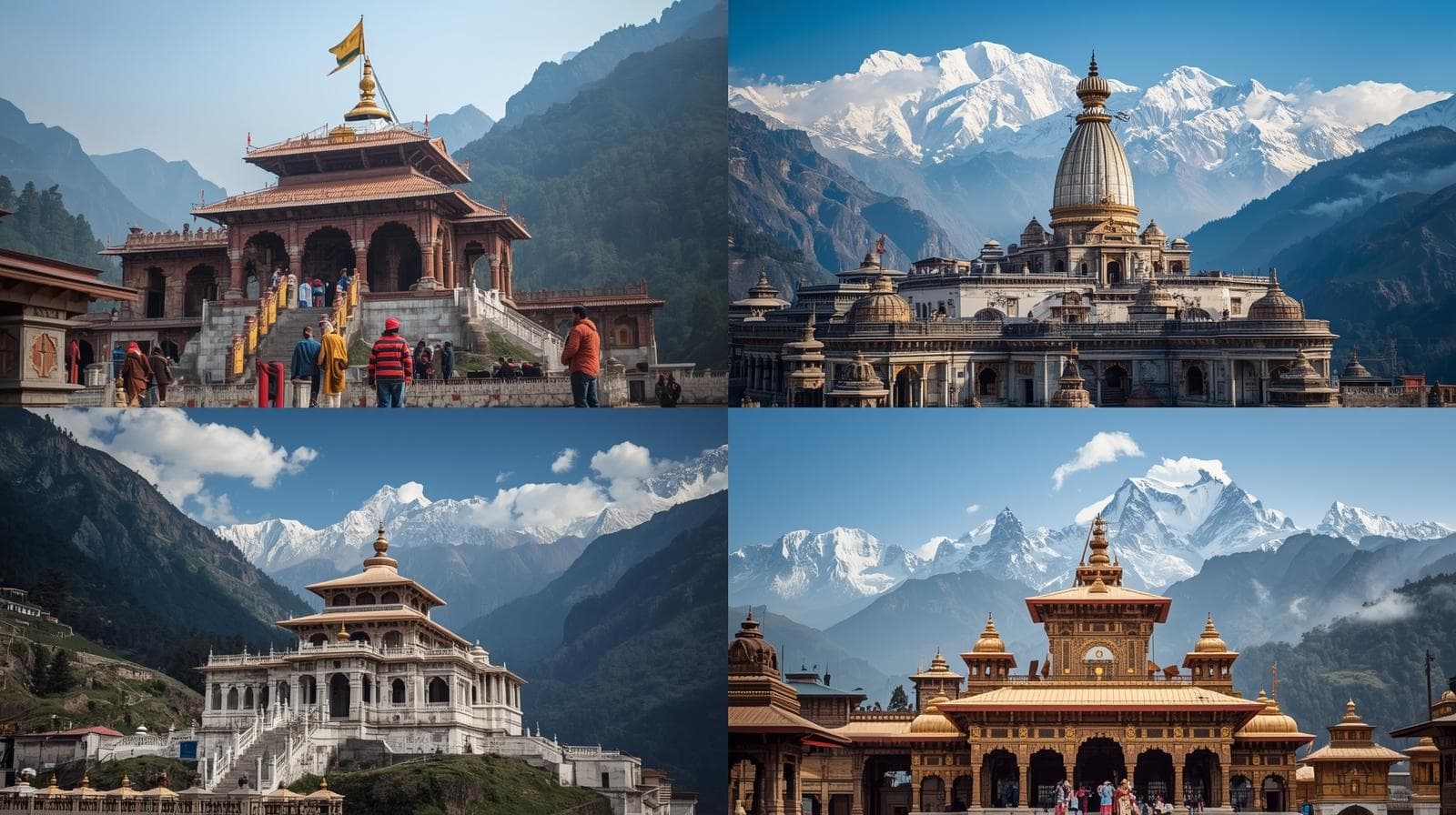
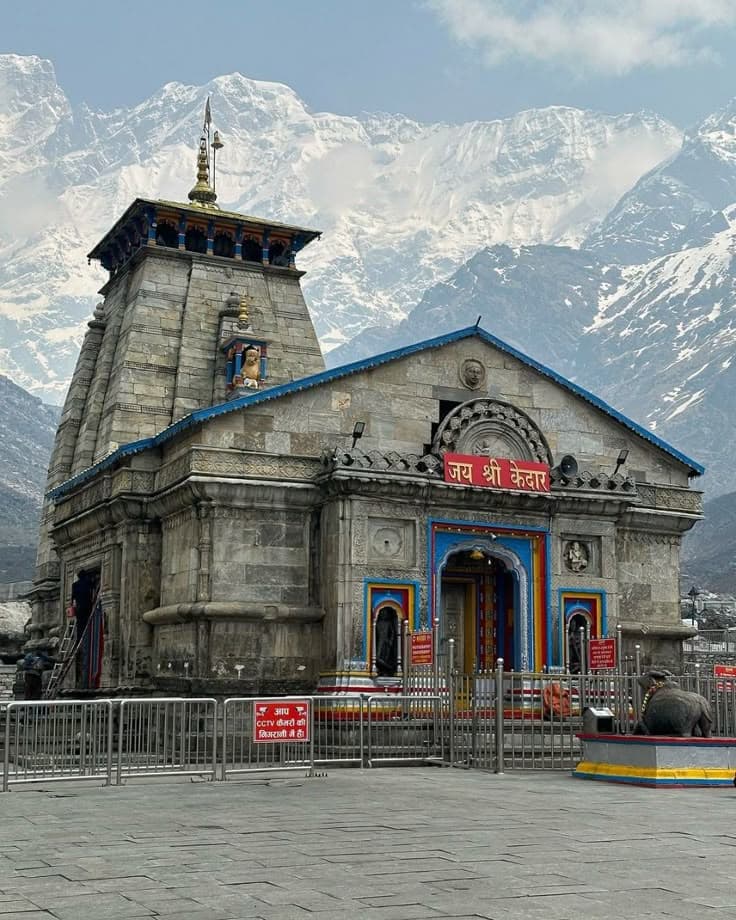
Neither a cab nor a bus goes to Kedarnath. The road from Haridwar runs up the Ganga and the Mandakini through Rishikesh, Devprayag, Rudraprayag and Guptkashi and ends at Sonprayag, about 230 km from Haridwar on our Char Dham pages and a full day of mountain driving; from Sonprayag a short shuttle reaches Gaurikund, and from Gaurikund the temple is a 16 km climb on foot, by pony, by palki or by helicopter from the helipads lower down the valley. A cab takes you to Sonprayag and waits there for the days you are up; a bus takes you to the same road-head on its own timetable. The registration every pilgrim needs is done online or at Haridwar, Rishikesh or Sonprayag. Our Haridwar to Kedarnath by car page prices the package; the bus route page covers the other way.
Where does the road end, and what comes after it?
The road ends at Sonprayag. Our Char Dham pages put Haridwar to Sonprayag at about 230 km, and the bus-route page reckons the corridor at 250 km and eight to nine hours to Gaurikund, which is the same journey counted to the trek head. Either way it is a full day: flat for the first 25 km to Rishikesh, then a narrow mountain highway along the river valleys through Devprayag, where the Alaknanda and Bhagirathi meet, Rudraprayag and Guptkashi, the last town with a full choice of hotels and the usual night halt before the climb.
From Sonprayag, vehicles from outside do not go further; a local shuttle covers the short hop to Gaurikund. From Gaurikund the temple is a 16 km climb, which the Char Dham pages count as 16 to 20 km depending on where the walk is measured from, to a temple at 3,583 metres. That is done on foot over most of a day, by pony or palki booked at Gaurikund, or by helicopter from the helipads at Phata, Sersi and Guptkashi, which turn the climb into minutes and are booked separately in advance. Most pilgrims sleep at Kedarnath, do the morning darshan and come down the next day; the car waits at Sonprayag or Guptkashi throughout.
Cab or bus: the honest comparison
| Question | Cab from Haridwar | Bus from Haridwar |
|---|---|---|
| Where it ends | Sonprayag, at your hotel or the shuttle point | Sonprayag or Guptkashi, at the stand |
| Timing | Your start, your halts, a night at Guptkashi if you want one | The timetable's start, the timetable's halts |
| While you are up at the temple | The car and driver wait at Sonprayag or Guptkashi, billed as days | You find a bus back when you come down |
| Road beyond Rishikesh | Any car; an SUV or Innova is easier on the hairpins | Only buses up to 22 to 25 seats are advisable, by the bus page |
| Luggage | In the boot; a roof carrier for trek gear on a tempo | In the hold, one bag each |
| Cost | Rate card: sedan ₹11/km, Ertiga ₹15, Innova ₹18, Tempo ₹23, on a 300 km per day minimum; the package page gives the total | Per seat; see the bus route page |
The bus is the cheaper seat and the cab is the easier journey, and the difference is largest on the days you are not driving. A car that waits at Sonprayag while you are up at the temple is there when you come down, tired, in whatever weather the afternoon brings; a bus has to be found. For a family with elders, for anyone doing the Do Dham on to Badrinath, or for a group filling an Innova or a Tempo Traveller, the cab wins on the road-head days, not the driving day.
The registration, in order
- Register every pilgrim. Uttarakhand's Char Dham registration is compulsory for everyone going up, and it is done online beforehand or at the registration counters at Haridwar, Rishikesh or Sonprayag. Carry the Aadhaar card used for it.
- Check the temple's dates. The portals open in late spring and close after Diwali; the exact dates are announced each year and the temple's official desk and the state's yatra site are where to confirm them.
- Book the helicopter if you want it. Helicopter seats from Phata, Sersi and Guptkashi are booked in advance on the official system, and they sell out; the price is on that system, not here.
- Arrange the pony or palki at Gaurikund. They are hired on the day at the counters at the trek head; the rates are the counters', and our drivers can tell you the current position on the morning.
- Keep the papers with the driver. The registration is checked on the road and at Sonprayag; the driver keeps the group's papers together and knows the check points.
How the days fall by cab
Our Haridwar to Kedarnath by car page plans it as four days, and that is the honest minimum. Day one is the drive from Haridwar to Guptkashi or Sonprayag, an early start and a full day on the mountain road with a halt at Devprayag or Rudraprayag. Day two is the climb from Gaurikund, on foot, by pony or by helicopter, with the evening aarti and the night at Kedarnath. Day three is the morning darshan and the descent, and the night back at Guptkashi. Day four is the drive back to Haridwar. The Do Dham version carries on from Guptkashi to Badrinath instead of turning for home, and our pages plan it as six days.
The fare follows the rate card: ₹11/km for a sedan, ₹15 for an Ertiga or SUV, ₹18 for an Innova Crysta and ₹23 for a 12-seater Tempo Traveller, on a 300 km per day minimum, which means the days the car waits at the road-head are billed as days. Tolls, parking, the driver's mountain halt and any hill charges are at actuals; the pony, palki or helicopter and the stays are yours to book. The package page gives the total for each vehicle and the Char Dham Yatra page puts Kedarnath into the full circuit.
When to go
The temple is open only while the portals are, from late spring to after Diwali, and our bus page names May to June and September to October as the seasons, with the monsoon between them the months to avoid: the mountain road beyond Rishikesh is landslide-prone in the rains and the bus page says the road deteriorates significantly after monsoon rain. May and June are the busiest weeks, with the yatra crowd on every road and every counter; September and October are quieter and clearer, and cold at the top. Check the road position before leaving Haridwar in any month; our drivers do.
Starting from Rishikesh, Dehradun or Delhi instead
Haridwar is the traditional start, but it is not the nearest. Our Char Dham pages put Rishikesh to Sonprayag at about 210 km, Dehradun at about 255 km and Delhi at about 430 km, against Haridwar's 230, and the road is the same from Rishikesh onward. If you arrive by air at Dehradun, the car meets the flight and the first day runs through Rishikesh without touching Haridwar; if you arrive by train at Haridwar, the first morning is the registration counter and then the road. From Delhi, most people add a night at Haridwar or Rishikesh for the Ganga aarti and start the mountain day fresh, which is how our packages plan it.
What to carry, and what the car carries
- One medium bag each. Our Char Dham pages recommend a single 15 to 20 kg bag per pilgrim; a Tempo Traveller adds a roof carrier for trek gear, a car has the boot.
- Layers and rain gear. Woollens, a waterproof and trekking shoes; the pages are blunt that mountain weather changes within hours even in summer, and the temple is at 3,583 metres.
- The registration and the Aadhaar. Checked on the road and at Sonprayag; the driver keeps the group's papers together.
- Oxygen on the packages. On our Char Dham packages the vehicle carries an oxygen cylinder, because the altitude at Kedarnath can bring on mild sickness; senior citizens are advised to consult a doctor before the climb and to use the pony, palki or helicopter.
- Patience. The road-head days are long and the counters are busy in season; the car is not going anywhere without you.
Frequently Asked Questions
Can a cab go all the way to Kedarnath?
No. The road ends at Sonprayag, about 230 km from Haridwar; a shuttle reaches Gaurikund and the last 16 km are on foot, by pony, by palki or by helicopter.
Is registration compulsory for Kedarnath?
Yes, for every pilgrim, done online or at Haridwar, Rishikesh or Sonprayag with an Aadhaar card. The registration is checked on the road.
How many days does Haridwar to Kedarnath take by car?
Four: the drive up, the climb and the night at the temple, the descent, and the drive back. Do Dham with Badrinath is six.