Prayagraj, called Allahabad until 2018, is built around the Sangam — the confluence of the Ganga, the Yamuna and the mythical Saraswati — and is one of the four cities that host the Kumbh Mela. A day and a half covers it: the Sangam by boat in the early morning, Anand Bhawan and Khusro Bagh in the afternoon, the Allahabad Fort and its Ashokan pillar the next morning. It is about 200 km from Varanasi and 650 km from Delhi.
The Sangam, and how to actually see it
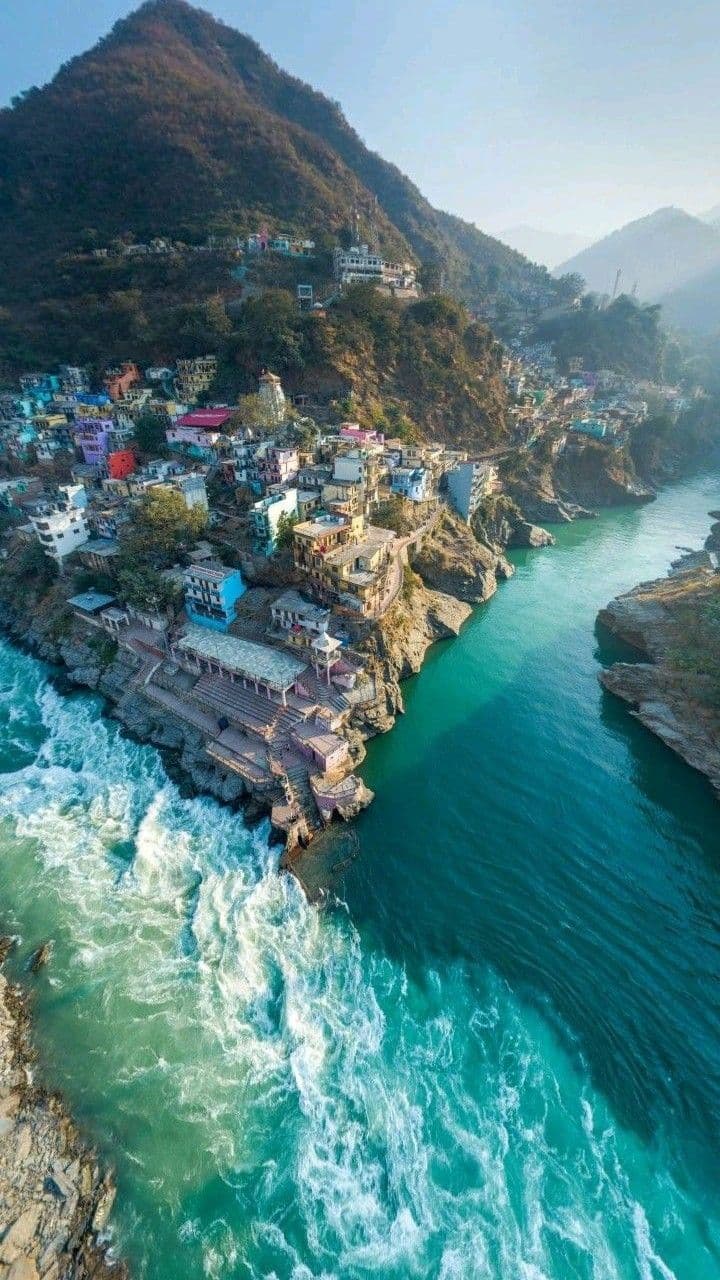
The confluence is visible as a line in the water: the Yamuna arriving green and deep, the Ganga browner and shallower, running alongside each other for some distance before mixing. The Saraswati is held to join invisibly from below.
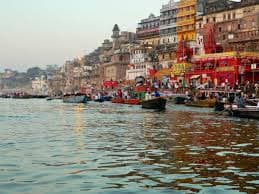
You see it from a rowing boat, hired at the ghat, which takes you out to the meeting point where platforms are anchored for bathing and priests perform rituals. The ride takes about an hour and the rate is negotiated at the ghat — agree it, and the duration, before getting in.
Early morning is the time. The light is better, the water is calmer and the ritual activity is at its height. By midday the heat on open water is considerable and the atmosphere has thinned.
As at Pushkar, boatmen and priests on the platforms will propose a puja and name a donation. The same approach applies: decide beforehand whether you want one, and settle the figure before anything begins.
| Morning | Afternoon | |
|---|---|---|
| Day one | Sangam by boat at sunrise | Anand Bhawan and the Nehru museum; Khusro Bagh |
| Day two | Allahabad Fort and the Ashokan pillar | Alfred Park and the Public Library, then onward |
Anand Bhawan, which is the best thing here
Anand Bhawan was the Nehru family home, bought by Motilal Nehru in 1900 and donated to the nation in 1970. It is where Jawaharlal Nehru grew up, where Indira Gandhi was born, and where a substantial part of the Indian independence movement was planned around a dining table.
It is preserved rather than reconstructed: the rooms are furnished as they were, with the family's books, the beds, Gandhi's room on his visits, and the Congress Working Committee meeting space. For anyone with any interest in how modern India was argued into existence, it is among the most affecting house museums in the country.
Swaraj Bhawan, the older family house next door, was donated earlier and served as Congress headquarters. Both are worth the time; Anand Bhawan more so.
The fort, and the pillar inside it
Akbar built the Allahabad Fort in 1583 at the confluence, and it remains under army control, which means only a small section opens to the public and access rules shift. Confirm current access before planning the morning around it.
What is inside matters disproportionately. The Ashokan pillar, a polished sandstone column from the third century BC, carries Ashoka's edicts and later inscriptions including Samudragupta's — a single stone with fifteen hundred years of imperial record cut into it. The Akshayavat, the undying banyan, is held in Hindu tradition to be immortal and sits in an underground chamber within the fort precinct.
Access to both has varied considerably over the years. It is worth checking rather than travelling in expectation.
Khusro Bagh
Khusro Bagh is a walled Mughal garden holding three sandstone tombs: Khusrau Mirza, Jahangir's eldest son who rebelled against his father and died in confinement; his mother Shah Begum; and his sister. The tombs are large, finely carved and almost entirely unvisited.
It is a quiet hour in a city that is otherwise busy, and the painted interior of Shah Begum's tomb retains work that is rarely seen in this condition.
The Kumbh Mela
Prayagraj hosts the Kumbh Mela on a twelve-year cycle, with the Ardh Kumbh at six-year intervals and the annual Magh Mela each winter. The full Kumbh here is among the largest gatherings of people anywhere on earth, with a temporary city built on the river flats to house tens of millions.
Visiting during the Kumbh is a completely different proposition from visiting Prayagraj: accommodation is booked a year ahead, movement is controlled, and the scale is difficult to convey. Visiting during the annual Magh Mela in January gives a far smaller version of the same thing and is manageable on ordinary arrangements.
Getting there
Prayagraj is about 200 km from Varanasi, three to four hours, which is the usual pairing. From Lucknow it is about 200 km, and from Delhi roughly 650 km — a long day by road, more commonly done by train or flight.
October to March is the comfortable season. Summer in this part of the Gangetic plain is severe, and the open river flats offer no shade whatever.
Questions people ask
What is the Sangam?
The confluence of the Ganga and the Yamuna, with the mythical Saraswati held to join from below. The two visible rivers run side by side in different colours before mixing, which you see from a hired rowing boat.
Is the Allahabad Fort open to visitors?
Only partly. It is an active army installation and public access to the Ashokan pillar and Akshayavat has varied. Check current rules before building a morning around it.
Why was Allahabad renamed?
The city was officially renamed Prayagraj in 2018, restoring the older name associated with the confluence. Both names remain in common use.
When is the next Kumbh Mela at Prayagraj?
The full Kumbh runs on a twelve-year cycle with an Ardh Kumbh at six years, and the Magh Mela annually each winter. Confirm dates for your year — the Kumbh requires booking roughly a year ahead.