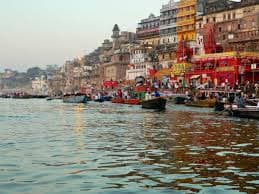
The two fixed points of a Varanasi visit are a boat on the Ganga at dawn and the Ganga Aarti at Dashashwamedh Ghat after sunset. Be on the water about forty minutes before sunrise — the light and the bathing both begin before the sun appears, and boats booked for "sunrise" often leave too late. For the aarti, arrive an hour early or take a boat, because the steps fill completely. Photography at the cremation ghats is not permitted and the rule is taken seriously.
The dawn boat, and the timing people get wrong
The river at dawn is the reason to come, and the common mistake is booking for sunrise rather than before it.
The hour before the sun clears the far bank is when the ghats come alive: bathers entering the water, priests beginning, laundry starting, the light moving from grey to pink across a two-kilometre arc of stone steps that faces almost due east. Once the sun is properly up, the quality of the light that makes Varanasi photographs is gone.
So the instruction is specific — be on the boat forty minutes before sunrise, which in winter means leaving the hotel around five-thirty.
Rowing boats are hired at the ghats and the rate is negotiated. Agree the duration, the stretch, and whether the boatman will stop. A typical ride runs from Assi or Dashashwamedh north past Manikarnika and back, an hour to ninety minutes. A rowed boat is quieter and better than a motorboat, and the river is calm enough that it is never the wrong choice.
| Early morning | Evening | |
|---|---|---|
| Day one | Dawn boat, Assi to Manikarnika and back | Ganga Aarti at Dashashwamedh, from the steps |
| Day two | Walk the ghats on foot; Kashi Vishwanath | Aarti again from a boat, which is a different view |
| Day three | Sarnath, 10 km — Buddha's first sermon | Depart |
The Ganga Aarti
At Dashashwamedh Ghat after sunset, a line of young priests perform a choreographed fire ceremony — brass lamps, incense, conch, bells — facing the river, for about forty-five minutes. It happens every evening and it is both a genuine ritual and, by now, a substantial spectacle with seating, a sound system and large crowds.
Two ways to watch it. From the steps, where you need to arrive an hour early for any kind of position, and where you are inside the crowd and the sound. From a boat on the water, which is calmer, gives a cleaner view of the whole line of priests, and is how to do it on a second evening.
A smaller, quieter aarti happens at Assi Ghat, and the Subah-e-Banaras morning ceremony there at dawn is worth knowing about — far fewer people, and it pairs naturally with the dawn boat.
Manikarnika, and how to behave
Manikarnika is the principal cremation ghat and functions continuously. Visitors pass it on the boat and can walk to it, and it is a place of grieving families, not an attraction.
The rules are simple and absolute. No photography or filming — of the pyres, the bodies, or the families. This is not a guideline and people have had phones taken.
Beyond that: stand back, do not approach the pyres, and be quiet. And be aware of a long-running approach in which someone presents themselves as connected to the ghat and asks for a donation "for wood for the poor", with figures escalating. Donating is a personal decision; being clear that you are not interested, early and politely, is the practical response.
Kashi Vishwanath and Sarnath
Kashi Vishwanath is one of the twelve Jyotirlingas and the spiritual centre of the city. The corridor project has reshaped the approach substantially. Security is tight, phones and bags are deposited, and queues are long — go early, and expect the visit to take longer than the darshan itself.
Sarnath, 10 km out, is where the Buddha gave his first sermon after enlightenment. The Dhamek Stupa, the excavated monastery ruins and the archaeological museum — which holds the Lion Capital of Ashoka, India's national emblem — make a comfortable half day and are a complete contrast in pace to the ghats.
When to come
October to March is the season, with December and January cold at dawn on the water — colder than people expect, and the boat is open. Dev Deepawali, on Kartik Purnima in November, is when the whole ghat arc is lit with lamps and is the most spectacular night of the Varanasi year; it is also the fullest.
April to June is severe. Monsoon raises the river substantially, which can submerge lower steps and change or suspend boat operations.
From Lucknow it is about 300 km, and Prayagraj is 200 km and the usual pairing.
Questions people ask
What time should the dawn boat leave?
About forty minutes before sunrise, not at sunrise. The hour before the sun clears the far bank is when the light and the bathing are at their best.
Where should I watch the Ganga Aarti from?
From the steps for the atmosphere, arriving an hour early; from a boat for a cleaner view of the whole ceremony. Many visitors do both on different evenings.
Can I photograph the cremation ghats?
No. Photography and filming at Manikarnika are not permitted and the rule is enforced. These are grieving families, not a sight.
Is Sarnath worth half a day?
Yes — the Dhamek Stupa, the monastery ruins and the museum holding the Lion Capital of Ashoka. It is also a complete change of pace from the ghats.