
Mandarin-speaking guide · Amritsar
中文
A Mandarin-speaking guide in Amritsar
A licensed Mandarin-speaking guide in Amritsar costs ₹3,000 for a full day of eight hours and ₹1,800 for a half day of four. With an AC car and driver on the published package, a full day is ₹5,500. Amritsar has 4 monuments on this page with their entry fees and opening hours, and the guide’s Ministry-of-Tourism licence card is sent to you before you pay anything.
Full day · 8 hours
₹3,000
Half day · 4 hours
₹1,800
With car and driver
from ₹3,300
Licence region
Northern Region
What it costs
Mandarin guide rates in Amritsar
The guide fee is set by language, not by city — a Mandarin speaker is ₹3,000 a day in Amritsar and the same in Delhi. The vehicle half of a bundled day is the published 4 hr / 40 km and 8 hr / 80 km rental package, so every figure below is two published rates added together and nothing else.
Half day
4 hours, 40 km included
₹1,800guide only
With a vehicle and driver
- Sedan (Swift Dzire / Honda Amaze) — 4 seats
- ₹3,300
- SUV (Ertiga / Innova) — 6–7 seats
- ₹4,000
- Innova Crysta — 7 seats
- ₹4,600
Guide ₹1,800 plus the published 4 hr / 40 km rental package. Monument entry tickets are paid at the gate and are not included.
Full day
8 hours, 80 km included
₹3,000guide only
With a vehicle and driver
- Sedan (Swift Dzire / Honda Amaze) — 4 seats
- ₹5,500
- SUV (Ertiga / Innova) — 6–7 seats
- ₹6,500
- Innova Crysta — 7 seats
- ₹7,500
Guide ₹3,000 plus the published 8 hr / 80 km rental package. Monument entry tickets are paid at the gate and are not included.
The half-day guide fee is 60% of the day rate, rounded up to the nearest ₹50 — the rule is printed on the rate card so the arithmetic is checkable. Monument entry is extra and is listed by monument further down this page.
Ministry of Tourism, Government of India
Regional Level Guide (RLG)
中文
- Language examined in
- Mandarin
- Licensing region
- Northern Region
- Full day · 8 hours
- ₹3,000
- Half day · 4 hours
- ₹1,800
Every licence card carries a photograph, a licence number, the issuing region and the languages the holder is examined in. We send a photograph of the card on WhatsApp when a booking is confirmed, before you pay anything, so you can check the number, the region and the language against the guide who meets you.
Why the licence matters here. Archaeological Survey of India monuments admit licensed guides and turn away unlicensed ones at the ticket gate. An unlicensed "guide" who approaches you outside the Taj Mahal or Amber Fort cannot accompany you inside, which is why the pitch is always made in the car park.
What you will see
The monuments of Amritsar, with what they cost at the gate
Every fee and opening time below is the figure published on this site's own guide to that monument, linked from each row. Watch the closures: Partition Museum is shut on Monday.
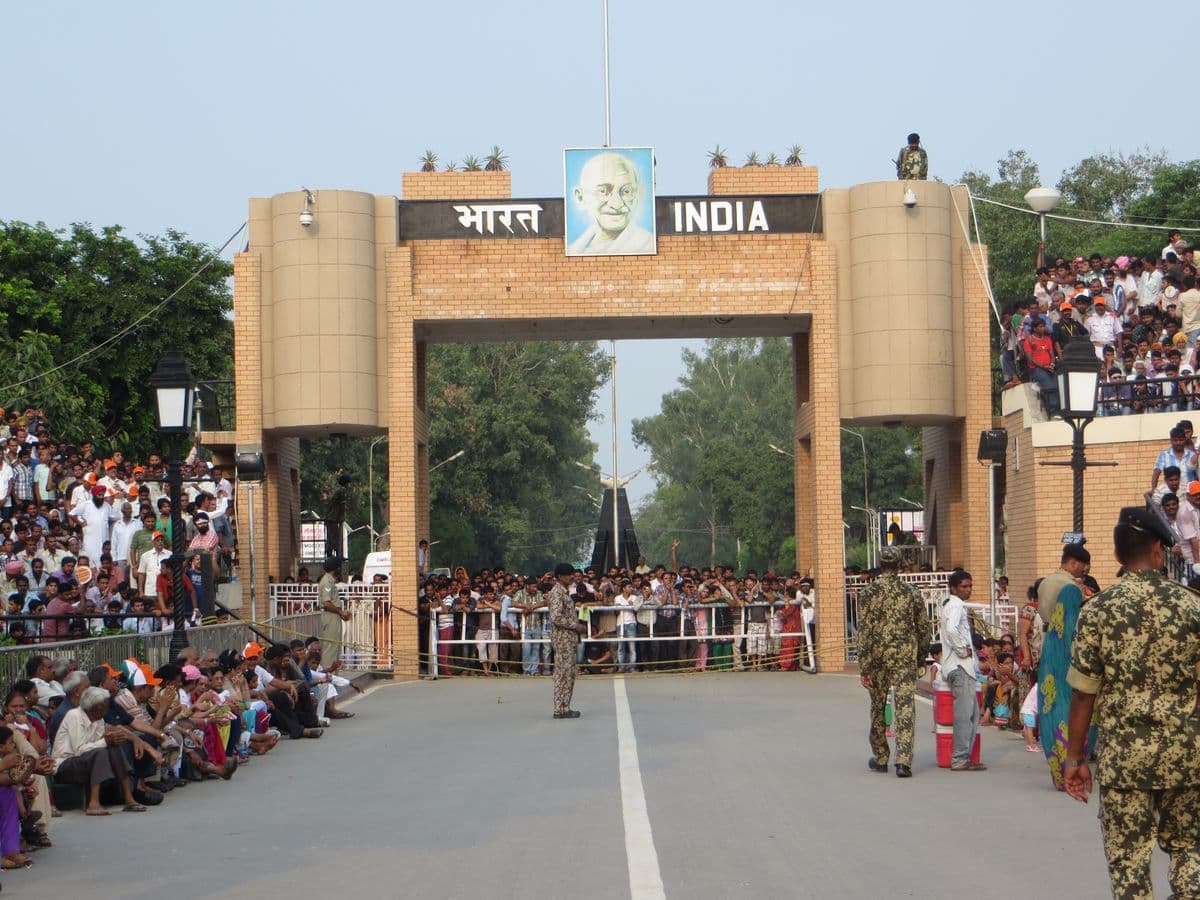
Amritsar monuments · 1 of 4
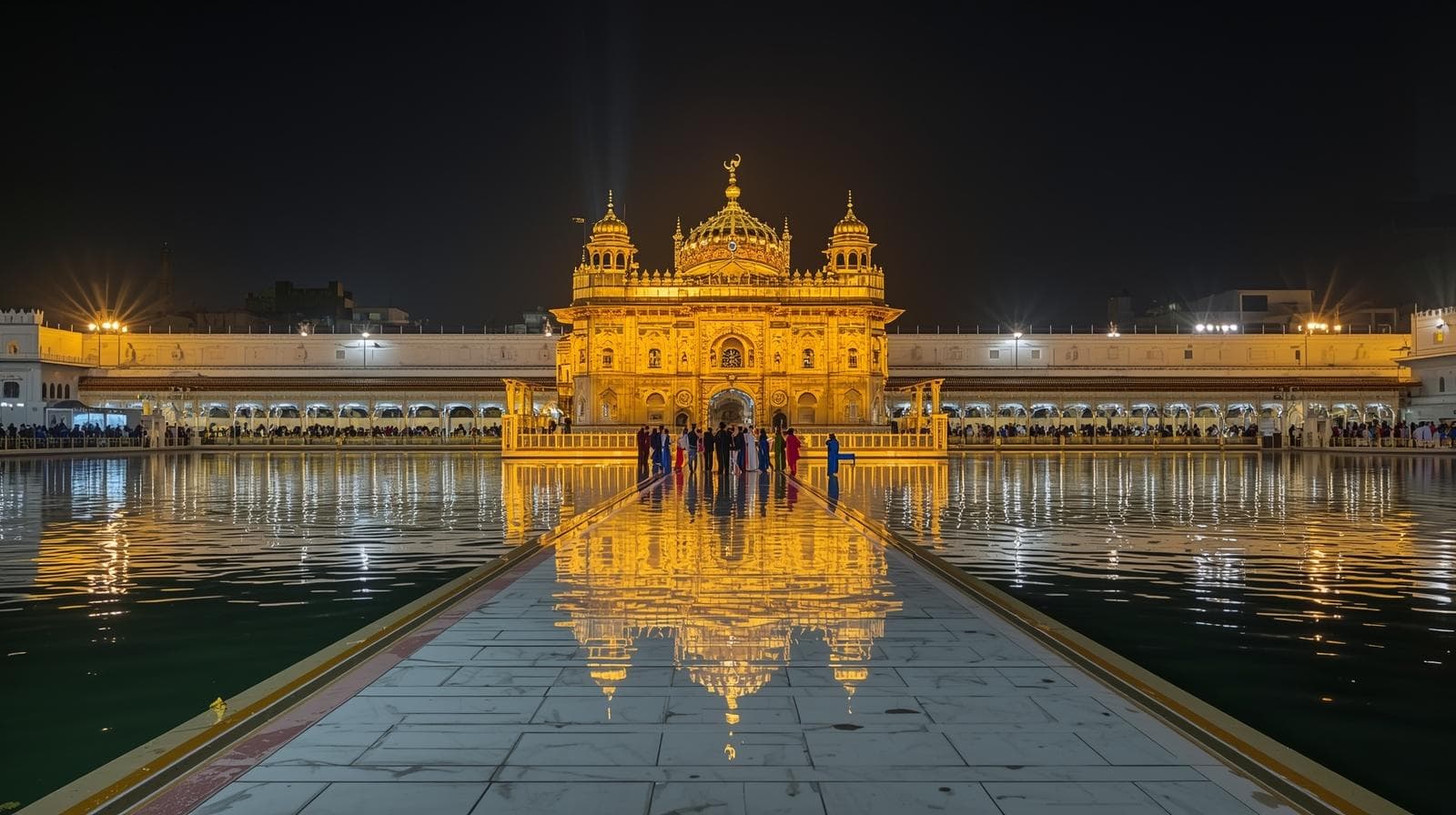
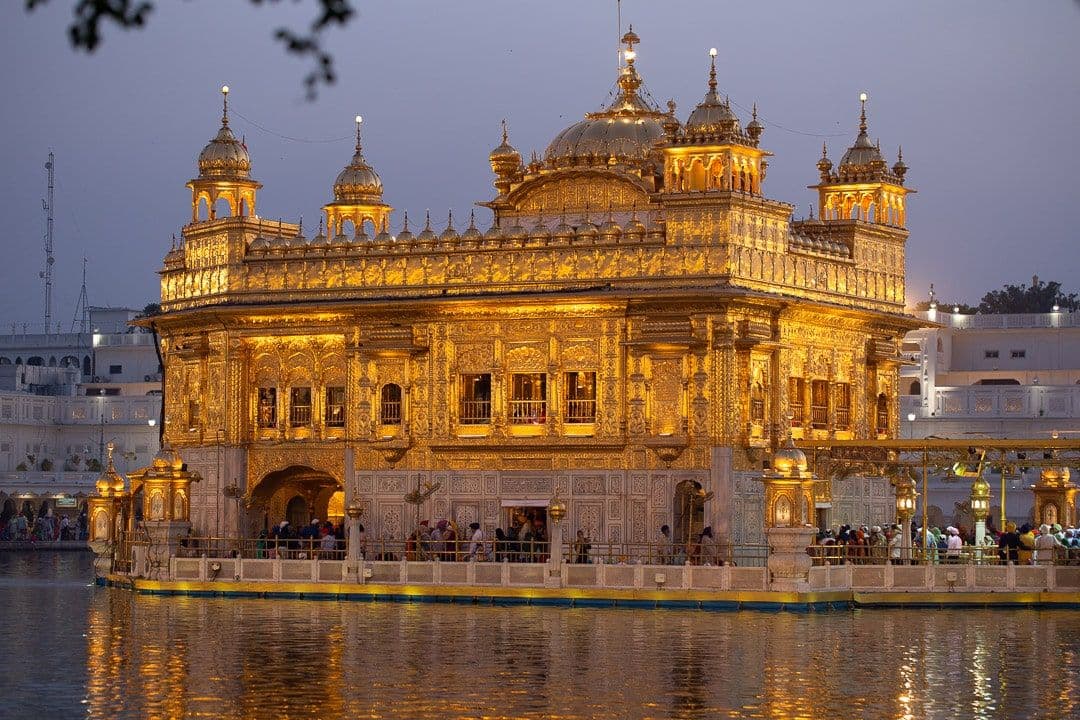
Golden Temple (Harmandir Sahib)
- Entry — Indian
- Free
- Entry — foreign
- Free
- Hours
- 24 hours
- Time needed
- 3–4 hours
| Monument | Entry — Indian | Entry — foreign | Hours | Closed | Time needed |
|---|---|---|---|---|---|
| Golden Temple (Harmandir Sahib) | Free | Free | 24 hours | Open all days | 3–4 hours |
| Jallianwala Bagh | Free | Free | 6:30 AM – 7:30 PM | Open all days | 45 minutes |
| Partition Museum | Not published | Not published | 10:00 AM – 6:00 PM | Monday | 1.5–2 hours |
| Wagah border retreat ceremony | Free | Free | Gates about 4:00 PM – Ceremony at sunset | Open all days | 3.5–4 hours including the drive |
3 of 4 carry a published entry fee. 3 are free to enter. Where a fee is not shown it is because this site does not hold a verified figure for it, and we would rather leave a gap than print a number nobody has checked.
Mandarin in Amritsar
What a Mandarin commentary does here that it does not do elsewhere
A good number of Mandarin-speaking visitors arrive at the Golden Temple with a connection already — the Sikh communities of Hong Kong, Singapore and Malaysia are long-established, and their gurdwaras are familiar buildings in those cities. A Mandarin commentary here can start from that rather than from zero.
What your guide covers
Mandarin commentary benefits from the Chinese record of India — Xuanzang travelled here in the seventh century and wrote it down — so a Buddhist site can be described through a source the traveller may already know.
The Harmandir Sahib as the central gurdwara, set against the diaspora gurdwaras of Hong Kong, Singapore and Malaysia.
The Sikh migration out of Punjab under the colonial economy, and how the communities of South-East and East Asia were formed.
The langar, the conduct and the Gurmukhi scripture, with the terminology kept distinct from Buddhist and Daoist vocabulary.
The shape of the day
A half day and a full day in Amritsar
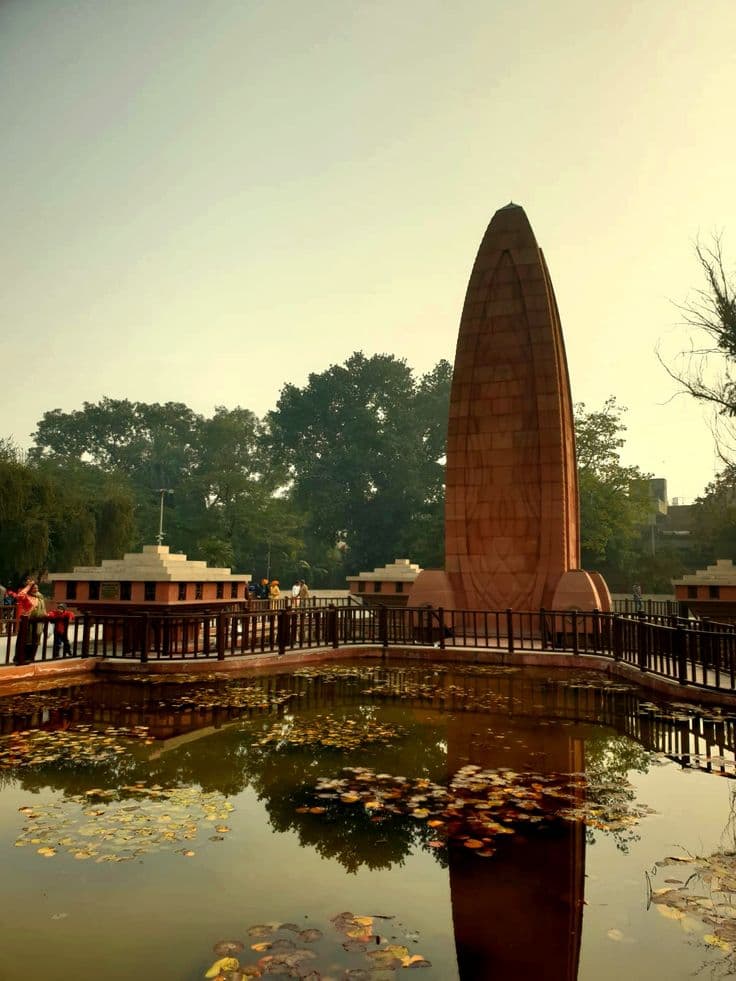
Amritsar is three things within eight hundred metres of each other: the central shrine of the Sikh faith, the garden where a British general had unarmed people shot in 1919, and the museum of the 1947 Partition that cut the province in half. A guide here is doing history that is still within living memory, in a city where many families have a direct stake in it. The tone matters as much as the facts, which is not true of a Mughal tomb.
Half day · ₹1,800 guide
The Golden Temple and Jallianwala Bagh
Best taken at dawn, when the Guru Granth Sahib is carried into the sanctum and the parikrama is nearly empty.
- 05:30
Hotel pickup
The old-city hotels are minutes away. Your guide briefs you on head covering, shoes and the sanctum rules before you go in, not after.
- 06:00
Golden Temple at dawn
Two hours. The palki procession, the parikrama, the Akal Takht, the causeway to the sanctum, and the langar — which you are welcome to eat in, and should.
- 08:15
Jallianwala Bagh
Two minutes’ walk. The narrow entrance lane, the bullet marks, the well. Forty-five minutes, and a guide who gets the tone right is the difference between a memorial and a photo stop.
- 09:15
Drop
The 4 hr / 40 km package covers the morning.
Full day · ₹3,000 guide
Golden Temple, Partition Museum and the Wagah retreat
The Wagah ceremony is at sunset and fills up long before, so the day is built backwards from it.
- 05:30
Hotel pickup
Dawn at the temple is the best hour of the day and the reason for the early start.
- 06:00
Golden Temple
Two and a half hours, including the langar and the Central Sikh Museum on the upper floor of the clock-tower entrance.
- 08:45
Jallianwala Bagh
Forty-five minutes on foot from the temple.
- 09:45
Breakfast in the old city
Kulcha on Lawrence Road, or a dhaba near the temple. Paid separately.
- 11:00
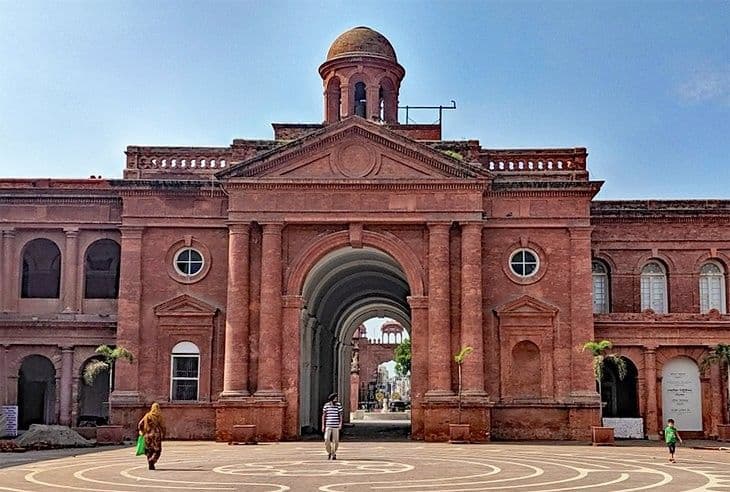
Partition Museum
Two hours. The oral-history recordings are the part people remember; closed on Monday, so a Monday day swaps in the Gobindgarh Fort instead.
- 13:30
Lunch and a break at the hotel
The afternoon is dead time here and the Wagah drive is better taken rested.
- 15:30
Drive to Wagah
Twenty-eight kilometres, about forty-five minutes. No bags past the checkpoint; the car parks well back and the last stretch is on foot.
- 16:30
Retreat ceremony
Early arrival is the whole of getting a seat. The ceremony itself runs to sunset.
- 19:00
Back to Amritsar
The 8 hr / 80 km package covers the city; the Wagah run adds distance beyond the 80 km, charged at the published per-km rate.
Orientation. The Golden Temple, Jallianwala Bagh and the Partition Museum are all inside the walled old city, within a few minutes’ walk of one another. The Wagah border is twenty-eight kilometres west, and the retreat ceremony there is a late-afternoon event that dictates the shape of any day that includes it.
The fare, stated plainly
What is in the price and what is not
What the fare covers
- A Ministry-of-Tourism licensed Regional Level Guide for the Northern Region, examined in Mandarin
- The guide’s licence card photographed and sent on WhatsApp at confirmation, before anything is paid
- An AC vehicle with driver on the published rental package, if you book the bundled rate
- Driver waiting time at every stop for the whole package duration
- Fuel, tolls within the package distance, and the driver’s allowance
- Help at the ticket counters, including which tier to buy and which gate to use
What it does not
- Monument entry tickets — these are paid at the gate and the figures for Amritsar are in the table above
- Meals, and any shopping or activity you choose during the day
- Distance beyond the package’s included kilometres, charged at the published per-km rate
- Guide or driver gratuity, which is customary but never compulsory
- Monument camera and video charges where the monument levies them
About Mandarin guides
Working in Mandarin
Buddhist sites are often the reason for the trip rather than a stop on it, and that reorders the itinerary: Sarnath before the ghats, Fatehpur Sikri’s debating hall before the palaces.
Who it serves
Mainland China, Taiwan, Hong Kong, Singapore, Malaysia
How names are handled
Names are given in pinyin alongside the spoken form, and dynastic dates are set against Chinese dynasties so the chronology lands.
Notice we need
Book 48–72 hours ahead in the October–March season.
The licence, and how to check it
A Regional Level Guide licence is issued by the Ministry of Tourism after a written examination, an interview and a training course run through the Indian Institute of Tourism and Travel Management. It is issued for a tourism region, not for the whole country, and it names the foreign languages the holder is examined in.
Every licence card carries a photograph, a licence number, the issuing region and the languages the holder is examined in. We send a photograph of the card on WhatsApp when a booking is confirmed, before you pay anything, so you can check the number, the region and the language against the guide who meets you.
Amritsar is licensed under the Northern Region. Northern Region — Delhi, Uttar Pradesh, Uttarakhand, Punjab, Haryana, Himachal Pradesh
Amritsar in photographs
What the day looks like
Photographed on the Amritsar routes these itineraries use.
Questions people ask
Mandarin guides in Amritsar
Our team is here to help. Contact us for personalized assistance.
Other combinations
The same city in another language, or the same language in another city
The two directions a reader usually wants next. Every rate shown is the published day rate for that language.
Nine other languages in Amritsar
Everything else in Amritsar
Book a Mandarin-speaking guide in Amritsar
Send your dates and the length of day you want. We come back with a named licensed guide, a photograph of their licence card, and the total in writing — ₹3,000 for the guide on a full day, or ₹5,500 with a sedan and driver included.
We send the guide’s licence card before you pay anything. Nothing is charged to confirm.