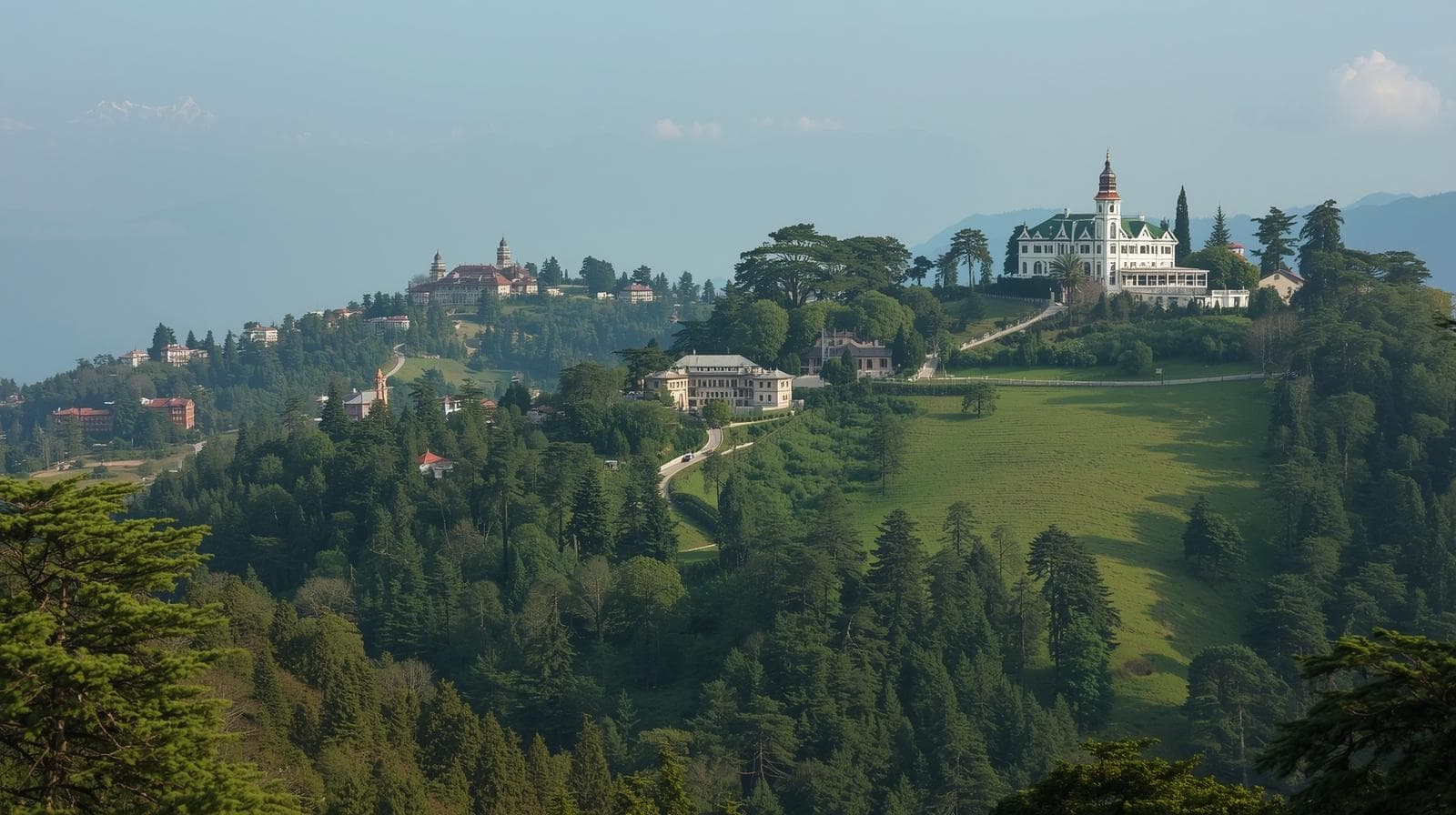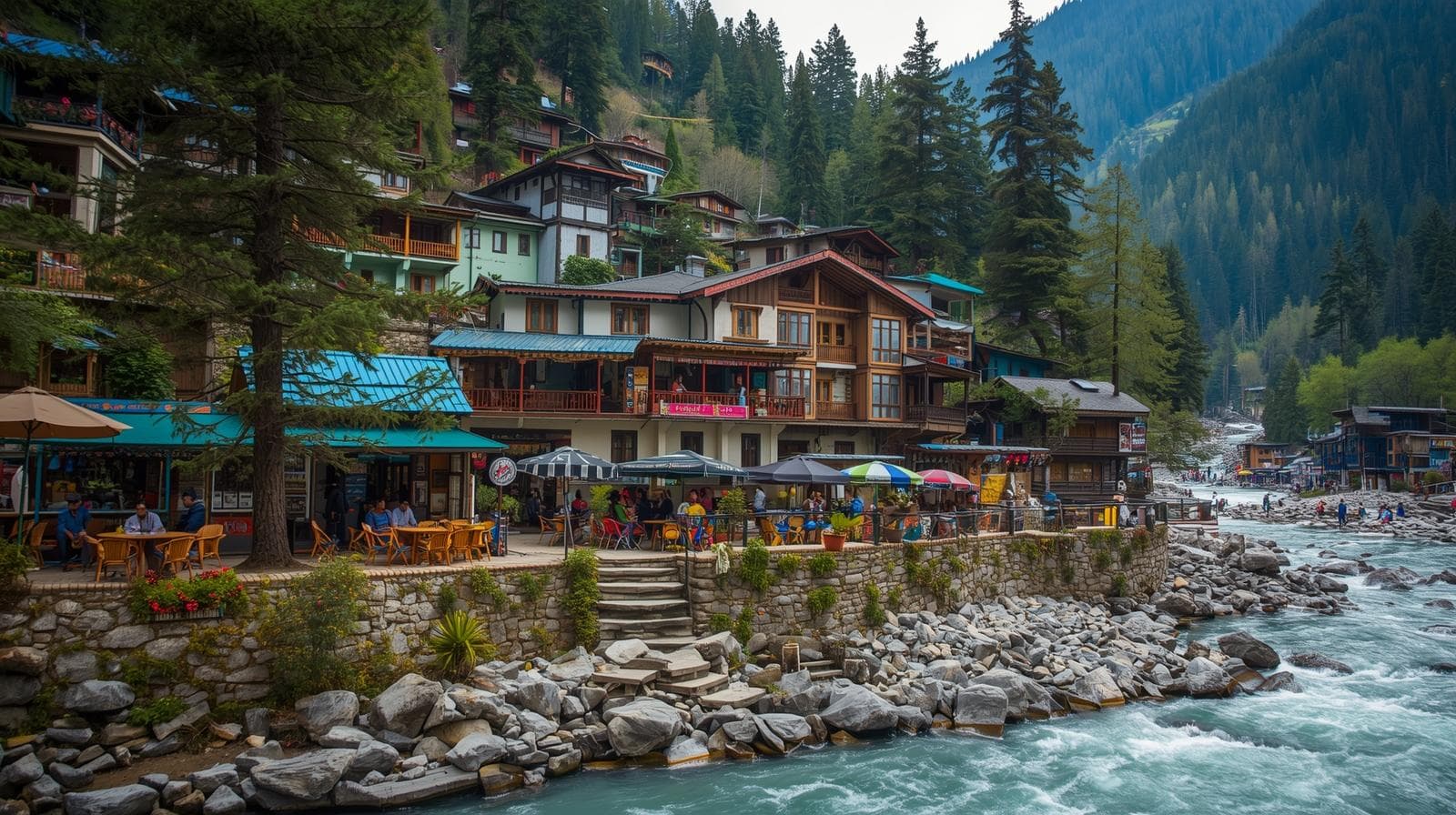

Dharamshala and McLeodganj are two separate towns about 9 km and 500 m of altitude apart, and almost everything visitors come for is in the upper one. McLeodganj at about 2,080 m holds the Tsuglagkhang complex — the Dalai Lama's temple and residence — the Tibetan institutions, the cafes and the trailheads. Lower Dharamshala is the administrative town with the bus stand and the HPCA cricket stadium. Book accommodation in McLeodganj unless you specifically want the lower town.
The two towns, and the booking mistake
This catches people out constantly. A hotel advertised as "Dharamshala" may be in the lower town, 9 km and a winding half-hour drive below McLeodganj, where there is very little to do in the evening and no walking access to anything.
Lower Dharamshala is the district headquarters: offices, the main bus stand, the market, and the HPCA stadium — which is genuinely worth seeing, a cricket ground with the Dhauladhar range directly behind the pavilion and one of the most striking settings in world cricket.
McLeodganj is where the Tibetan community settled after 1959, where the Central Tibetan Administration sits, and where visitors spend their time. Above it again are Dharamkot and Bhagsu, quieter villages that have become the long-stay and yoga-retreat end of the area.
The Tsuglagkhang complex
The main temple complex houses the Dalai Lama's residence, the Namgyal Monastery, the Tibet Museum and the main prayer hall. It is open to visitors, free, and is an active monastic institution rather than a monument — monks debate in the courtyard in the afternoons, which is open to watch and is the most interesting hour there.
The Tibet Museum within the complex documents the occupation and the exile, and it is a difficult and worthwhile hour. It explains why the town exists.
Public teachings by the Dalai Lama are given periodically and require advance registration with a passport, usually arranged through the Branch Security Office in McLeodganj. Dates are published in advance on the official site, and they are not frequent — travellers hoping to coincide should check well before booking.
| Morning | Afternoon | |
|---|---|---|
| Day one | Tsuglagkhang complex and the Tibet Museum | Bhagsunag waterfall and temple; Bhagsu village |
| Day two | Triund trek from Galu Devi, 9 km return | Rest, or descend to Dharamkot |
| Day three | Norbulingka Institute, lower valley | HPCA stadium, then onward |
Bhagsunag and the waterfall
Bhagsunag is about 2 km from McLeodganj, reached on foot in half an hour along a lane past cafes and guesthouses. The temple is old and modest; the waterfall is a further twenty-minute walk up a stepped path and is busy in season.
The falls are at their fullest just after the monsoon and can be a disappointing trickle in late spring. The walk up, through pine with the Dhauladhar ahead, is the better part regardless of the water.
The Triund trek, honestly described
Triund is the walk everyone does and it deserves its reputation: a ridge at about 2,850 m with the Dhauladhar wall directly above and the Kangra valley spread out below. It is roughly 9 km return from the Galu Devi temple road head, and most people take four to five hours for the round trip.
It is marketed as easy and it is not quite. The first half is a steady forest path; the last stretch, the "22 curves", is a sustained climb that catches unprepared walkers. It is entirely doable for anyone reasonably fit in proper shoes, and genuinely unpleasant in flip-flops, which is what a surprising number of people attempt.
Camping on the ridge is popular and is regulated — numbers and litter have been a serious problem and rules have tightened. Check the current position rather than assuming you can pitch where you like. Day-walking it and descending by evening avoids the issue entirely.
Norbulingka and the crafts
The Norbulingka Institute, down in the valley between the two towns, was founded to preserve Tibetan artistic traditions — thangka painting, wood carving, metalwork, applique. The workshops are open to visitors and you can watch artisans at work, which is a far better hour than a souvenir shop.
The gardens are formal and quiet, with a temple holding a large gilded Buddha. It is the most peaceful place in the area and is routinely skipped by visitors who stay up in McLeodganj.
When to come
March to June is the main season — rhododendron, clear Dhauladhar views in spring, warm days. July and August are monsoon and Dharamshala is among the wettest places in India; the mountains disappear for days and the Triund path becomes slippery and leech-prone.
September to November is the best window: the clearest air of the year, the falls still full, and thin crowds. December to February brings cold and occasional snow on the upper ridges, with Triund genuinely demanding.
From Delhi it is about 480 km and eleven hours, usually overnight. From Chandigarh it is around 250 km and six hours, and from Amritsar about 200 km, which is the quickest approach by air.
Questions people ask
Should I stay in Dharamshala or McLeodganj?
McLeodganj, unless you have a specific reason not to. It is 9 km and 500 m above the lower town and holds the temple, the cafes and the trailheads.
Can I see the Dalai Lama?
Public teachings happen periodically and need advance registration with a passport. Dates are published ahead and are not frequent — check before planning a trip around it.
How hard is the Triund trek?
About 9 km return and four to five hours. The forest section is gentle; the final "22 curves" is a sustained climb. Proper shoes matter more than fitness.
When are the Dhauladhar views clearest?
September to November. Monsoon hides the range for days at a time and Dharamshala is one of the wettest places in India.