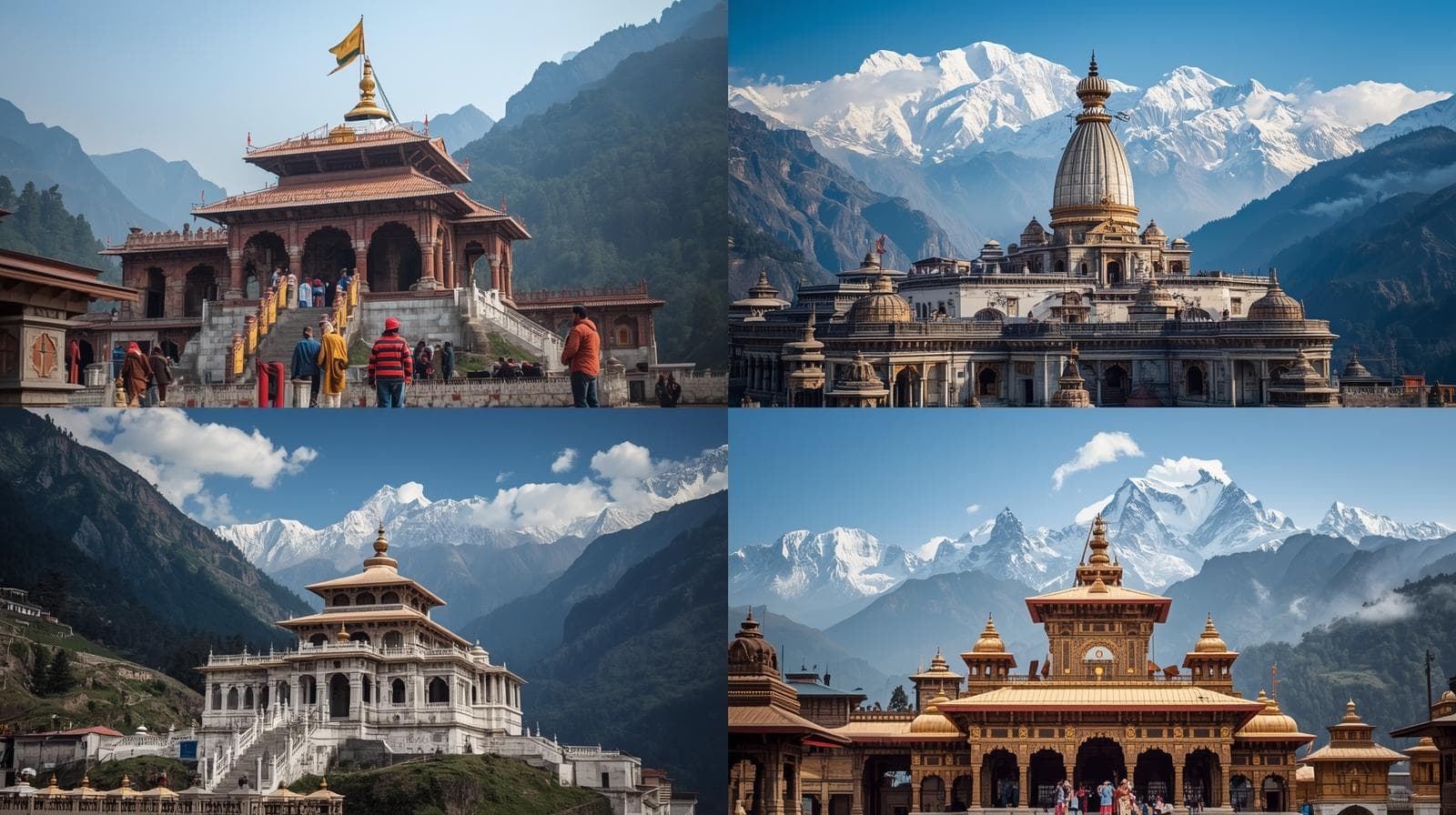

The Khatu Shyam Ji temple is in Khatu village in Sikar district, about 80 km from Jaipur and 270 km from Delhi, and is one of the most visited pilgrimage sites in Rajasthan. The deity is identified with Barbarika, grandson of Bhima, whose head was given as alms before the Mahabharata war and blessed by Krishna to be worshipped in his name. The temple opens in defined morning and evening darshan windows, and the Falgun Mela around February or March draws enormous crowds over roughly ten days.
Who Khatu Shyam is
The story belongs to the Mahabharata. Barbarika, grandson of Bhima and a warrior of extraordinary skill, vowed to fight on the side of whoever was losing. Krishna, recognising that this would make the war unwinnable for either side, asked for his head as alms before the battle. Barbarika gave it, and Krishna granted that he would be worshipped in the Kali Yuga by Krishna's own name — Shyam.
The head is held to have been buried and later discovered at Khatu, where the temple now stands. Devotees address the deity as "haare ka sahara" — the support of the defeated — which is the heart of the devotion here and explains a great deal about who comes and why.
The temple and darshan
The present temple structure dates to the eighteenth century with later expansion, built in marble with the characteristic Rajasthani arches and a silver-worked sanctum. The image is decorated elaborately and changed through the day.
Darshan runs in defined windows, broadly morning and evening, with timings shifting between summer and winter. The queue system is managed through corridors and can be long on Ekadashi, on Sundays and through the mela.
Two things are distinctive here. Nishan — a decorated triangular flag — is carried by devotees and offered at the temple, and the route into Khatu is often lined with people walking in carrying them. And the offering of itra, perfume, along with coconut and sweets is particular to this shrine.
| Detail | |
|---|---|
| From Jaipur | about 80 km, two hours |
| From Delhi | about 270 km, five to six hours |
| From Sikar | about 45 km |
| Busiest | Falgun Mela (Feb-Mar), Ekadashi, Sundays |
| Nearby | Salasar Balaji about 100 km; Shekhawati havelis |
The Falgun Mela
The Falgun Mela, in the Hindu month of Falgun and usually falling in February or March, is the major annual event and runs for roughly ten days around Falgun Ekadashi. It marks the appearance of the deity's head at Khatu.
The scale is substantial — lakhs of pilgrims, many walking the final stretch from Ringus or further, with the road into Khatu becoming a continuous procession. Temporary arrangements handle accommodation and food, and ordinary logistics in the village break down under the numbers.
For a devotee this is the time to come. For a visitor wanting to see the temple itself, it is the time to avoid — darshan queues extend to many hours and the village is impassable by vehicle.
Combining it
Khatu sits in Sikar district on the edge of the Shekhawati region, which makes an obvious pairing. Salasar Balaji, a major Hanuman temple, is about 100 km away and the two are very commonly visited together as a circuit from Jaipur or Delhi.
The painted havelis of Shekhawati — Nawalgarh, Mandawa, Fatehpur — are within reach of the same route, which means a trip can combine pilgrimage and the finest fresco architecture in Rajasthan without a long detour.
Practical notes
Phones and bags are generally not permitted in the sanctum area and cloakroom facilities are available near the temple. Footwear is left outside. Prasad is bought from shops around the temple complex.
Accommodation in Khatu itself is basic and limited; most visitors stay at Sikar or Jaipur, or treat it as a day trip. During the mela, booking anywhere within reach requires months of notice.
From Jaipur it is a comfortable two hours each way and works well as a single day. From Delhi it is five to six hours, which makes an overnight at Jaipur or Sikar more sensible than a same-day return.
Questions people ask
Who is Khatu Shyam Ji?
The deity is identified with Barbarika, grandson of Bhima, who gave his head as alms before the Mahabharata war and was blessed by Krishna to be worshipped in his name.
When is the Falgun Mela?
In the month of Falgun, usually February or March, running about ten days around Falgun Ekadashi. It draws lakhs of pilgrims and the village becomes impassable by vehicle.
How far is Khatu Shyam from Jaipur?
About 80 km, roughly two hours, which makes it a comfortable day trip.
Can I combine it with Salasar Balaji?
Yes — Salasar is about 100 km away and the two are very commonly done as one circuit, often with the Shekhawati haveli towns added.