Mount Abu is Rajasthan's only hill station, at about 1,220 m in the Aravallis, roughly 220 km from Udaipur and 185 from Jodhpur. The reason to come is the Dilwara temples — five Jain temples built between the eleventh and thirteenth centuries whose marble carving is among the finest anywhere in India. They open to non-Jain visitors only in the afternoon, usually from around noon, and photography inside is prohibited. Nakki Lake and Guru Shikhar, the highest point in Rajasthan, fill the rest of a two-day stay.
Dilwara, and why it is extraordinary
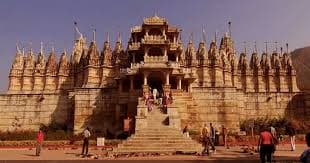
From outside the Dilwara temples are deliberately plain — low, unadorned stone, almost industrial. That restraint was protective: an undecorated exterior attracted less attention during periods when temples were being destroyed.
Inside, the marble is carved to a thinness that is difficult to believe. Ceilings are cut into concentric lotus patterns so fine that the stone is translucent in places; pillars carry bands of figures no larger than a thumb; the great domes are worked into hanging pendants of marble. The Vimal Vasahi, completed in 1031, and the Luna Vasahi of 1230 are the two that stop people in their tracks.
The marble was quarried near Ambaji and carried up the mountain by elephant. Craftsmen are traditionally said to have been paid by the weight of marble dust removed, which is the kind of story that explains the obsessive fineness whether or not it is literally true.
The visiting rules, which are strict
These catch people out and are worth knowing before you plan a morning around Dilwara.
Non-Jain visitors are admitted only in the afternoon, typically from around noon, with the mornings reserved for worship. Photography is entirely prohibited inside — cameras and phones are deposited at the entrance, and this is enforced rigorously. Leather is not permitted, including belts, wallets and bags. Modest dress covering shoulders and knees is required.
Entry itself is free. Guides wait at the entrance and are genuinely useful here, because the detail is so dense that an untrained eye slides over most of it.
| Morning | Afternoon | |
|---|---|---|
| Day one | Nakki Lake and the bazaar | Dilwara temples from noon; Sunset Point |
| Day two | Guru Shikhar, 15 km | Achalgarh Fort and Achaleshwar Mahadev; Wildlife Sanctuary |
Nakki Lake
Nakki Lake sits in the middle of the town, ringed by hills, with boating and a promenade. Legend has it the lake was dug out by a god using his nails — nakh — which gives it the name.
It is pleasant and it is also the commercial heart of Mount Abu: horses, boats, photographers, ice cream and a crowd. Toad Rock, a rock formation above the lake shaped unmistakably like a toad about to jump, is a ten-minute climb and the standard photograph.
Early morning here is genuinely lovely and almost nobody is up for it.
Guru Shikhar and Achalgarh
Guru Shikhar at about 1,722 m is the highest point in Rajasthan and the whole Aravalli range. There is a small temple to Dattatreya at the summit, a bell, and a view that on a clear day runs a very long way across Rajasthan and into Gujarat. A road goes nearly to the top with a final flight of steps.
Achalgarh Fort, 11 km from town, is a fifteenth-century Rajput fort built by Rana Kumbha on older foundations — the same ruler who built Kumbhalgarh. It is largely ruined and quiet. The Achaleshwar Mahadev temple below it is the more interesting stop, with a brass Nandi and a toe of Shiva worshipped in place of a lingam.
Sunset Point, and the season
Sunset Point is exactly what it sounds like and is a Mount Abu institution — a long ridge with railings, a great many people, snack vendors, and a genuinely good sunset over the plains. Arriving half an hour early is necessary in season to get a position at the front.
November to February is peak season, when Mount Abu is cool and crowded and Gujarati and Rajasthani families arrive in numbers; December can be genuinely cold at night. March to June is when the hill station does its actual job — pleasant while the plains below are at 45°C. Monsoon turns the Aravallis green and is quiet and beautiful, with mist that can obscure Guru Shikhar entirely.
Mount Abu is a protected area and vehicles pay an entry toll at the checkpost on the way up. From Udaipur it is about 220 km and four and a half hours; from Jodhpur around 185 km.
Questions people ask
When can non-Jain visitors enter the Dilwara temples?
Afternoons only, usually from around noon, with mornings reserved for worship. Plan the day around it rather than arriving early.
Can I photograph the Dilwara carvings?
No. Cameras and phones are deposited at the entrance and the rule is enforced strictly. Leather items are also not permitted.
What is the highest point in Rajasthan?
Guru Shikhar at about 1,722 m, 15 km from Mount Abu town, with a road almost to the summit and a short flight of steps at the end.
When is Mount Abu busiest?
November to February, and especially around Diwali and the winter holidays. March to June is when it functions as a genuine escape from the heat below.