
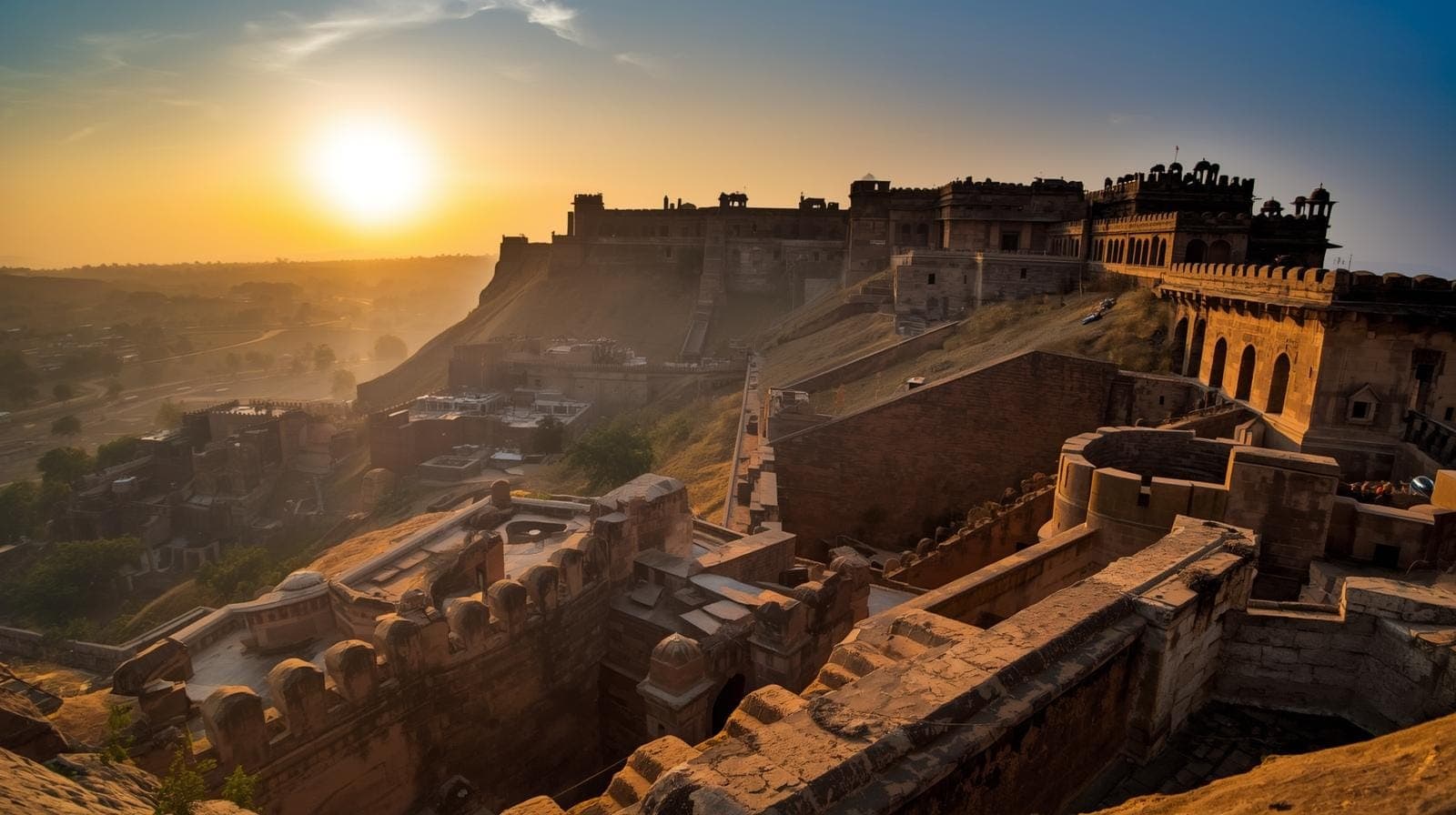
Ranthambore is about 180 km from Jaipur and three and a half hours by road, and is among the best places in India to see a wild tiger. Safaris run in ten numbered zones in morning and afternoon slots, in a six-seat gypsy or a twenty-seat canter, with zones allocated by the forest department rather than chosen. Zones 1 to 5 are the older core and are more sought after, but sightings happen across all ten. Ranthambore Fort, a tenth-century hill fort, stands inside the reserve and is free to enter and separate from the safari.
How the zones work, and the thing agents will not say
The park is divided into ten zones. Zones 1 to 5 are the original core around the lakes and the fort, and they carry the reputation; zones 6 to 10 were added later and sit in different terrain.
The important mechanics: you do not choose your zone. Allocation is done by the forest department, usually by a computerised system, and an operator who promises you zone 3 is promising something not in their control. Some will take money for it.
The second thing: the reputation gap is smaller than the pricing suggests. Tigers move across the whole reserve, territories shift, and zones 6 to 10 produce regular sightings. A visitor who gets zone 8 and spends the drive feeling cheated has usually been set up for that by whoever sold the trip.
| Gypsy | Canter | |
|---|---|---|
| Seats | 6 | 20 |
| Cost | Higher | Lower |
| Photography | Much better — low, open, fewer people | Harder; height and movement |
| Availability | Sells out first | Easier to get |
| Zone allocation | Same system for both | Same system for both |
Booking
Permits release online in advance through the official Rajasthan forest department system, and the popular slots go quickly — especially weekends, Indian holidays and the whole of the winter season.
Most visitors book through their hotel, which costs more and is considerably simpler. If you do that, confirm in writing that the quoted price includes the permit, the vehicle, the guide and park entry, and understand that the zone is not part of what they can promise.
Identification is checked at the gate against the names on the permit.
The fort, which most visitors skip
Ranthambore Fort sits on a 200 m outcrop inside the reserve, dates to around the tenth century, and is a UNESCO World Heritage site as part of the Hill Forts of Rajasthan. It is free to enter and does not need a safari permit — a separate road leads up to it.
The climb is a long flight of steps and takes about thirty to forty minutes at a steady pace. At the top there are palaces, tanks, temples and views across the whole park, with the lakes visible below.
The Ganesh temple inside the fort is an active and busy pilgrimage site, which surprises visitors who arrive expecting a ruin. Thousands of wedding invitations are posted to the deity here each year.
Langurs at the fort are numerous and bold. Carrying food openly is asking for trouble.
The odds and the season
Ranthambore has genuinely good tiger odds by Indian standards — better than Sariska, generally better than Corbett for a single drive — because the terrain is open and the animals are habituated to vehicles. A single safari is still a chance rather than a transaction. Two or three across a stay make a sighting likely rather than possible.
October to March is the comfortable season and the busiest. April to June is hot and gives the best odds, as water sources shrink and animals come to the lakes. July to September the core zones close for monsoon.
Getting there
Sawai Madhopur is the gateway town, about 180 km from Jaipur and three and a half hours by road, with good rail connections from Delhi and Mumbai.
It fits naturally into a Rajasthan circuit between Jaipur and Udaipur, which is how most travellers reach it. Two nights is the sensible minimum — it gives three safari slots, which is what turns a possible sighting into a likely one, and leaves a morning for the fort.
Questions people ask
Can I choose my safari zone at Ranthambore?
No. Zones are allocated by the forest department, usually by computer. An operator promising a specific zone is promising something outside their control.
Are zones 1 to 5 much better?
They carry the reputation as the older core around the lakes, but tigers range across all ten and zones 6 to 10 produce regular sightings. The gap is smaller than the pricing implies.
Gypsy or canter?
A gypsy for photography — six seats, low and open. A canter is cheaper and easier to get. Zone allocation works the same for both.
Do I need a permit for Ranthambore Fort?
No. The fort is free, reached by its own road, and needs no safari permit. Allow thirty to forty minutes for the climb.