

The Golden Triangle with Ranthambore:seven days, and what the extra three buy
The standard Golden Triangle is four days and it covers Delhi, Agra and Jaipur properly. Seven days should not be spent adding an afternoon to each — it should be spent adding the things the triangle drives straight past. This circuit puts Bharatpur between Agra and Ranthambore, two safari slots at Ranthambore itself, and the Chand Baori step well at Abhaneri on the Jaipur road. About 1,150 km in all, with four driving days and three local ones. A sedan bills ₹23,100 for the seven days on the 300 km per day minimum; an Innova Crysta ₹37,800.
Updated · Fares from the published rate card, Sedan ₹11/km to Tempo ₹23/km
- The loop
- 7 days · ~1,150 km
- Driving days
- 4 of 7
- Longest single leg
- Bharatpur → Ranthambore, 240 km
- Sedan, 7 days
- ₹23,100
The Golden Triangle is the most-driven route in India and the four-day version works. Delhi for a day, Agra for a day with the Taj at sunrise, Jaipur for a day and a half, and home. Nothing is rushed and nothing important is missed.
So the useful question is not how to stretch it but what to add. Three things qualify, in this order: Ranthambore, because a tiger reserve is the one experience the triangle has no equivalent of and it needs two safari slots rather than one; Bharatpur, because Keoladeo is forty kilometres from Agra and on the road you are already taking; and Abhaneri, because the Chand Baori step well is ninety kilometres before Jaipur on the Ranthambore road and takes an hour.
Fares follow the published rate card — sedan ₹11/km, Ertiga or SUV ₹15/km, Innova Crysta ₹18/km, 12-seater Tempo Traveller ₹23/km — on a 300 km per day minimum, with tolls, parking and state entry at actual. Ranthambore safari permits are booked separately and must be fixed before the car.
The loop
The circuit, day by day and kilometre by kilometre
Kilometre marks are cumulative from Delhi. Clockwise: down the Yamuna Expressway, east to the reserve, then up to Jaipur and home.
- km0
 Local
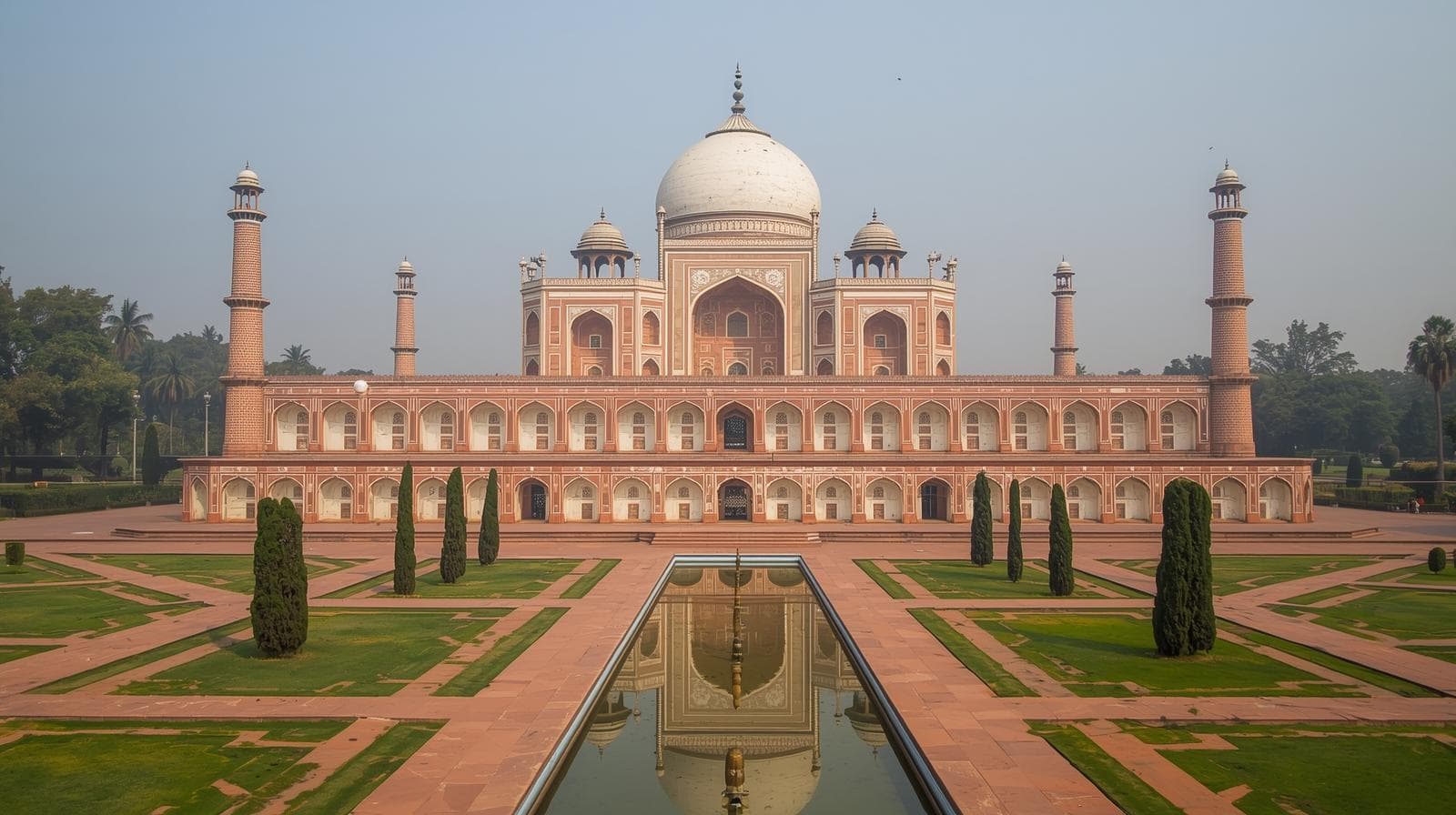
LocalDay 1: Delhi
Local day · 50 kmHumayun’s Tomb and the Qutb complex in the morning, Old Delhi around the Jama Masjid and Chandni Chowk in the afternoon, India Gate and the Lodhi Gardens for the evening. A walking day with the car between quarters.
Halt: Night: Delhi
- km50
 Yamuna Expressway
Day 2: Delhi to Agra
3.5 hrs · 230 kmThe Yamuna Expressway, six lanes and fully FASTag-enabled at Jewar and Mathura. Arrive by lunch, take Agra Fort and Itmad-ud-Daulah in the afternoon, and keep the Taj for sunrise the next morning — which is the single best decision on this itinerary.
Halt: Night: Agra
- km280
 Short day
Day 3: Agra, then Bharatpur
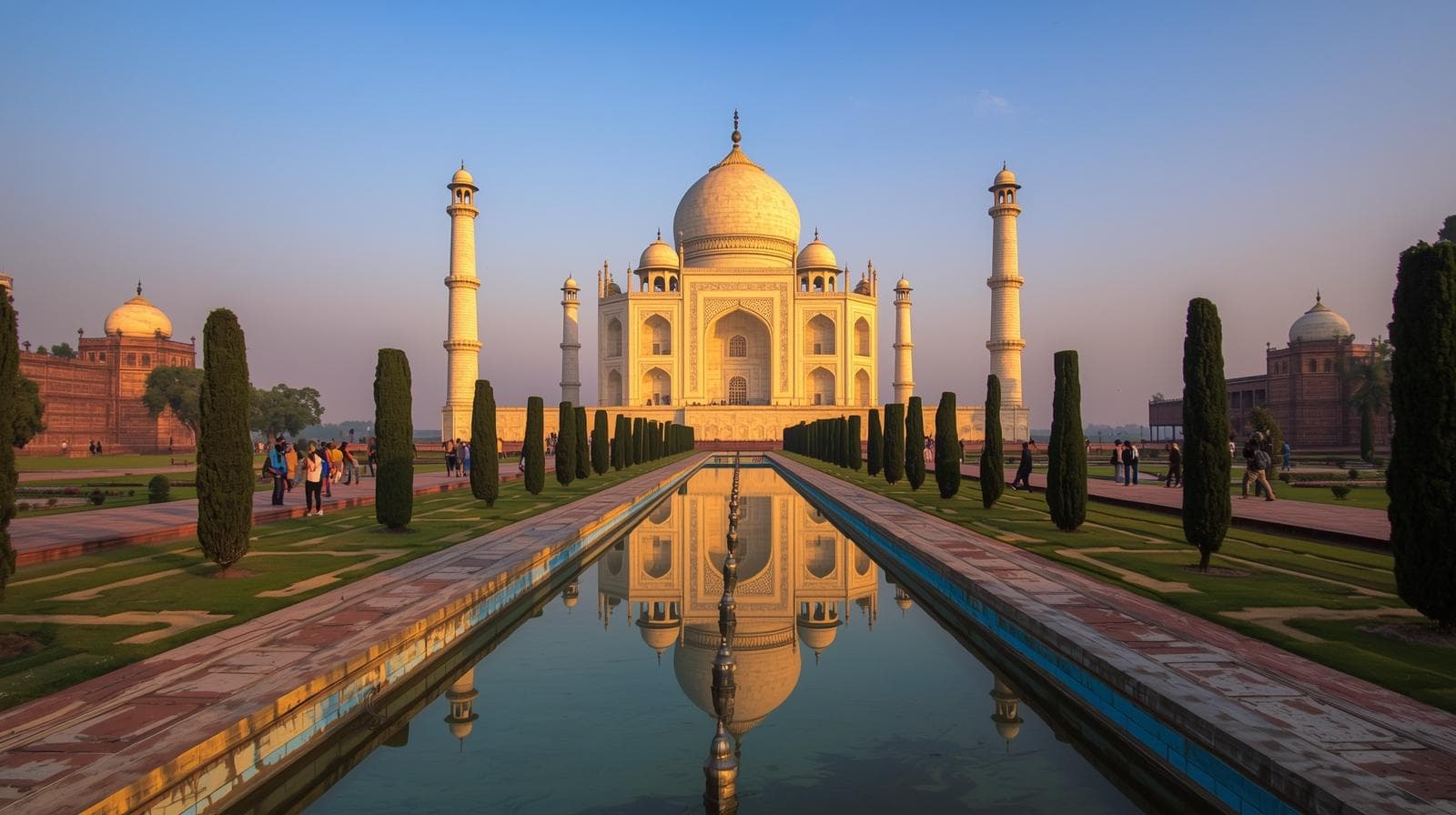
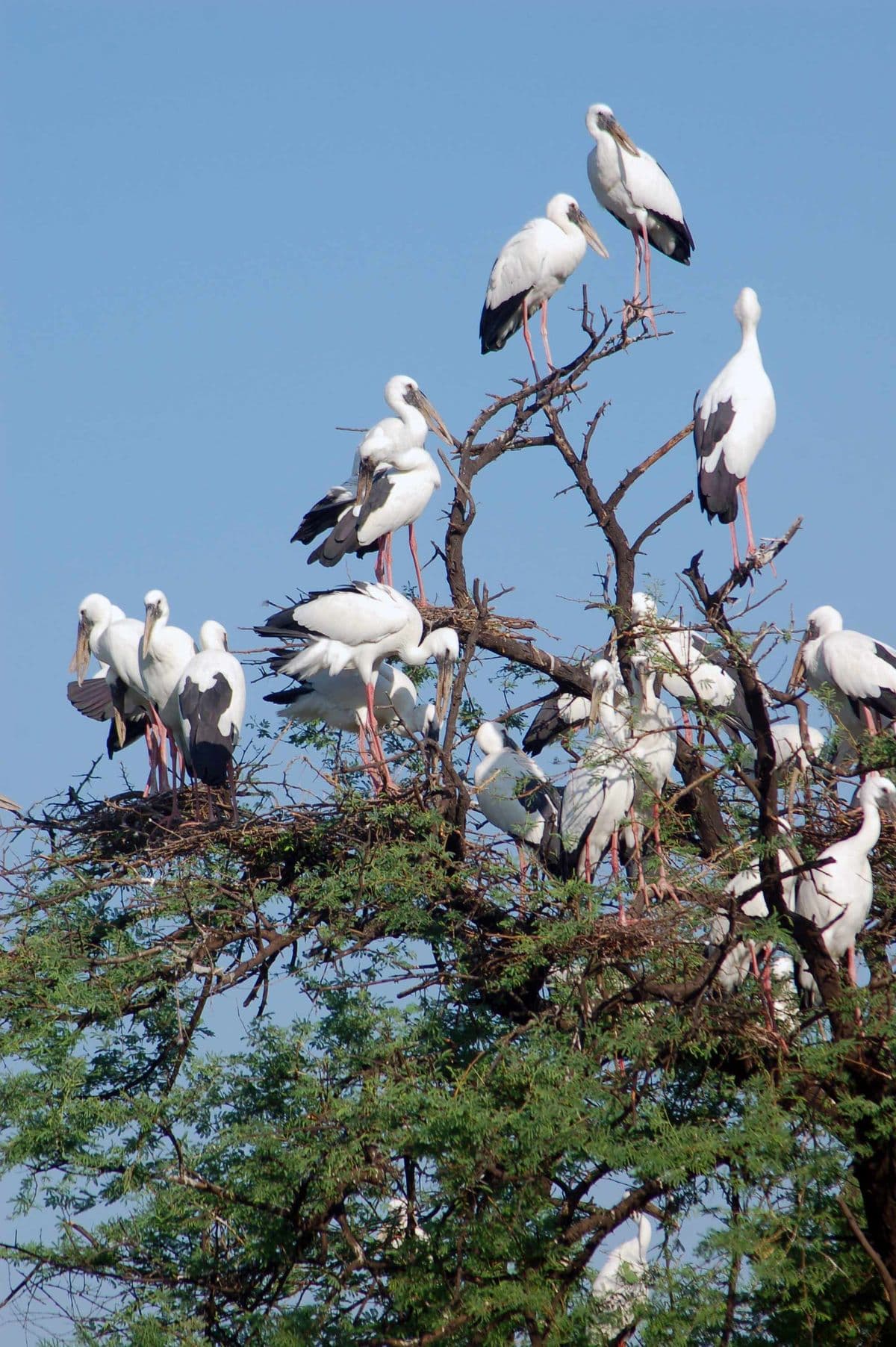
1 hr · 55 kmThe Taj at opening, when the marble changes colour for twenty minutes and the crowd is a fraction of mid-morning. Fatehpur Sikri after breakfast, 40 km west, then 55 km on to Bharatpur for the late afternoon at Keoladeo — the causeway at dusk, with the cycle rickshaw drivers who double as spotters.
Halt: Night: Bharatpur
- km335
 Permits first
Day 4: Bharatpur to Ranthambore
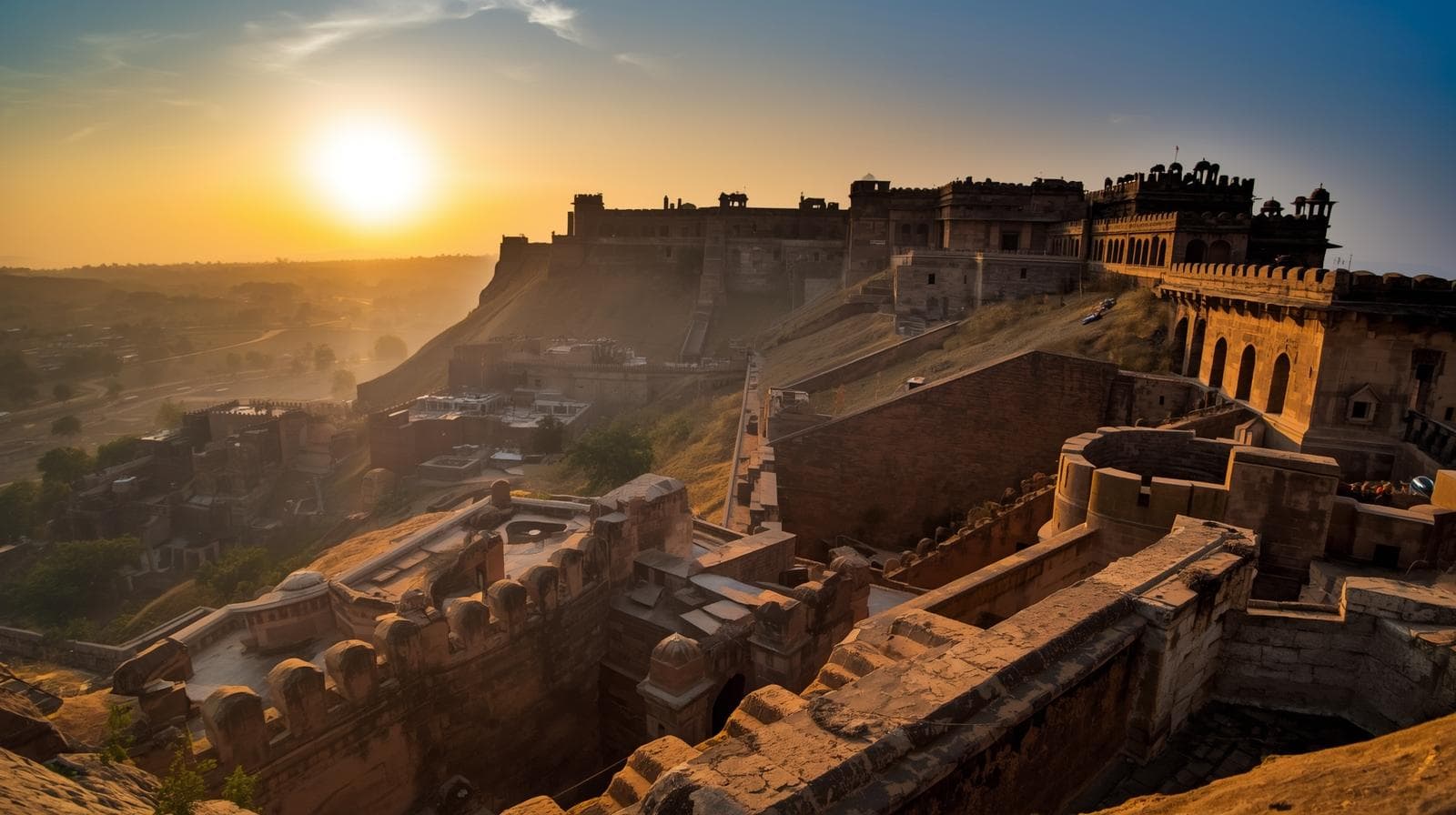
4.5 hrs · 240 kmKeoladeo again at sunrise before the coaches, which is why the night here is worth it, then south-west through Dausa and Lalsot. Arrive at Sawai Madhopur for the afternoon safari if your permit allows; otherwise settle in and take two drives tomorrow.
Halt: Night: Ranthambore
- km575
 Local
LocalDay 5: Ranthambore
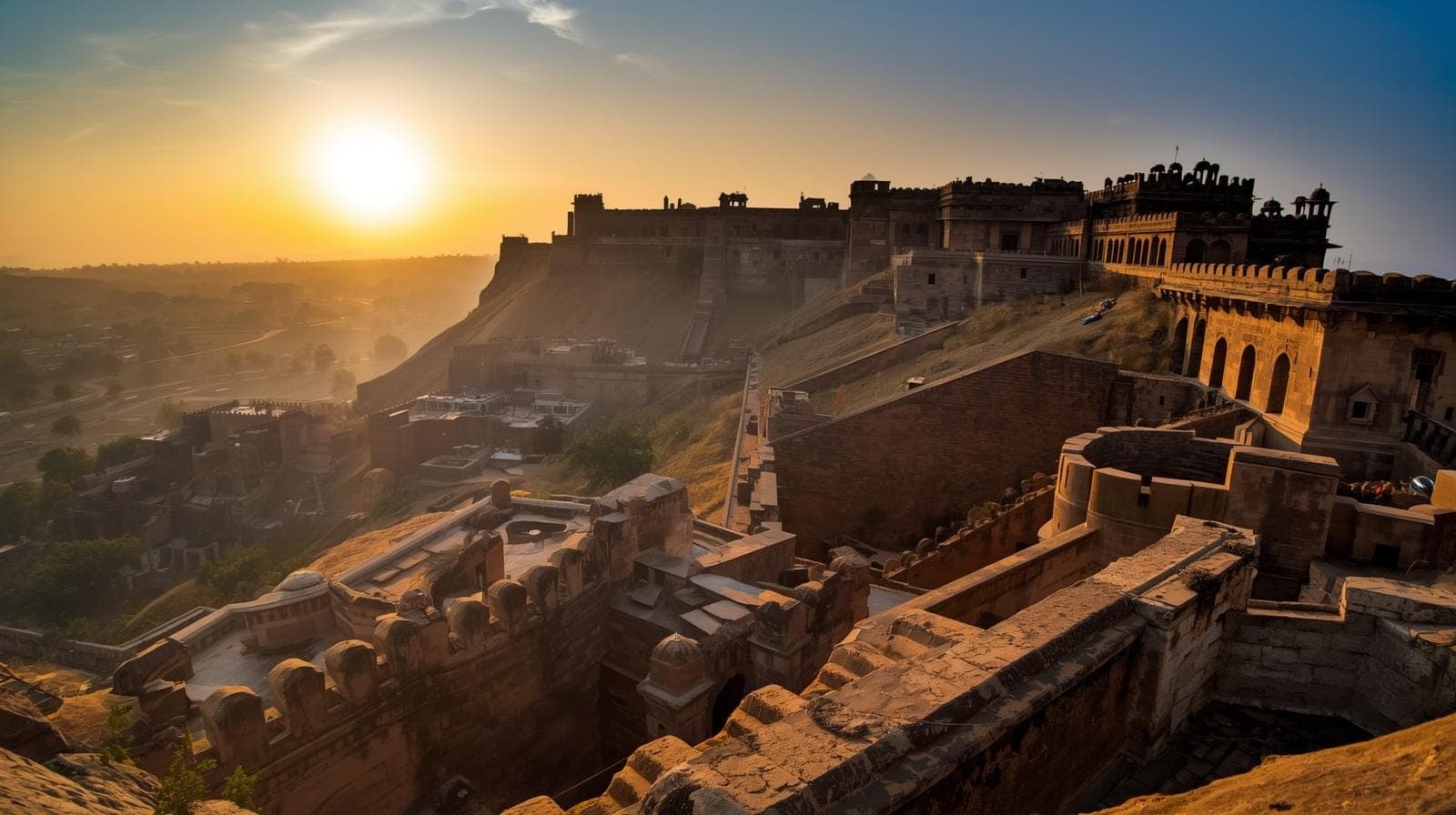
Local day · 60 kmTwo safaris, dawn and mid-afternoon, in different zones — which roughly doubles the chance of a sighting over a single drive. The tenth-century fort inside the park is part of the safari rather than a separate visit, and Padam Talao with the old hunting lodge above it is the view everyone recognises.
Halt: Night: Ranthambore
- km635
 Abhaneri
Day 6: Ranthambore to Jaipur via Abhaneri
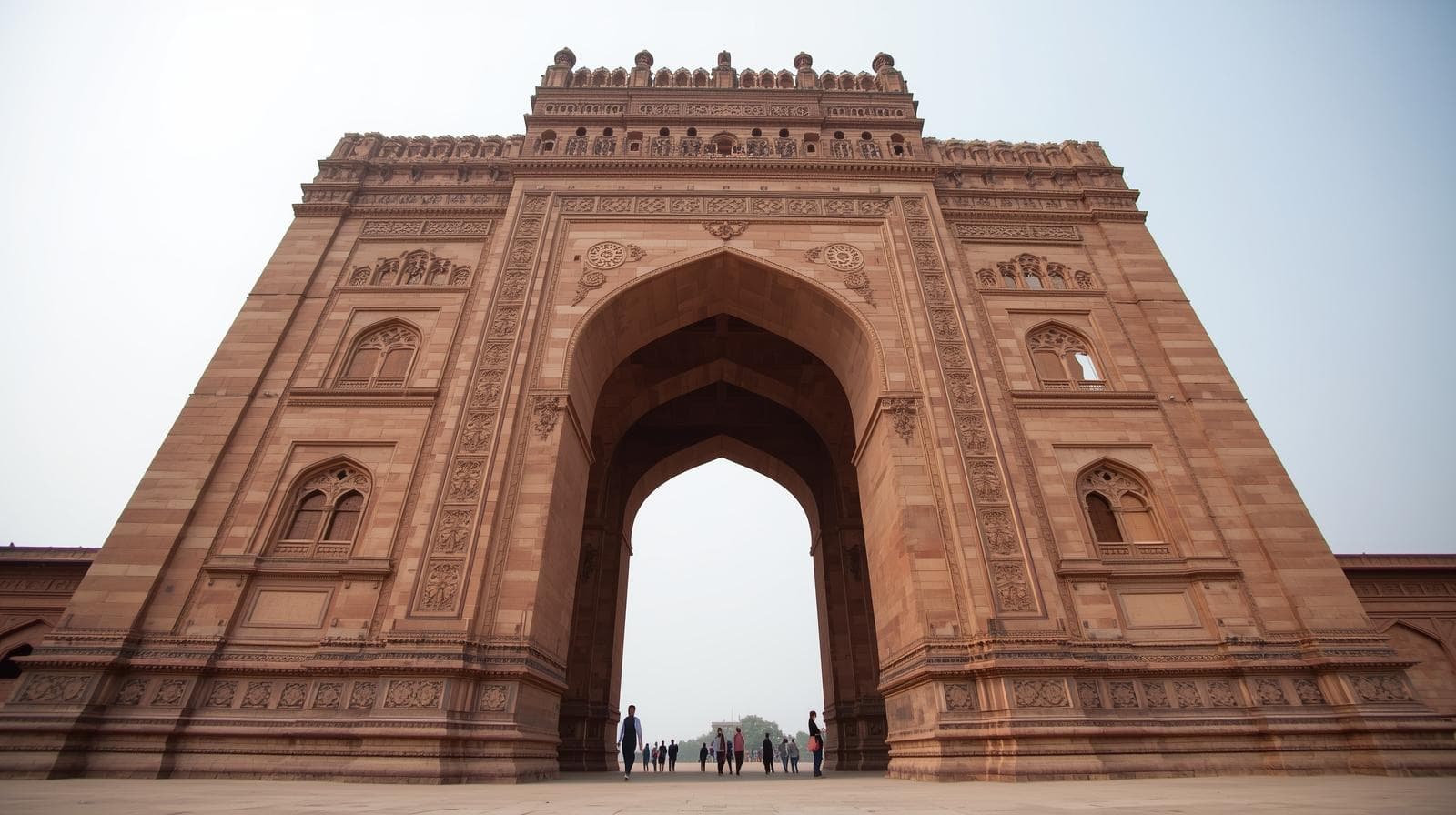
4 hrs · 180 kmNorth through Dausa, stopping at Abhaneri for the Chand Baori step well — 3,500 steps in thirteen storeys, and one of the most striking structures in Rajasthan for an hour of your time. Then into Jaipur for the walled city in the late afternoon and Nahargarh at sunset.
Halt: Night: Jaipur
- km815
 NH-48
NH-48Day 7: Jaipur, then Delhi
5 hrs · 280 kmAmber Fort at eight when the ramp is quiet, the City Palace and Jantar Mantar after it, and the Panna Meena stepwell if there is time. Leave Jaipur by two and NH-48 has you in Delhi for dinner.
Halt: Home
- km1095
Delhi
Evening of day 7About 1,095 km on the loop with the local days counted, 1,150 with the safari drives. Seven days at the rate card, tolls, parking and state entry at actual.
The seven-day Golden Triangle with Ranthambore at a glance
Distances from the site’s corridor data. The three local days bill the 300 km per day minimum, which is why the seven-day fare is flat rather than the sum of the legs.
| Day | From → to | Km | Hours | Night | What you see |
|---|---|---|---|---|---|
| 1 | Delhi local | 50 | 2 driving | Delhi | Humayun’s Tomb, Qutb, Old Delhi |
| 2 | Delhi → Agra | 230 | 3.5 | Agra | Yamuna Expressway, Agra Fort, Baby Taj |
| 3 | Agra → Fatehpur Sikri → Bharatpur | 95 | 2 | Bharatpur | Taj at sunrise, Fatehpur Sikri, Keoladeo at dusk |
| 4 | Bharatpur → Ranthambore | 240 | 4.5 | Ranthambore | Keoladeo at dawn, Dausa, Lalsot |
| 5 | Ranthambore local | 60 | 3 driving | Ranthambore | Two safaris, the fort, Padam Talao |
| 6 | Ranthambore → Abhaneri → Jaipur | 180 | 4 | Jaipur | Chand Baori, the walled city, Nahargarh |
| 7 | Jaipur → Delhi | 280 | 5 | Home | Amber at opening, City Palace, NH-48 |
| Total | The loop | ~1,095 | ~24 driving | 6 nights | Three cities, a reserve and two step wells |
Fares for the seven days: Sedan ₹23,100, Ertiga ₹31,500, Innova Crysta ₹37,800, 12-seater Tempo Traveller ₹48,300. Tolls, parking and state entry at actual. Ranthambore safari permits are separate and close weeks ahead in season; the park shuts its core zones during the monsoon.
The argument
What the extra three days actually buy over the four-day triangle
Not more time in the three cities. Delhi, Agra and Jaipur are well covered in four days, and the commonest seven-day itinerary — an extra half-day in each, plus a slower pace — buys very little. What it buys is a lie-in.
The three days buy a tiger reserve and two structures the triangle drives past. Ranthambore is the real addition: two safari slots in different zones, a tenth-century fort inside the park, and an experience with no equivalent anywhere on the standard route. It costs two driving days and a local one, which is exactly the three days you have.
Bharatpur and Abhaneri are the free additions, and that is the part most itineraries miss. Keoladeo is 55 km from Agra on the road toward Ranthambore, so it adds a night rather than a detour. Chand Baori at Abhaneri is directly on the Ranthambore-to-Jaipur road and takes an hour. Neither costs you a day; they cost you the decision to stop.
 Ranthambore
The permits
Ranthambore safaris have to be booked before the car
Permits are sold by the forest department per zone and per time slot, dawn and mid-afternoon, and the popular zones go weeks ahead — considerably further over long weekends and through the October to March season. This is the one element of the itinerary that cannot be arranged on the day.
The practical order is to fix the permits for days four and five first, then build the rest of the circuit backwards from them. If your afternoon permit on day four does not come through, the fallback is two drives on day five, which is why the itinerary keeps a full local day there.
The park closes its core zones during the monsoon, roughly July to September. If your dates fall in that window, Ranthambore is the wrong addition and the better one is Bundi and Kota, or Kumbhalgarh and Ranakpur on a Udaipur extension.
The timing
Why the Taj on day three rather than day two
Because the Taj at sunrise and the Taj at two in the afternoon are different buildings. For roughly twenty minutes after the gates open the marble shifts through pink and cream as the light comes up, and the crowd is a small fraction of what it is by nine. Everyone who has seen both says the same thing.
That means arriving in Agra on day two, taking Agra Fort and Itmad-ud-Daulah that afternoon, and giving the Taj the following morning. An itinerary that drives Delhi to Agra and visits the Taj the same afternoon has technically seen it and has missed the point.
One hard constraint: the Taj is closed on Fridays. Agra Fort, Fatehpur Sikri, Itmad-ud-Daulah and Sikandra are all open, so a Friday in Agra is far from wasted — but if the Taj is the reason for the trip, the dates should be planned around it rather than discovered at the gate.
The alternatives
If Ranthambore is closed or full, what else fits in three days?
Bundi and Kota, east of Ranthambore, are the closest substitute in geography and nothing like it in character — a step-well town and a palace with some of the best surviving Rajput wall painting in the state, and almost no visitors. They slot into exactly the same days.
Gwalior and Orchha are the other direction and the stronger choice if forts interest you more than wildlife. Gwalior is 120 km from Agra with a hill fort Babur called the pearl among Indian fortresses; Orchha is a further 115 km, with cenotaphs along the Betwa in a village of a few thousand people.
Udaipur is the addition people most often ask about and the one we would advise against on seven days. It is 400 km from Jaipur and deserves two nights of its own, which turns this into a ten-day trip. Keep it for the full Rajasthan circuit.
Three things the drivers would tell you
Permits before the car, always
Ranthambore safari slots are zone-specific and sell out weeks ahead in season. Fix those first; everything else on this itinerary can move around them.
The Taj is closed on Fridays
Plan the Agra night so the sunrise visit does not land on a Friday. Everything else in Agra is open, but the one monument you came for is not.
Keoladeo rewards two visits
Dusk on the day you arrive and sunrise the next morning. That is the entire argument for a night at Bharatpur rather than driving through.
Abhaneri takes an hour, not a day
Chand Baori is directly on the Ranthambore-to-Jaipur road. Tell the driver in advance and it costs you an hour; discover it afterwards and it costs you nothing but regret.
Amber Fort at eight
The elephant-gate ramp queues badly from mid-morning. Being there at opening on day seven is worth more than an extra hour in bed.
Questions people ask
Frequently asked questions
Our team is here to help. Contact us for personalized assistance.
