
Travelling with elderly parents:where the walking actually is
The thing to plan around is not the driving — a car is the easy part — but the last three hundred metres. A great many of the places people most want to take their parents are reached on foot: the Taj gates are a walk from the car park, Vrindavan's temple lanes take no vehicles, Shimla's Mall and Mussoorie's are pedestrian, Mehrangarh is a climb, and Kedarnath is sixteen kilometres. Knowing which is which before you book, rather than at the kerb, is what makes the difference.
Updated · Fares from the published rate card, Sedan ₹11/km to Tempo ₹23/km
- The easy part
- The driving
- The hard part
- The last 300 metres
- Easiest vehicle to board
- Innova Crysta
- Plan around
- Steps, distance from parking, shade
A substantial share of the multi-day trips we run are families taking parents somewhere — a pilgrimage, a city they wanted to see again, a wedding. It is work we do a lot of, and the single most useful thing we can put on a page is the specifics, because general reassurance helps nobody.
Three things decide whether a day works: how far the vehicle can get to the entrance, how many steps there are after that, and whether there is shade and somewhere to sit. None of those appear in a guidebook and all of them are knowable in advance.
What follows is site by site, then the practical arrangements that help, then the honest list of places we would advise against.
How far the car gets, and what is left to walk
Distances are from the nearest vehicle point to the main entrance, which is the figure that matters and the one nothing publishes.
| Site | Car reaches | Then | Assistance |
|---|---|---|---|
| Taj Mahal, Agra | The car park | A walk to the gate, then the complex on the flat | Wheelchairs available; golf carts to the gate |
| Agra Fort | The entrance | A ramped climb inside, mostly gentle | Manageable for most |
| Amber Fort, Jaipur | The base, or the top by jeep | A steep ramp, or take the jeep up | Jeeps to the top — ask for one |
| City Palace, Jaipur | Close to the entrance | Flat courtyards, some steps | Largely manageable |
| Mehrangarh, Jodhpur | A road up to the fort | Internal climbs and steps | Lifts in parts of the fort |
| Har ki Pauri, Haridwar | Nearby, restricted at aarti | A short walk; ghat steps to the water | Crowds are the real issue, not distance |
| Vrindavan temple lanes | The parikrama marg | A walk or e-rickshaw; lanes take no cars | E-rickshaws are the answer here |
| Varanasi ghats | Godowlia or Assi | Lanes on foot, then ghat steps | Boats reach the ghats; lanes cannot be driven |
| Shimla Mall and Ridge | Cart Road or Victory Tunnel | The lift, then flat | The lift is the key — use it |
| Mussoorie Mall | Picture Palace or Library | The Mall on the flat | Manageable; the Mall itself is level |
| Nainital Mall | Tallital or Mallital | Flat along the lake | Easy; cable car for Snow View |
| Yamunotri | Jankichatti | **6 km uphill** | Ponies and palanquins at the trailhead |
| Kedarnath | Gaurikund | **16 km, 1,500 m gain** | Ponies, palanquins, helicopter |
| Badrinath | The temple | Steps to the shrine | Road to the door — the easiest Char Dham |
| Gangotri | The temple | A short walk, some steps | Road to the door |
| Golden Temple, Amritsar | The plaza edge | A walk around the sarovar, flat | Wheelchairs available; open through the night |
Assistance provision changes and is not uniform. Where this table says wheelchairs or jeeps are available, that is the general position rather than a guarantee for a specific day — ask us to confirm close to your dates and we will.
The vehicle
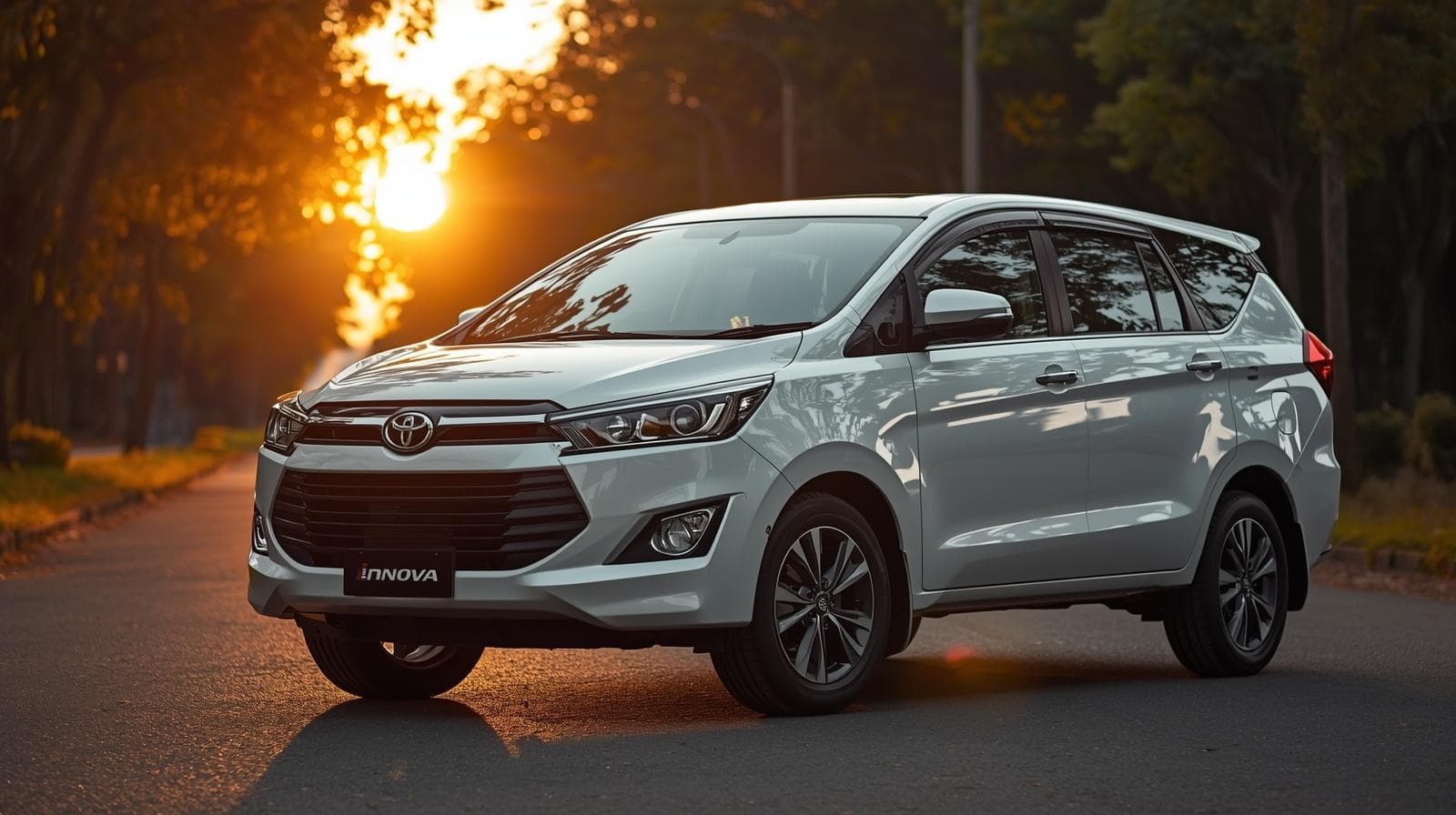
Why the Innova is the right car, and it is not about comfort
It is about the height of the seat. Getting in and out of a low sedan involves dropping down and pushing up, which is the movement that hurts a bad knee or hip. The Innova Crysta sits higher, so boarding is closer to sitting down on a chair and standing up from it — and on a trip with eight or ten stops a day, that movement is repeated twenty times.
The second reason is the door aperture and the grab handle, both of which are larger and better placed than on a sedan. The third is suspension over the kind of road surface that makes a long day uncomfortable.
At ₹18 per kilometre against ₹11 for a sedan, it is ₹2,100 more on a 300 km day. For a trip whose whole purpose is that your parents enjoy it, that is not where to economise. The Ertiga at ₹15 is the middle option and is also a high-seat vehicle.
The day shape
How to build a day that works
**Two major sites a day, not four.** The limiting factor is not time but accumulated walking, and a day with four monuments means four walks from parking plus four sets of steps. Two sites with a long lunch between them is a better day and sees more, because nobody is tired by the second one.
**Early mornings, always.** Shade and temperature matter more than they do for anyone else in the group, and the sites are emptier. A 7 a.m. start at the Taj or Amber is a different experience from an 11 a.m. one in every respect that matters here.
**The car waits, and that is free.** On an outstation day hire there is no waiting charge, so the car can sit at the gate for three hours while you go at whatever pace suits. Use that: there is no reason to rush a monument because the vehicle is on a clock, because it is not.
**Build in a rest afternoon.** On a trip longer than four days, a day with no sightseeing at all in the middle is what makes the second half work. The commonest mistake on a parents' trip is a nine-day itinerary with nine full days in it.
Char Dham specifically
The honest position on the four shrines
This is the trip most often asked about and the one where the answer is most specific. **Gangotri and Badrinath have road right up to the temple** — a short walk and some steps, and they are entirely achievable for most people in their seventies.
**Yamunotri is a 6 km uphill walk** from Jankichatti. Ponies and palanquins are available at the trailhead and are the standard arrangement; a palanquin carried by four bearers is the option for someone who cannot sit a pony. It takes two to three hours up.
**Kedarnath is 16 km with a 1,500 metre gain**, and this is the one that needs a decision rather than an attempt. The helicopter from Phata, Sersi or Guptkashi is what most families use, and it is weather-dependent — flights are grounded regularly, so the plan needs to survive a cancellation. Ponies and palanquins cover the distance but the altitude at 3,583 metres is a separate consideration from the distance.
**Do Dham — Badrinath and Kedarnath only — is often the better trip** for a family with elderly parents, because it halves the days and the travel while keeping the two shrines most people are going for. And the winter seats at Kharsali, Mukhba, Ukhimath and Joshimath are reachable by road all year with no walking at all, which almost nobody considers.
What we would avoid
The places we would steer a family away from
**Kedarnath on foot**, unless your parents walk regularly and have been to altitude. Sixteen kilometres with a 1,500 metre gain is a mountain day, and the point at which people turn back is usually Rambara, two-thirds of the way up, in worse shape than when they started.
**Spiti and Kunzum La.** Kaza is at 3,800 metres reached over a 4,590 metre pass in a single day's drive. Altitude sickness is a real risk on that ascent for anyone, and it is not a trip to take an older parent on.
**The Varanasi lanes in a crowd**, specifically during a festival. The ghats are reachable and a boat solves a great deal, but the lanes around Vishwanath during Dev Deepawali are a crush that is genuinely unsafe for someone unsteady.
**Any itinerary with more than two long driving days in a row.** Eight hours in a car is tiring for everyone and more so here. The Himachal and Rajasthan circuits on this site both have local days built between the long legs for exactly this reason.
If an enquiry asks us for one of these, we will say what we think rather than quote it. That has cost us bookings and it is the right way round.
Three things the drivers would tell you
Two sites a day, not four
The limit is accumulated walking, not time. Two monuments with a long lunch between sees more than four rushed ones.
Take the Innova for the seat height
Not for comfort — for the movement of getting in and out, repeated twenty times a day. ₹2,100 more on a 300 km day.
The car waiting costs nothing
On an outstation day hire there is no waiting charge. There is no reason to rush a monument because the vehicle is on a clock.
Ask for the Amber jeep
The ramp up to Amber Fort is steep. Jeeps run to the top and most visitors do not know to ask.
Consider Do Dham, or the winter seats
Badrinath and Kedarnath halves the travel. The winter seats at Kharsali, Mukhba, Ukhimath and Joshimath need no walking at all.
Questions people ask
Frequently asked questions
Our team is here to help. Contact us for personalized assistance.
